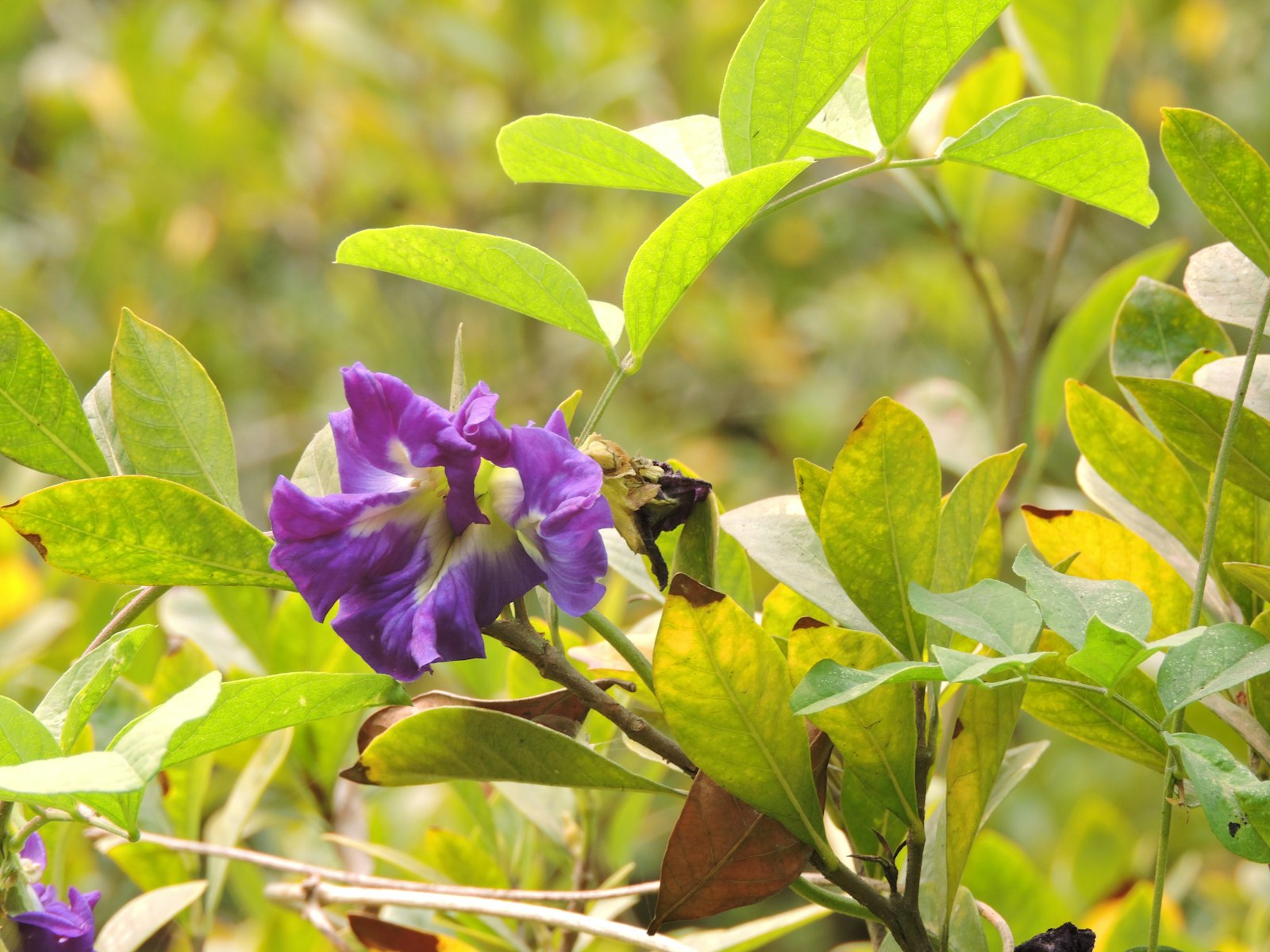
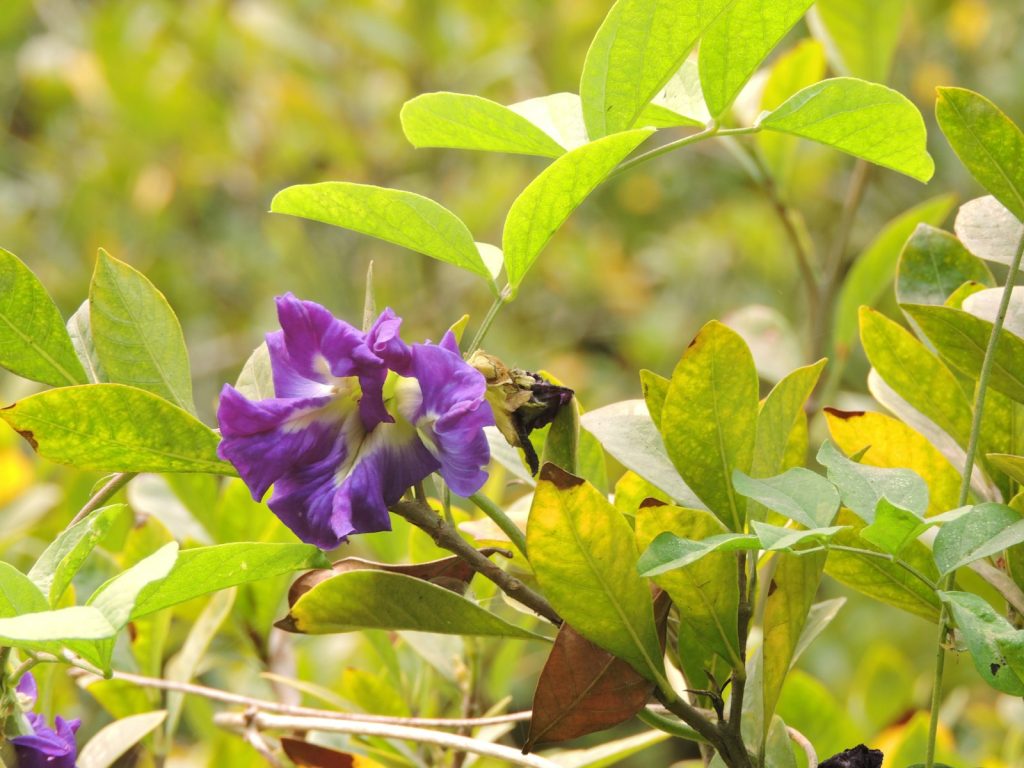
Independent sourcing note: We are an independent butterfly pea flower tea B2B sourcing desk — we curate verified Indonesian growers and tea makers and route your RFQ to a vetted partner; we are not the manufacturer, exporter of record, or freight forwarder. Butterfly pea is dried Clitoria ternatea flowers, graded by colour and moisture and also sold as petals, powder, and extract. Figures (MOQ, FOB per kg, lead times) are indicative ranges and vary by grade, season, and volume — final terms are by quote. Compliance (pesticide-residue limits, organic certification, food-contact, and import status such as EU novel-food, which is uncertain) is your responsibility to verify with the supplier and a licensed customs broker — this is general trade information, not legal or regulatory advice. We may earn a sourcing commission on referred orders (referral disclosure).
Butterfly pea flower uses span herbal tea, blue lattes, color-change cocktails, natural food coloring, baking, cosmetics and nutraceuticals — each application pulling a different product form from the same dried Clitoria ternatea flower. The challenge for a B2B buyer is that most suppliers sell one form and never explain why you might need a different one. This guide matches application to form so you buy the right ingredient from the outset.
The pigment behind every application is the same: ternatins, a class of polyacylated anthocyanins (delphinidin-based), responsible for the deep blue color and the pH-triggered color shift that turns blue drinks purple or pink when acid is added. Understanding that one chemical fact — ternatins degrade with heat, light and oxygen, and they shift color with pH — explains almost every sourcing decision on this page.
Why Product Form Matters as Much as the Flower Itself
The dried flower arrives in three commercial forms: whole flowers (intact, premium grade), broken petals or fines (blend and extract feedstock), and powder (milled, for colorant and latte applications). A fourth intermediate, water-soluble liquid or spray-dried extract, is produced by further processing the petals or fines.
These are not interchangeable. Whole flowers command the highest per-kg price because they provide visual drama — floating in a glass, steeping in a teapot, artfully scattered across a cocktail. Powder commands a lower per-kg price but a meaningful cost-per-color-unit advantage at scale. The question is never “which is cheaper” in isolation; it is always “which delivers the right color intensity, the right sensory experience, and the right unit economics for my application.”
Before the application breakdown, two regulatory facts belong at the top of any honest sourcing conversation. In the United States, the FDA approved butterfly pea flower water extract as a color additive exempt from certification under 21 CFR 73.69 (2021), with approved food categories expanded over time — confirm the current exact category list in the CFR, because approved categories have been added incrementally and the source text was not directly verified for this guide [FLAG: verify current 21 CFR 73.69 scope]. The dried flower itself, sold as a herbal tisane, is treated as a conventional food in the US. In the European Union, Clitoria ternatea as a food ingredient (other than supplements, and jurisdiction rules vary) is classified as a novel food and is not currently authorized: EFSA raised safety objections (EFSA EN-7084), the European Commission terminated the authorization procedure (C(2026)776), and there have been active RASFF enforcement notifications including reported recalls. EU buyers must verify the current regulatory status before ordering for the EU food market. This guide is trade information, not regulatory advice.
Application 1: Herbal Blue Tea and Tea Blends
What the buyer wants
Loose-leaf tea brands, wellness cafes, health food retailers and e-commerce tea sellers want a caffeine-free herbal tisane that brews naturally blue and can be positioned around clean-label, antioxidant-associated wellness without a medical claim. The color-change payoff — squeeze lemon and watch it shift purple to pink — is the product’s hero moment. That visual is what drives social sharing and repeat purchase. The buyer is not selling a drug. They are selling a sensory ritual.
Which form to buy
Whole flowers, premium grade. For visible tea applications, intact flower structure is the point. Premium tea-grade butterfly pea typically specs at roughly 90% intact flowers — broken petals in a premium loose-leaf are a sign of rough handling or lower-grade feedstock, and the customer notices. Look for deep, uniform blue color with minimal browning; browning signals over-hot drying or excessive light exposure during storage, both of which signal ternatin degradation and reduce color strength.
For blended teas — butterfly pea plus lemongrass, plus hibiscus, plus lemon myrtle — broken petals or even fines can serve adequately because the blend appearance overall matters more than any single flower’s integrity. Blends also allow cheaper feedstock material to be used for the butterfly pea component where the other botanicals dominate the visual.
Health positioning — where to stop
The SERP for butterfly pea tea is saturated with claims about cancer prevention, diabetes management, cognitive function and blood sugar control. These claims create YMYL liability and, more practically, are often not supported by robust human trial evidence at the doses in a cup of tea. The positioning that holds up under scrutiny: caffeine-free, made from a botanical with antioxidant-associated compounds (ternatins are a flavonoid subclass), visually dramatic, clean-label. That is the honest ceiling. Any medical benefit claim beyond this needs qualified dietary supplement counsel and, depending on the market, formal substantiation. Do not publish medical benefit claims you cannot defend.
Application 2: Blue Lattes
What the buyer wants
Specialty cafes, hotel F&B operations, and food service distributors want a butterfly pea flower latte ingredient that dissolves cleanly in warm milk or a milk alternative, delivers consistent blue color without visible flower particles, and handles batch-preparation without clumping. The visual is what sells the ticket — a blue latte earns its own Instagram post. Consistency matters enormously here: a café steaming dozens of lattes a day cannot hand-measure loose flower for each one.
Which form to buy
Powder. Specifically, a powder with a defined mesh or sieve size so that the per-gram dosing translates to reliable color yield. Whole flowers steeped in hot milk will color the milk but leave fibrous residue unless strained; that is not a viable café workflow at volume. Powder dissolves or suspends uniformly, can be premeasured into sachets, and integrates into syrup bases or premix formats that further simplify service.
Note that butterfly pea latte powder is usually cold-mixed or briefly warm-mixed — do not assume stability under prolonged high heat. Ternatins degrade faster under sustained boiling than under the brief bloom-and-steam of a standard latte preparation. If your application involves holding a batch at high temperature for extended periods, request color-stability data at the relevant temperature and duration from your supplier before committing volume.
Ready to source powder for your latte program? Use our enquiry form or reach the desk directly via WhatsApp at 6281139414563 — include your target volume and whether you need OEM sachets or bulk powder.
Application 3: Color-Change Cocktails, Mocktails and RTD Beverages
The pH chemistry behind the bar moment
The color-change butterfly pea drink ingredient is the product’s most commercially exploited feature and the one that rewards some chemical literacy in the buyer. Ternatins are pH-indicator pigments. In neutral or slightly alkaline water (pH 7 and above), the brew or extract appears blue. Add an acid — lemon juice, citric acid, tonic water, a dry white wine — and the pH drops, shifting the pigment structure and turning the drink purple, then pink-red, depending on how much acid you add. The color change is rapid, visible, and dramatic. It is the spectacle that mixologists, RTD brands and social-media F&B marketers have been building products around.
Craft cocktails and mocktails: whole flower or extract?
For a bar making cocktails individually — gin and tonics, blue margaritas, color-change lemonade — whole flowers are the natural choice. A small number of dried flowers steeped briefly in hot water produces a concentrated blue liquor that the bartender uses as a cocktail base. The visual of the flower steeping can itself be part of the tableside theatre. Some bars serve the blue liquor in a separating vessel so the customer triggers the color change themselves with a squeeze of citrus. Whole flowers at premium grade give the deepest initial blue and the most vivid shift. This is where per-flower integrity is visible.
For an RTD beverage producer running a production line, whole flowers steeped then filtered can work at modest scale, but as production volume rises, the economics shift. Water-soluble extract — standardized for ternatin concentration, filtered, spray-dried or in liquid form — offers consistent color yield per unit dose, simpler QC, and easier scale-up than steeping variable batches of whole flower and filtering each run. Extract also allows tighter control over the starting pH of the formula before the color-change acid trigger is added.
Cost-per-color-unit, not per-kg price
A buyer choosing between whole flower at an indicative FOB range of approximately USD 6–12/kg (standard Indonesia/Vietnam origin, non-organic) and extract should not compare those two numbers directly. Extract delivers more color per gram than whole flower because it concentrates the ternatin fraction. The relevant comparison is color yield per production unit — how many liters of finished beverage at target color intensity can each form color at each cost point? This is the calculation to run with your formulation team before committing to a form at RTD volume.
Application 4: Natural Blue and Purple Food Coloring
The clean-label colorant case
The largest and fastest-scaling butterfly pea natural blue food coloring application is not tea at all — it is the push by food and beverage manufacturers to replace synthetic blue dyes (FD&C Blue No. 1, Blue No. 2 and their EU equivalents E133, E132) with botanically derived alternatives. Regulatory pressure, retailer clean-label policies, and consumer preference surveys have all accelerated this.
Butterfly pea water extract is the only commercially viable source of a natural, water-soluble blue-to-purple colorant available at meaningful industrial scale. Spirulina phycocyanin provides a different blue (more cyan, less stable under heat and acid), but it cannot replicate the pH-shift behavior or the purple register of ternatins. For a manufacturer that needs a blue that can shift to purple based on formulation pH — in a yogurt, a beverage, a candy — butterfly pea extract is currently without a direct natural substitute.
US regulatory status
In the United States, the FDA’s 2021 approval of butterfly pea flower water extract as a color additive exempt from certification (21 CFR 73.69) was the commercial catalyst for the natural-blue category. The extract is approved for use in a range of food categories, with additional categories confirmed subsequently — beverages, certain dairy, confectionery, and others. Confirm the current exact list of approved categories in the CFR before formulating, and confirm whether your specific product category and processing conditions fall within scope [FLAG: verify current 21 CFR 73.69 scope]. This is trade information, not regulatory advice; your compliance and legal team must confirm.
EU status — the wall that matters
The EU novel-food non-authorization for Clitoria ternatea in foods is not a technicality. It is currently the single biggest barrier to EU food-colorant sourcing of this ingredient. Authorization procedures were terminated following EFSA safety objections (EFSA EN-7084; Commission Decision C(2026)776). RASFF enforcement notifications have been issued against shipments. A food manufacturer planning a clean-label blue relaunch for the EU market cannot currently use butterfly pea extract as the colorant without legal exposure. Member-state supplement rules may differ by jurisdiction, but these are uncertain and variable — verify with qualified regulatory counsel for each market.
Which form for food coloring
Water-soluble extract, either as a concentrated liquid or spray-dried powder, is the standard form for industrial colorant applications. Whole flower is not used at this scale. Powder grade from whole dried petals can function in some applications but lacks the concentration and batch-consistency of a properly standardized extract. If your application requires a specific anthocyanin concentration spec, request a CoA with absorbance measurement (typically at wavelengths in the 560–620 nm range for ternatin pigments) so you can compare color strength between suppliers and batches.
Application 5: Baking and Confectionery
Blue-hued baked goods, frosting, rice dishes (blue rice is a traditional preparation across parts of Southeast Asia, including Malaysia and Thailand), ice cream, and candy are established butterfly pea applications. The product form is almost always powder or extract. The key technical challenge is heat stability: prolonged oven baking at high temperatures will fade the blue faster than a cold or room-temperature application. Butterfly pea blue in a cold glaze or buttercream holds better than in a cake baked at 180°C for 40 minutes.
The pH-shift also matters in baking: add baking soda (alkaline) and the product can shift bluer or greener; add cream of tartar or lemon (acid) and it turns pink-purple. This can be designed intentionally for visual effect or managed carefully to maintain expected product color. Buyers formulating for baked goods need stability data at their specific bake temperature, time and formulation pH before committing.
| Application | Recommended Form | Key Buying Consideration |
|---|---|---|
| Loose-leaf herbal blue tea | Whole flowers, premium grade (~90% intact) | Color depth, intact ratio, no browning |
| Tea blends (with other botanicals) | Broken petals or whole | Grade match to overall blend; cost-efficiency acceptable |
| Blue lattes (café / food service) | Powder (defined mesh size) | Dissolution consistency; per-gram color yield |
| Craft cocktails / mocktails | Whole flowers (theatre & steep) or powder | Visual impact per serving; extraction simplicity |
| RTD beverages at scale | Water-soluble extract or spray-dried powder | Standardized ternatin concentration; US 21 CFR 73.69 scope [FLAG] |
| Natural food coloring (industrial) | Water-soluble extract | Absorbance spec; US regulatory compliance; EU novel-food wall |
| Baking and confectionery | Powder or extract | Heat stability at bake temp; pH of formulation |
| Cosmetics / skincare / haircare | Extract or powder (cosmetic-grade) | Cosmetic-grade specifications; separate from food-grade CoA |
| Nutraceuticals / capsules | Powder (defined anthocyanin %, supplement-grade) | Supplement-grade CoA; regulatory route per market |
Application 6: Cosmetics, Skincare and Haircare
Butterfly pea appears in a growing number of skincare formulations — facial masks, serums, toners, shampoos and conditioners — positioned around antioxidant plant extract appeal and the visible blue color as a product differentiator. The regulatory pathway for topical cosmetic use is distinct from food use, and the EU novel-food restriction applies to food, not cosmetics; however, cosmetic formulations using botanical extracts have their own compliance considerations under EU Regulation 1223/2009 and equivalent frameworks elsewhere.
For cosmetic buyers, the required product form is typically an extract or powder specified to cosmetic grade, with a CoA separate from or in addition to any food-grade documentation. Microbiology limits for topical application (particularly yeast, mold and Staphylococcus) may differ from food-grade specs. Request cosmetic-grade testing documentation, not simply the food CoA, and confirm suitability with your cosmetic formulator and regulatory consultant for the target market.
Haircare is a smaller but active segment, often positioning butterfly pea extract around scalp health and hair color vibrancy. The same cosmetic-grade sourcing considerations apply. This guide cannot assess cosmetic efficacy claims — those require your own formulation and clinical assessment.
Application 7: Nutraceuticals, Powders and Capsules
Supplement brands in the US, Australia and parts of Asia are packaging butterfly pea flower powder in capsules and tablet form, positioning it around anthocyanin content and antioxidant-associated marketing language. The supplement regulatory route is market-specific: in the US, dietary supplement regulations under DSHEA apply; in the EU, the novel-food non-authorization may affect supplement use depending on member state (jurisdiction-specific and currently uncertain — verify with regulatory counsel before committing to an EU supplement launch).
For capsule and tablet applications, buyers typically need a defined anthocyanin percentage on the CoA — not simply a color-strength measurement but a quantified ternatin or total anthocyanin figure — so that the finished supplement label can carry an honest ingredient declaration and dosing rationale. Request supplement-grade material with appropriate documentation. Standard food-grade whole flower CoAs are insufficient for a supplement without additional analytical characterization.
Health claim guidance: do not publish medical benefit claims for butterfly pea supplements without qualified substantiation for your market. The desk’s editorial position is that the SERP for butterfly pea health benefits is saturated with unqualified medical assertions, and a buyer launching a supplement brand on those claims is building on an unstable foundation. The antioxidant-associated positioning without a specific disease claim is more defensible and still commercially effective in the supplement market.
Matching Your Application to This Desk
The desk sources from Indonesia, the region’s most cost-competitive origin for non-organic material and increasingly credible for certified supply. Indonesia is a significant but secondary origin behind Thailand in terms of brand recognition — Thai origin carries a premium positioning in some markets — but for buyers prioritizing value or looking to diversify supply away from a single Thai supplier, Indonesia-origin material is worth a trial sample.
We route qualified RFQs to a vetted partner who quotes, contracts and ships. We do not manufacture or take title to goods. Where an introduction leads to a transaction, the partner may pay us a referral fee; that fee does not change what we publish or who we recommend. Our job is to get you to the right form and the right supplier, not to maximize a transaction.
To start a conversation, reach us on WhatsApp at 6281139414563 or email [email protected]. Tell us your application, your target volume, your destination market, and whether you need organic or food-safety certification — that information gets you to a relevant quote faster than a generic enquiry.
You can also use our enquiry form to submit a structured RFQ. Include your product form preference (whole flower, broken petals, powder, extract), grade requirements, volume and any certification needs, and we will route it appropriately.
Frequently Asked Questions
Which butterfly pea product form should I buy for a color-change cocktail menu?
For a bar making cocktails individually, whole flowers at premium grade give the deepest blue steep and the most vivid pH-shift when the customer adds citrus or tonic. The visual is part of the theatre. If you are producing at RTD scale — dozens or hundreds of bottles per production run — water-soluble extract or spray-dried powder will give better per-unit color consistency and simpler process control than steeping batches of whole flower each run.
Is butterfly pea flower water extract approved for use in food in the US?
The FDA approved butterfly pea flower water extract as a color additive exempt from certification under 21 CFR 73.69 in 2021. Approved food categories have been expanded over time. You must confirm the current exact scope of approved categories in the CFR before formulating, because additional categories have been added incrementally and the up-to-date list requires direct reference to the regulation. This is trade information, not regulatory advice — confirm with your food law counsel and the FDA.
Can I use butterfly pea flower as a natural food coloring in the EU?
Not currently for food applications. Clitoria ternatea is classified as a novel food in the EU and is not authorized as a food ingredient or food color. EFSA raised safety objections (EFSA EN-7084), and the European Commission terminated the authorization procedure (C(2026)776). There have been active RASFF enforcement notifications including reported recalls. Cosmetic use in the EU is a different regulatory track. Member-state supplement rules vary. Verify the current status with qualified EU regulatory counsel before ordering for any EU food application.
Does butterfly pea powder work in hot applications like baking?
Butterfly pea powder and extract are used in baking and confectionery, but ternatin pigments are heat-sensitive — prolonged high-temperature baking will cause some color fading. Cold or ambient-temperature applications (glazes, buttercream, no-bake confectionery, ice cream) generally retain color better than applications with extended oven time at 160°C or above. The formulation pH also determines final color: alkaline baking soda shifts the color bluer or greener; acid ingredients shift it purple-pink. Request heat-stability data from your supplier at the specific temperature and time your application requires before committing volume.
Does this desk supply cosmetic-grade butterfly pea extract?
We route RFQs for cosmetic-grade extract to our vetted partner alongside food-grade enquiries. Cosmetic-grade material requires a separate CoA with microbiology limits appropriate for topical application — this is distinct from a food-grade CoA and buyers should not assume one document covers both applications. When submitting your enquiry, specify the end use (cosmetic/topical vs. food/beverage vs. supplement) so the quote reflects the correct grade documentation.