Independent sourcing note: We are an independent butterfly pea flower tea B2B sourcing desk — we curate verified Indonesian growers and tea makers and route your RFQ to a vetted partner; we are not the manufacturer, exporter of record, or freight forwarder. Butterfly pea is dried Clitoria ternatea flowers, graded by colour and moisture and also sold as petals, powder, and extract. Figures (MOQ, FOB per kg, lead times) are indicative ranges and vary by grade, season, and volume — final terms are by quote. Compliance (pesticide-residue limits, organic certification, food-contact, and import status such as EU novel-food, which is uncertain) is your responsibility to verify with the supplier and a licensed customs broker — this is general trade information, not legal or regulatory advice. We may earn a sourcing commission on referred orders (referral disclosure).
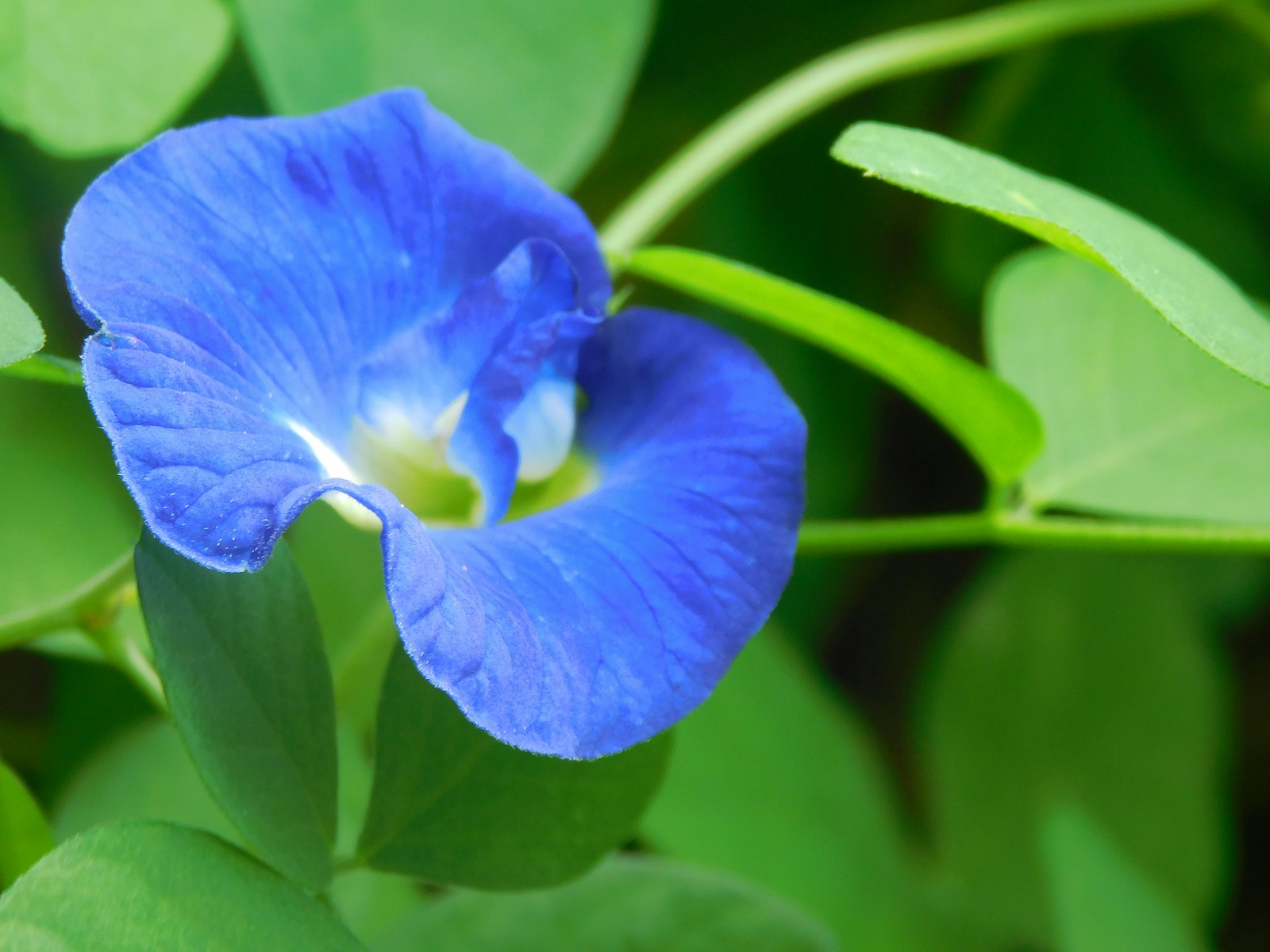
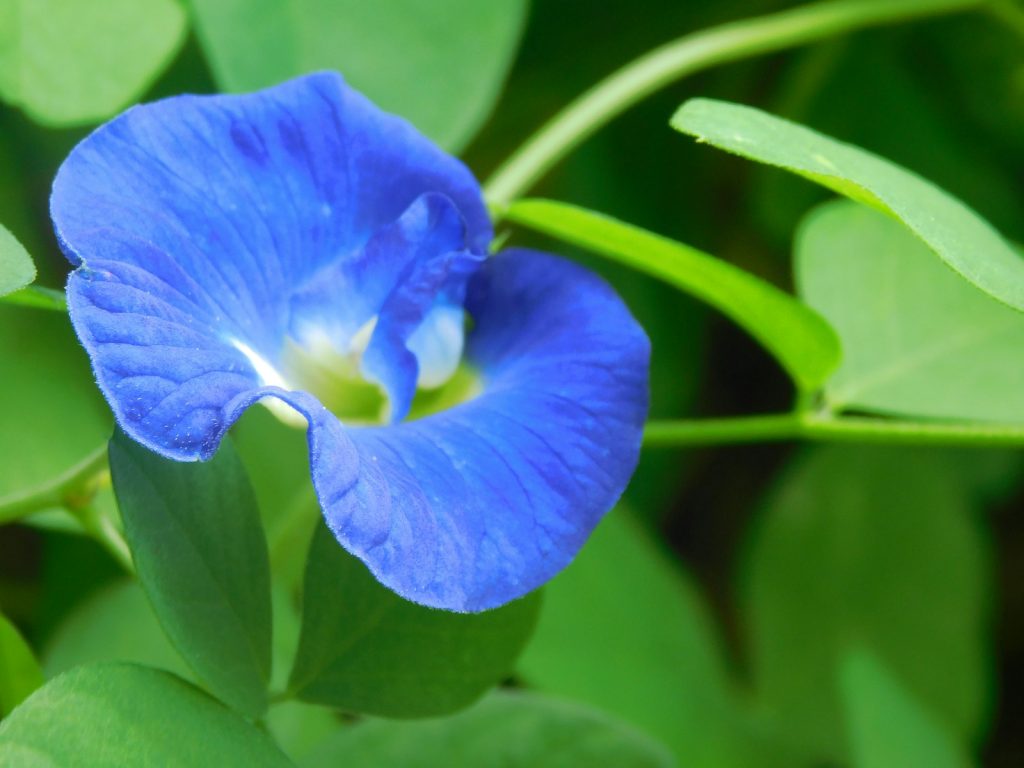
Butterfly pea for the cocktail trade means sourcing dried Clitoria ternatea flowers — or their water-soluble extract — as the active color-change ingredient in cocktails, mocktails and ready-to-drink beverages. The core mechanism is chemistry, not marketing: ternatins, the polyacylated delphinidin anthocyanins responsible for the deep blue color, are pH-sensitive. In neutral or mildly alkaline water they appear blue. Add citrus, tonic water, or any acid and the pH drops, shifting the pigment from blue through purple to pink or red depending on dose. That visible, customer-triggered transformation is why butterfly pea has become a serious bar-program ingredient, not just a wellness tea curiosity.
This guide is for bar managers, RTD beverage developers, and procurement buyers who need to buy this ingredient in quantity — whether for a single cocktail bar running through a kilogram a month or a beverage manufacturer planning a container-scale launch. The chemistry is verified. Regulatory status, pricing, and consistency considerations are covered below with appropriate uncertainty language where the facts are inferred rather than settled.
The Color-Change Mechanic: What You Are Actually Buying
Understanding the pH-shift chemistry is not optional for a buyer. It determines which product form you need, how you specify storage, and how you write the CoA requirements you hand to a supplier.
Ternatins — polyacylated delphinidin-3,3′,5′-triglucosides — are the pigments. They belong to the anthocyanin class of flavonoids, found across the plant kingdom in red cabbage, blueberries, and hibiscus, but ternatins are unusual in two ways: they produce a genuinely blue color in neutral solution (most anthocyanins are red-pink at neutral pH), and they carry multiple sugar and acyl groups that make them more stable than simpler anthocyanins under mild processing conditions. That relative stability is part of why butterfly pea extract has attracted FDA color-additive attention and RTD-scale commercial interest.
The color-change sequence matters for formulation:
- pH 7 and above (neutral to alkaline): deep blue. A butterfly pea steep in plain water sits here.
- pH 5–6: blue-purple transition. A dry tonic or lightly acidic mixer begins the shift.
- pH 3–4: pink to red. Fresh lemon juice, citric acid, or an acidic wine completes the shift. At this range you are in a visually distinct and commercially dramatic register.
The practical implication for a bar: the color the customer sees depends on the acid level of the mixer, not just the dose of butterfly pea. A bartender who understands this can design the cocktail so the customer triggers the shift themselves — pouring the tonic over the blue steep is the tableside reveal. One that does not understand it will get inconsistent results and blame the supplier when the issue is formulation.
Whole Flower vs Extract: Choosing the Right Form for Your Bar Program
This is the sourcing decision that matters most for a bar program butterfly pea wholesale buyer. Both forms deliver the color-change cocktail ingredient. They deliver it differently, at different cost structures, and with meaningfully different practical workflows at the bar.
Whole Flowers: For Drama, Steep Control, and In-Bar Theatre
At a cocktail bar making drinks individually — gin and tonics, mezcal spritzes, color-change lemonades — whole dried butterfly pea flowers are the natural starting point. Five to eight dried flowers steeped in 150–200 ml of hot water for five to ten minutes produces a deeply colored blue infusion. That infusion is the cocktail base. The bartender uses it in place of a plain blue syrup or adds it to the spirit before the acid trigger. Some bars steep tableside so the customer watches the blue bloom in real time before the citrus squeeze. That is a bar experience product.
For this use case, grade matters visibly. Premium whole flower at roughly 90% intact petals produces a deep, saturated blue steep. Broken petals or fines will still color the water but may leave visible debris and produce a slightly murkier steep. If your cocktail menu has the flower floating artfully in the glass — a technique that has featured in a number of high-profile bar programs internationally — intact flower quality is the purchase decision, not just color yield.
Whole flower pricing at B2B volumes is indicative in the FOB range of approximately USD 6–12/kg for standard food-grade Indonesian or Vietnamese-origin material, with premium or certified-organic Thai-origin material reaching into the USD 10–20/kg range. These are ranges inferred from sparse public data and analogous herb trade — not firm quotes and not a negotiating anchor. Request a live quote with your specific volume, grade, and origin requirements.
Extract: For RTD Scale, Consistent Dosing, and Production Lines
A bar running through a kilogram of whole flowers per month has a manageable infusion workflow. An RTD beverage manufacturer filling tens of thousands of bottles per run does not. For production-scale butterfly pea color, water-soluble extract — either spray-dried powder with a standardized ternatin concentration or a concentrated liquid extract — is the practical form.
Extract eliminates the steep-and-filter step entirely. A calibrated dose of extract dissolves directly into the production batch, delivers a defined color intensity based on the CoA absorbance spec, and behaves consistently across lots provided the supplier has standardized their extraction process. For a large RTD operation, this matters more than any per-kilogram headline price difference between extract and whole flower.
Spray-dried extract carries a higher per-kilogram price than whole flower, but cost-per-color-unit — how many liters of finished product at target color intensity does each kilogram color — typically favors extract at volume. The ratio depends on the extract’s ternatin concentration and your target formulation color depth. The calculation requires actual CoA data, not catalog claims. Any reputable extract supplier should provide an absorbance measurement at the relevant wavelength range (approximately 560–620 nm for ternatin pigments) so you can compare color strength between suppliers and across production lots.
Powder from ground dried flower is a third option. It is closer to whole flower on the processing scale than spray-dried extract and sits in between on cost-per-color-unit. It works in applications where some dispersion into solution is acceptable — a latte mix, a powdered beverage format — but in a bottled RTD where visual clarity matters, the insoluble fiber in ground flower powder creates a settling issue that extract avoids. Know which form your specific product needs before sampling.
| Attribute | Whole flower | Ground flower powder | Spray-dried water-soluble extract |
|---|---|---|---|
| Best use case | Individual cocktails, tableside theatre, infusion-based bar programs | Powdered beverage formats, latte mixes, small-batch RTD | RTD bottled beverages, large-scale production, strict color consistency |
| Color yield | Depends on steep time, water temp, flower grade | Moderate; tied to feedstock anthocyanin level | High; standardizable via absorbance spec on CoA |
| Production workflow | Steep + filter per batch | Dissolve/disperse; may require agitation | Dissolve directly; cleanest integration |
| Clarity in bottle | Good once filtered | May leave fiber sediment; use with care | Excellent; no fiber fraction |
| Indicative FOB price range | ~USD 6–12/kg standard; ~USD 10–20/kg premium/organic [indicative, request live quote] | ~USD 6–10/kg [indicative] | Higher per-kg; lower cost-per-color-unit at scale [by quote] |
| US regulatory status | Conventional herbal food; dried tea/tisane; no color-additive approval for infusion | Conventional herbal food; not covered by 21 CFR 73.69 | Water extract approved as color additive, 21 CFR 73.69 [verify current category scope] |
| EU status | Novel food — NOT authorized for EU food use | Novel food — NOT authorized for EU food use | Novel food — NOT authorized for EU food use |
Lot-to-Lot Consistency: The Real Challenge in a Bar Program
A single sample order will tell you whether butterfly pea works in your cocktail. It will not tell you whether the next order will produce the same color. For a bar with a signature color-change cocktail on the menu, lot-to-lot consistency is the sourcing problem, and it is one the industry underserves on the specification side.
The variables that drive color variation between lots are predictable once you understand the chemistry. Anthocyanin content in the raw flower varies with growing conditions, harvest timing, and drying protocol. Flowers picked fully open in the morning and dried at controlled low temperatures retain more ternatin than flowers harvested in the afternoon heat and sun-dried at ambient temperature — though the specific drying specs are grower-practice based rather than rigorously controlled-trial data. Light, oxygen, and heat during drying and storage all degrade ternatins before the flower reaches you. A lot that has sat in a poorly sealed warehouse for four months may steep significantly paler than a freshly dried lot of the same origin and grade.
Two things you can ask for to manage this:
A CoA with Color Strength (Absorbance) Measurement
Not every supplier provides this for whole flower. For extract, it is standard. For whole flower supplying a bar program, it is worth requesting: an absorbance measurement at the relevant wavelength (roughly 560–620 nm) on a standard extraction — say, a defined weight of flower steeped in a defined volume of water at a defined temperature for a defined time. This creates a basis for comparing color strength between lots. If the first lot had an absorbance of 0.8 at your standard extraction and the second lot comes in at 0.5, you now know to adjust dose rather than discovering the problem after the first round of inconsistent cocktails leaves a Saturday night crowd confused.
Some suppliers will not have the equipment for this. Others do. Asking the question tells you something about the supplier regardless of the answer.
Shelf Life and Storage Discipline
Ternatins degrade with moisture, oxygen, and light. Industry-standard shelf life for properly dried, airtight-packed dried butterfly pea flowers is typically stated as 18–24 months from production — this is a supplier-stated and general-herb-norm figure, not a peer-reviewed butterfly-pea-specific standard, but it is a workable contract reference point. Request a minimum remaining shelf life at point of shipment — 18 months remaining is a reasonable ask on a bulk order — and confirm the packaging is airtight food-grade polyethylene with outer carton protection.
At the bar, storage matters as much as the source product. Flowers stored in a clear glass jar on a bar shelf, exposed to ambient light, will fade noticeably over weeks. Opaque airtight tins or dark-labeled containers in a cool, dry area will preserve the ternatin content and color yield through the season. Build your bar SOP around that.
Mixology Blue Flower Sourcing: Regulatory Reality Check
Most sourcing guides for bartenders skip the regulatory section. That is a problem for buyers building branded RTD products or exporting to certain markets. The regulatory landscape for butterfly pea is not uniform, and one market’s approved colorant is another market’s illegal food additive.
United States
The US is the most commercially developed regulated market for butterfly pea as a beverage ingredient. In 2021, the FDA approved butterfly pea flower water extract as a color additive exempt from certification under 21 CFR 73.69. This approval has been extended over time to a growing list of food categories including beverages, yogurt, confectionery, dairy drinks, and others. You must confirm the current exact scope of approved categories directly in 21 CFR 73.69 — the CFR is amended periodically and the full current list was not directly verified for this guide. [VERIFY current approved category scope.]
Three clarifications that matter for an RTD buyer:
- The approval is for water extract, not for infused butterfly pea liquid prepared at the bar or for ground flower powder. If you are building an RTD product and relying on the color-additive approval, the extract form as specified in 21 CFR 73.69 is what the regulation covers, not a house-made infusion or milled powder.
- The approval is for color function only. It does not license any health claim, functional benefit language, or disease claim on the label. Avoid those claims regardless of market.
- Standard import obligations still apply: FDA Prior Notice, FSMA/FSVP supplier verification program requirements for the importer, facility registration for the foreign supplier, and EPA pesticide tolerance compliance. The color-additive approval does not waive any of these.
For a craft cocktail bar buying dried flowers as a conventional herbal ingredient — steeped and used as a beverage ingredient on-premises — the regulatory situation is simpler. Dried butterfly pea flowers sold as an herbal tisane are treated as conventional food in the US, with no formal color-additive approval required for in-bar infusion use. The 21 CFR 73.69 approval becomes relevant when the extract is used as a color additive in a regulated packaged food or beverage product.
European Union — A Clear Warning
Clitoria ternatea as a food ingredient in the EU is classified as a novel food and is not currently authorized. This is not a gray area. EFSA raised safety objections (reference EFSA EN-7084). The European Commission terminated the authorization procedure (Decision C(2026)776). Active RASFF enforcement notifications have followed — Austria 2025.0444, Belgium 2024 involving Cambodian-origin flowers — and Belgium has reportedly seen recall actions.
This means a European bar or beverage producer cannot legally purchase butterfly pea flower as a food ingredient, cannot legally use it in a commercial cocktail sold to customers, and cannot label a product containing it for food retail. The novel-food wall applies to all forms: whole flower, ground powder, and water extract alike. Member-state supplement rules differ and are currently uncertain across the bloc — verify with qualified EU regulatory counsel for each specific market and product type before any commercial use. Organic certification does not override the novel-food non-authorization.
Buyers sourcing for markets outside the US and EU — Australia, Japan, South Korea, Singapore, the Gulf — face different regulatory environments, generally more permissive but each with its own requirements. Confirm for your specific destination and product format before committing to a production run.
If you are planning a bar program or RTD launch and need a sourcing conversation that covers your specific regulatory destination, use our enquiry form or reach us on WhatsApp at +62 811 3941 4563 with your market, product format, and target volume — we will make sure the RFQ routes to a supplier who can address your compliance documentation needs.
Storage Conditions: What the Chemistry Demands
Bars routinely buy premium spirits and store them correctly. Butterfly pea flowers — and extract — get less careful treatment, which is a mistake given that ternatin degradation is real and measurable.
The three enemies of ternatin stability are heat, light, and oxygen. In that order of practical impact for a bar environment:
Light is the easiest to address and the most often neglected. A clear jar of blue flowers sitting under bar lighting or direct sunlight will fade noticeably within weeks. Store in opaque, airtight tins or sealed dark bags in a drawer or cupboard. Do not display them as counter décor if you want consistent color yield across the season.
Heat matters less for short-term bar storage than for the drying and shipping phase — the supplier controls that. But storing product above a heat vent, in a hot storage room, or next to commercial refrigeration exhaust vents will accelerate degradation. Cool and dry is the correct environment.
Oxygen is the issue once a bag or container is opened. Each time you open a container and close it, the headspace air exchanges. Resealing tightly, or decanting into a vacuum-sealed container for the working bar portion, extends usable life. A large supply order should stay in the original sealed packaging until needed.
For extract, hygroscopicity is an additional consideration. Spray-dried extract with a maltodextrin carrier will absorb moisture from ambient air once opened, leading to clumping that makes dosing inconsistent. Keep opened extract in a dry, sealed container, and if you are ordering bar-program extract in bulk, consider the pack size carefully — a 5-kg foil bag opened and reclosed over two months in a bar environment will not perform like the same product freshly opened.
What to Include in Your Bar Program RFQ
A vague enquiry produces a vague quote. Mixology blue flower sourcing at commercial scale works best when the buyer comes to the conversation with a clear brief. Here is what a well-structured bar program request should specify:
- Product form
- Whole flower (specify premium grade or standard), ground powder (specify mesh size), or spray-dried water-soluble extract (specify target ternatin concentration or absorbance spec if known). These are different products with different pricing and different CoA requirements.
- Volume
- Monthly or quarterly volume, and the minimum you can commit to for an initial trial order. Small wholesale entry typically starts around 20–50 kg; serious B2B FOB orders run 100–500 kg and above. These are indicative ranges — your supplier will state their specific MOQ.
- Origin preference
- Indonesian origin is the most cost-competitive for standard food-grade material. Thai origin carries a premium positioning in some markets and a perception of higher quality at the premium tier. Vietnamese origin overlaps with Indonesian on price. If origin is a selling point on your menu — “infused with Javanese butterfly pea flower” — specify it up front and request origin documentation.
- Certification requirements
- Organic (USDA NOP or EU Reg. 2018/848 — note EU certification does not override the EU novel-food non-authorization for food use), food-grade GMP/HACCP/ISO 22000. For the US market: FDA-registered facility, FSMA/FSVP-compatible supplier documentation.
- Required CoA fields
- Moisture content (ideally ≤10% for premium grade, ≤12% standard — inferred from general dried-herb practice, not a butterfly-pea-specific standard), water activity (≤0.6 ideal), microbiology panel (total plate count, yeast and mold, Salmonella absent per 25 g, E. coli absent per 25 g), pesticide multi-residue (LC/GC-MS/MS against destination-market MRLs), heavy metals (Pb/Cd/As/Hg by ICP-MS), and color strength or absorbance data.
- Destination market
- This determines applicable import regulations, pesticide MRL thresholds, and whether the 21 CFR 73.69 color-additive scope matters to you. State it explicitly.
Pricing: What You Can Actually Know
There is no public price board for butterfly pea flower at B2B trade-desk level. Public listings are sparse, often retail-adjacent, and structurally unreliable as negotiating benchmarks. What is known from limited public data and analogous herb trade comparisons:
For standard food-grade whole flower at B2B volumes (100 kg and above), indicative FOB ranges from Indonesian and Vietnamese origins sit roughly in the USD 6–12/kg band for non-organic material. Thai premium-positioned product runs higher, with top-end certified organic grades reaching the USD 12–20/kg range. These numbers are informed estimates, not firm prices — real B2B prices are negotiated privately and vary substantially with grade, certification, volume, seasonality, and logistics. Do not use this range as a negotiating anchor without a live quote from a verified supplier who knows your specific volume and destination.
For ground flower powder, indicative FOB ranges inferred from available data suggest approximately USD 6–10/kg for standard non-organic material — reflecting that broken-petals or fines feedstock typically inputs the powder grade. For spray-dried extract, the per-kilogram price is higher than both, but cost-per-color-unit at production scale typically favors extract over whole flower or ground powder for RTD volumes. Run the actual calculation with CoA absorbance data from a specific lot before making a sourcing decision on price alone.
See our powder and extract wholesale guide for a fuller treatment of cost-per-color-unit thinking, and the applications page for a complete form-by-application matching framework across all butterfly pea end uses.
To get a live, volume-specific quote for your bar program or RTD project, reach us via our enquiry form or on WhatsApp at +62 811 3941 4563 or email at [email protected]. Include your form preference, volume, destination, and any certification requirements — that information gets the RFQ to the right supplier without a round of back-and-forth.
Frequently Asked Questions
Why does butterfly pea turn purple or pink when I add citrus to a cocktail?
The color change is driven by pH. Butterfly pea flowers contain ternatins — a class of polyacylated anthocyanin pigments that appear blue in neutral or mildly alkaline water. When you add an acidic ingredient (lemon juice, citric acid, tonic water, dry wine), the pH of the liquid drops. Lower pH shifts the molecular structure of the ternatin pigment, first to purple around pH 5–6, then to pink or red around pH 3–4. The shift is rapid, visible, and reversible in theory — though reversing it at a bar is not practical. This is verified anthocyanin chemistry, not a supplier claim.
Which butterfly pea form works best for an individual cocktail bar?
Whole dried flowers at premium grade (approximately 90% intact petals, deep uniform blue with no browning). Five to eight flowers steeped in hot water produce a blue infusion that serves as the cocktail base. The intact flower provides visual drama both in the steep and, if used as a garnish, in the glass. Ground flower powder works for batched applications where clarity is less critical. Water-soluble extract is the right choice if you are scaling to RTD production volumes or if your bar volume makes fresh steeping impractical to standardize.
How do I ensure consistent color across cocktail servings throughout a bar season?
Request a CoA with an absorbance measurement on a standardized extraction from every lot you buy — roughly 560–620 nm for ternatin pigments. This gives you a color-strength benchmark to compare across lots. If a lot comes in lower than your reference, adjust your steep dose upward before it reaches customers. Store product in opaque, airtight containers away from heat and light. Set a bar SOP for steep time, water temperature, and dose per serving, and re-test when you receive a new lot rather than assuming consistency. The biggest source of color variation is usually not the supplier — it is uncontrolled bar storage and variable steeping practice.
Can I use butterfly pea extract in bottled RTD cocktails sold in the US?
The FDA approved butterfly pea flower water extract as a color additive exempt from certification under 21 CFR 73.69 in 2021, with approved food categories expanded over time to include beverages among others. This approval is relevant if you are using the extract as a color additive in a regulated bottled product. You must confirm the current exact scope of approved food categories in 21 CFR 73.69 directly — the CFR is amended and the full current list requires direct reference to the regulation, not this guide. [VERIFY] The approval covers water extract as defined in 21 CFR 73.69, not house-made infusions or ground powder. Standard FDA import requirements (Prior Notice, FSMA/FSVP, facility registration) apply regardless. This is trade information, not legal or regulatory advice — confirm with your food law counsel.
Why can European bars not use butterfly pea flowers commercially?
Clitoria ternatea as a food ingredient in the EU is classified as a novel food and is currently not authorized for food or beverage use. EFSA raised safety objections (EFSA EN-7084) against the authorization application, and the European Commission terminated the procedure (Decision C(2026)776). RASFF enforcement notifications have followed, including actions in Austria (2025.0444) and Belgium (2024), with reported recalls. This applies to all forms — whole flower, powder, and water extract — for food or beverage use. Cosmetic use falls under a different regulatory framework. Member-state supplement rules vary and are legally uncertain across the EU. Any EU bar or beverage producer should seek qualified regulatory counsel before any commercial use of this ingredient in food or drink.