This page collects the questions this desk receives most often from buyers researching butterfly pea flower wholesale — procurement teams, tea brand founders, beverage formulators, and natural-colorant buyers working out whether Clitoria ternatea from Indonesia belongs in their supply chain. The answers are sourced where sourcing is possible and candid where it is not. Nothing here is legal, customs, regulatory, or medical advice; it is trade information, and buyers must verify compliance with their own licensed broker and the relevant authorities before importing.
If your question is not below, or if you want a specific live quote rather than an indicative range, use our enquiry form or reach us on WhatsApp at +62 811 3941 4563. The desk routes qualified requests to a vetted Indonesian export partner.
What Is the Minimum Order Quantity (MOQ) for Butterfly Pea Flower?
There is no single industry-standard MOQ. The figure depends on the supplier, the product form, the grade, and whether you are buying from stock or ordering a production run. That said, the trade broadly segments into two practical bands, and understanding which band you are in before you start contacting suppliers saves a lot of time.
Small Wholesale: Roughly 20–50 kg
At this volume, you are in air-freight territory. The per-kg unit cost sits near the top of the indicative FOB range for whatever grade you are buying because the supplier’s per-unit overhead — packing, documentation, handling — is high relative to the order value. One public Vietnamese listing on a B2B marketplace noted an MOQ of 50 kg in 5 kg food-grade PE bags, which is a useful working reference for the small-lot floor [single-source, unverified; treat as indicative only]. This tier works for a tea brand doing a trial run or a formulator verifying color performance before committing volume.
Serious B2B / FOB: Roughly 100–500 kg and Above
This is the range where FOB ocean-freight economics start to make sense and where suppliers will discuss real pricing. Indonesian and Thai suppliers generally expect inquiries in this band before treating a buyer as a commercial account rather than a sample prospect. A full 20-foot container of properly dried whole flowers runs roughly 3–5 metric tonnes (MT), given that dried butterfly pea is light and bulky — bulk density inferred at roughly 100–150 kg per cubic metre from analogous dried botanicals; no butterfly-pea-specific figure is published. A 40-foot container scales to roughly 6–10 MT. These are estimated figures, not confirmed FCL data.
MOQs for private-label and OEM formats — retail pouches, pyramid tea bags, custom blends — are set per SKU and typically run to hundreds or thousands of retail units, or roughly 50–100 kg of bulk ingredient per SKU [indicative, unverified at source]. Powder has its own MOQ logic, often aligned with the processor’s minimum run for milling and quality control.
The bottom line on butterfly pea MOQ questions: state your volume and product form clearly in your first inquiry and ask for the supplier’s minimum. The number they give you is often negotiable if you can commit to a follow-on order roadmap, but it is less negotiable if you push them below their drying-batch economics. For a live MOQ and price for your specification, reach out via the enquiry form or WhatsApp.
What Is the FOB Price Per Kg?
Every answer to this butterfly pea FOB price question must begin with the same caveat: there is no posted price board for this commodity, and any number published without a grade, volume, certification, and origin qualifier is not useful for procurement. The ranges below are the most transparent indicative brackets this desk can publish, reasoned from sparse public listings and analogous herb-market pricing. They are not firm quotes and must not be used as the basis for a purchasing decision without a live quote from a vetted exporter.
| Form / Grade | Origin | Indicative Range (USD/kg) |
|---|---|---|
| Standard food-grade whole flower, non-organic, bulk | Indonesia / Vietnam | ~USD 6–12/kg |
| Standard food-grade whole flower, non-organic, bulk | Thailand (standard) | ~USD 8–15/kg |
| Premium select whole flower, organic or high-grade | Thailand (top end) | ~USD 12–20/kg |
| Broken petals / fines / blend-grade | SE Asia (various) | ~USD 6–10/kg |
| Powder (ground dried flower) | SE Asia (various) | Variable; one unverified listing noted ~USD 17.9/kg [VERIFY]; spray-dried extract commands more |
The price levers are grade, organic certification, volume, and origin. A premium certified Thai lot at the top of the market can be two to three times the price of a standard Indonesian bulk lot — and both are legitimate positions reflecting real cost differences in the supply chain. For deeper context on what moves the number, see our FOB price guide.
Remember that FOB stops at the ship’s rail. Ocean freight, insurance, destination port charges, import duty, and clearance fees are all on top. For light, bulky cargo like dried flowers, expect landed cost to run materially above FOB — get a full freight quote from your forwarder before building your cost model.
Is It Legal to Import Butterfly Pea Flower into the EU?
This is the most important question on this page and the one where a wrong answer can cost a buyer real money. Read it carefully.
Clitoria ternatea used as a food — including as a tea, a food colorant, or a food ingredient — is currently NOT authorized for sale in the EU under Regulation (EU) 2015/2283 on novel foods. This is not a gray area or a country-by-country technicality. It is a hard stop at the EU level.
Here is the specific record, as far as this desk can establish:
- A traditional-food notification for Clitoria ternatea was filed under the novel-food procedure.
- EFSA raised safety objections (reference EFSA EN-7084).
- The European Commission terminated the authorization procedure (Commission Decision C(2026)776).
- Enforcement has followed. RASFF notifications were issued for Austria (alert reference 2025.0444) and Belgium (reporting flowers of Cambodian origin). Belgium reportedly recalled butterfly pea teas from retail.
Active RASFF enforcement means that product moving through EU distribution channels as a food or tea is being flagged, recalled, and reported. A good COA, organic certification, and a low FOB price do not override novel-food non-authorization. The product cannot legally enter EU commerce as a food at this time regardless of how well it is grown or packaged.
A few complications buyers sometimes ask about:
- What about food supplements?
- Supplement regulation varies by EU member state. Some member states have more permissive frameworks for botanical supplements than others. Whether a given format and dosage qualifies as a supplement rather than a novel food in a specific member state is a jurisdiction-specific question that requires an EU food law specialist, not a trade desk. Do not assume supplement status without specialist advice.
- What about cosmetics?
- The novel-food regulation covers food use. Cosmetic applications of butterfly pea extract or powder fall under a different regulatory framework (EU Cosmetics Regulation 1223/2009). This desk does not cover cosmetics compliance; seek specialist advice if that is your market.
- Does organic certification change the situation?
- No. Organic certification addresses how the crop was grown, not whether it is authorized as a food. An organic non-authorized product is still a non-authorized product.
The desk’s position: any EU buyer considering butterfly pea for the food market must confirm current novel-food status with an EU food law specialist before placing any order. Do not order first and ask regulatory questions later. The legal landscape may shift — novel-food authorizations are amended periodically — but this desk cannot track real-time regulatory changes, and the information above reflects the position as understood at the time of writing. Verify before you buy.
Is Butterfly Pea Flower Legal to Import into the United States?
The US picture is meaningfully more permissive than the EU, though it is not without its own compliance requirements. The two distinct regulatory tracks are worth keeping separate.
Dried Flower / Herbal Tea: Conventional Food
The dried whole flower or broken petals, sold as an herbal tisane, is treated in the US as a conventional food under FDA jurisdiction. It is not a drug and not a dietary supplement (unless labeled and marketed as one). No FDA enforcement action against butterfly pea herbal tea has been noted. Many US brands sell it without incident. This does not mean no compliance is required — it means the product falls into the normal food import framework rather than a novel-food authorization process.
That normal framework includes:
- FDA Prior Notice: Required under the Bioterrorism Act for all food shipments to the US. Filed electronically before the shipment arrives.
- FSMA / FSVP (Foreign Supplier Verification Program): US importers are responsible for verifying that their foreign suppliers meet US food safety standards. This means documented hazard analysis and supplier verification activities, not just a certificate on file.
- Foreign facility registration: Food facilities, including processors and exporters, must register with FDA.
- Pesticide tolerances: EPA sets maximum residue limits (MRLs) for pesticides in imported food. Butterfly pea flower from smallholder farms with undisclosed pesticide practices is a real risk here. Demand multi-residue pesticide testing from your supplier.
- Labeling: Standard FDA food labeling requirements apply, including ingredient statement, net weight, and country of origin. Avoid any disease claims on the label — they create drug-misbranding exposure.
Butterfly Pea Flower Extract: Approved Color Additive
In 2021, the FDA approved butterfly pea flower water extract as a color additive exempt from certification, listed at 21 CFR §73.69. Approved food categories have been expanded over time and at the time of writing cover an increasingly broad range of applications including beverages, yogurts, candy, pretzels, dairy drinks, RTE products, and others. Confirm the exact current list of approved food categories by checking the current CFR text directly — the desk does not reproduce regulatory schedules that change, and a category not listed at the time of your specific use is not authorized [FLAG; confirm with a regulatory specialist].
The extract approval is specific to the water extract of dried flowers. It is not a blanket approval for all butterfly pea preparations. Powder sold as a colorant for use in categories not listed in §73.69 would need separate regulatory analysis.
Whole Flower vs Powder vs Extract: Which Should I Buy?
The right form depends entirely on your application. Buying the wrong form costs money and time. Here is a quick decision map; the applications page covers each use case in more detail.
- Whole dried flowers
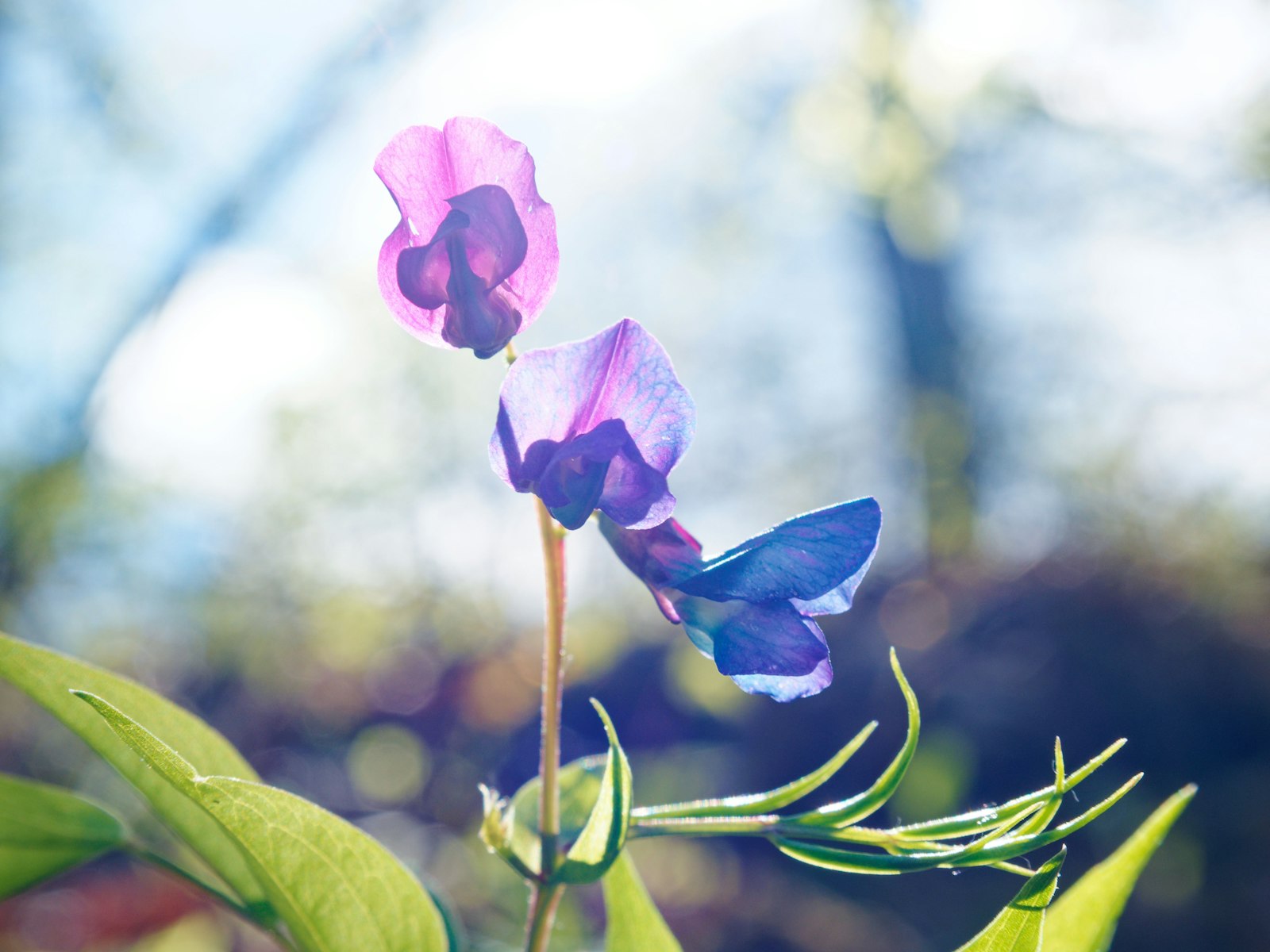
- The premium form. Deep blue, 5 cm pea-shaped flowers with visible intact petals — exactly what a specialty tea brand, upscale cocktail bar, or direct-to-consumer herbal tea company wants. Color-change novelty (blue to purple-pink as acid is added) is most dramatic with whole flowers in a clear vessel. Premium tea grade commonly specifies ≥90% intact flowers. Price is toward the top of the FOB range.
- Broken petals / fines
- Lower grade, lower price. Suits extract feedstock, blended teas where appearance is secondary, or any application where color yield matters more than visual presentation. Color performance per kilogram can be comparable to whole flower if the anthocyanin content is intact, but it is not guaranteed — specify color strength in your CoA if this is your primary concern.
- Powder (ground dried flower)
- Suited for latte blends, colorant applications in solid food or powder formats, capsule fill, and nutraceutical manufacturing. Mesh size matters for dissolution and color yield. Not the same thing as spray-dried extract — it is simply ground flower, sometimes with inferior solubility depending on sieve fraction. Often double-layer LDPE packed in bags up to roughly 20 kg [indicative, unverified].
- Water-soluble extract / spray-dried extract
- Processed for maximum solubility and color yield per gram, particularly suited for RTD beverage colorant applications where dose accuracy and reproducibility matter. This is the form addressed by the FDA color-additive approval at 21 CFR §73.69. More expensive per kilogram than powder, but cost-per-color-unit in a formulated beverage can be lower if the extract is sufficiently standardized. Demand a standardized anthocyanin content specification, not just an origin claim.
Before committing to a form, ask yourself: Is visible flower drama part of your product? Buy whole. Is color yield and solubility in a liquid system the priority? Buy extract. Is cost-per-batch the constraint? Broken petals or non-standardized powder may serve. Every application choice is also an EU compliance question — the novel-food non-authorization applies to all forms for EU food use.
What Certifications Can Butterfly Pea Flower Suppliers Offer?
Several certifications circulate in buyer conversations and supplier listings. This desk’s position is consistent: every certification claim is self-reported until you verify it independently at the issuing body. Here is a plain-language rundown of what each means and how to verify it.
USDA NOP Organic
The US National Organic Program certificate is issued by an USDA-accredited certifying agent (not by USDA itself). A valid certificate names the certified operation, the certifying agent, the scope of certification, and the validity period. Verify by checking the USDA Organic Integrity database or contacting the named certifying agent directly. Organic certification covers how the crop was grown — no synthetic pesticides or synthetic fertilizers under NOP rules — and requires the entire handling chain to be certified if the product is sold as organic in the US. An Indonesian grower can hold NOP certification through an accredited agent operating internationally. Confirm who the certifying agent is before paying an organic premium [VERIFY at source].
EU Organic (Regulation 2018/848)
Equivalent to USDA NOP in principle, but issued under EU rules and requiring a Certificate of Inspection (COI) in the TRACES system for import into the EU. Important caveat for butterfly pea: EU organic certification does not resolve the novel-food non-authorization. A certified organic product that is not authorized as a novel food cannot lawfully enter EU food commerce regardless of its organic status. For US buyers sourcing EU-organic-certified Indonesian product, verify the certifying body is recognized under EU-US organic equivalence arrangements [confirm current status].
HACCP (Hazard Analysis and Critical Control Points)
HACCP is a food-safety management system, not a third-party certification in the same sense as organic. A supplier claiming HACCP compliance should be able to provide their documented HACCP plan, CCP records, and evidence of regular internal audits. Many exporters in Southeast Asia operate under HACCP-based systems; not all have third-party verification of those systems. Ask for the plan, not just the claim [VERIFY at source].
ISO 22000 / FSSC 22000
ISO 22000 is a manageable international standard for food safety management systems that includes HACCP as a component. FSSC 22000 (Food Safety System Certification) adds a sector-specific prerequisite scheme on top of ISO 22000 and is recognized by GFSI. A valid ISO 22000 or FSSC 22000 certificate is issued by an accredited certification body, carries a certificate number, and has an expiry date. Verify by contacting the certification body named on the certificate. This is a real, verifiable standard — more robust than a self-stated HACCP claim [VERIFY certificate at issuing body].
What Certifications Cannot Do
No certification substitutes for a test-backed COA on the specific lot you are buying. A supplier can be certified and still ship a non-compliant lot. Request the lot-specific COA, not just the company’s corporate certificates. The COA should include: moisture content, water activity, microbiological panel (TPC, yeast/mold, Salmonella and E. coli absent per 25 g), pesticide multi-residue screen against destination MRLs, heavy metals (lead, cadmium, arsenic, mercury by ICP-MS), and if you are buying for color performance, anthocyanin color strength (absorbance at approximately 560–620 nm).
What HS Code Does Butterfly Pea Flower Use?
There is no single correct answer to the butterfly pea HS code question. Classification depends on the product form, the declared use, and the national tariff schedule of the importing country. Getting the code wrong creates customs delays, duty recalculation, or seizure. Getting it right requires a binding ruling from the customs authority of your importing country or, at minimum, a confirmed opinion from a licensed customs broker.
That said, the headings most commonly considered by traders and brokers are:
- HS 1211 — Plants and parts of plants used primarily in pharmacy, perfumery, insecticidal or similar purposes
- Commonly argued for bulk dried herbal and medicinal flowers entering the US and many other markets. A reasonable starting point for inquiry with your broker if the product is sold as a herbal ingredient.
- HS 0603 / 0604 — Cut flowers / ornamental foliage
- Relevant if the product is being sold as decorative dried flowers or potpourri rather than a food or herbal ingredient. Not the typical heading for export-volume B2B trade in food-grade dried flowers.
- HS 1404 — Vegetable products not elsewhere specified
- A residual category sometimes used for powder or forms that do not fit neatly under HS 1211 or HS 2106.
- HS 2106 — Food preparations not elsewhere specified
- May apply to finished retail herbal tea blends, sachets, or teabag formats where the product is a prepared food rather than a raw ingredient. Less common for bulk dried whole flower.
- HS 0902 — Tea (Camellia sinensis)
- Does not apply. Butterfly pea is not Camellia sinensis and should never be classified under this heading.
Get a binding tariff ruling from the customs authority or a licensed broker in your importing country before shipping. Do not rely on what a seller tells you their code is — the importing-country classification is what determines your duty liability.
For your RFQ, include the product form, declared use, and destination country so the export partner can provide the heading they are using for Indonesian export documentation. This is trade information, not customs advice; a licensed broker must confirm the applicable heading for your specific shipment.
How Do I Get a Sample?
Sample ordering is the right first step before committing to any butterfly pea wholesale volume, and this desk routes sample requests to the same vetted partner as commercial RFQs.
A few things worth knowing about samples before you start:
- Paid samples are standard. Expect to pay for the product plus international shipping at express rates. Sample pricing is well above FOB export levels — the overhead of packing a 0.5–2 kg lot and sending it by courier is disproportionate to the product value. This is not a markup; it is the cost structure of small shipments. Treat sample cost as sunk.
- Request a COA alongside the physical sample. A physical sample without analytical data tells you only what the product looks like on your desk, not whether it meets your food-safety or regulatory requirements. The COA should cover moisture, water activity, microbiology, pesticide screen, and heavy metals at minimum.
- Evaluate color performance in your application, not in a cup of water. Color response is pH-dependent and matrix-dependent. Butterfly pea performs differently in a lemon-spiked cocktail, a dairy-based latte, a baked good, or a neutral herbal tea. Test in your actual system at your expected dosage, not in a generic comparison.
- A good sample does not guarantee production lots. This is the most common trap in herbal commodity sourcing. A production run may draw from a different harvest batch with different drying conditions. Once you have approved a sample, negotiate a quality clause into your purchase agreement that ties the production lot to the approved sample’s COA specifications.
For full guidance on what to evaluate and how to step up from sample to trial order to FCL, see our sample ordering page. To place a sample request now, use the enquiry form or WhatsApp at +62 811 3941 4563.
Are You the Exporter? Who Are We Buying From?
No, this desk is not the exporter, manufacturer, or exporter-of-record. We are an independent sourcing and trade-information desk for Indonesian butterfly pea flower. We curate verified makers and processors, publish trade information, and route qualified RFQs to a vetted Indonesian export partner who quotes, contracts, and ships. We are not a plantation, we do not manufacture or process product, and we do not take title to goods.
Where we earn a referral fee on introductions we say so plainly. No one can pay to change what we publish; if you use our free guidance and proceed with the vetted partner, they may pay us a referral fee at no extra cost to you. Our editorial guidance is not influenced by that arrangement — the reason the EU novel-food warning is the first thing you read on every relevant page is that an honest sourcing desk puts the buyer’s legal exposure ahead of the transaction.
The vetted partner handles the commercial relationship: quoting, purchase agreement, production, export documentation, phytosanitary certification, and shipment. We do not publish their name here because introductions are made through the RFQ process and we do not endorse any single supplier publicly without ongoing verification. The desk does not fabricate supplier names, and any specific capability claim for a named maker is flagged [VERIFY] until confirmed.
Ready to move from reading to sourcing? Submit your specification and target volume and we will route your request. WhatsApp: +62 811 3941 4563. Email: [email protected].
Additional Questions Buyers Ask
Is butterfly pea flower the same as blue tea?
Yes, in everyday trade language. “Blue tea,” “butterfly pea tea,” and “blue pea flower tea” all refer to an herbal tisane brewed from dried Clitoria ternatea flowers. It is caffeine-free, brews a deep blue infusion, and shifts to purple or pink when acid is added — the pH color-change that drives its visual appeal in cocktails and specialty drinks. It is not related to traditional Camellia sinensis (green, black, oolong, white) tea. EU buyers should note that “blue tea” as a food or beverage is covered by the same novel-food non-authorization that applies to the flower ingredient.
What is the shelf life of bulk dried butterfly pea flowers?
Properly dried, airtight, and stored cool, dark, and dry, dried butterfly pea flowers are typically stated to carry an 18–24 month shelf life by suppliers. A common commercial contract clause uses 24 months from production date. These figures are supplier-stated and consistent with general dried-herb industry norms; they are not the result of published peer-reviewed stability studies specific to this species [FLAG: treat as defensible norm, not species law]. Anthocyanin pigments (ternatins) are sensitive to heat, light, and oxygen, so storage conditions directly affect both color retention and shelf life. Insist on production date, not just expiry date, in your purchase documentation.
What is the color in butterfly pea flower and is it heat-stable?
The blue pigment is a family of polyacylated anthocyanins called ternatins — specifically polyacylated delphinidin-3,3′,5′-triglucosides. They are responsible for the characteristic deep blue color and the pH-dependent color shift (blue in neutral to mildly acidic, purple to pink as pH drops further). Ternatins are moderately heat-sensitive: high drying temperatures degrade them and cause browning or color fade. In food applications they perform best in low-acid, lower-temperature systems; high heat and strongly acidic conditions both compromise color intensity. This is a documented characteristic of anthocyanin pigments generally and butterfly pea ternatins specifically. If heat stability is a critical spec for your application, request color-strength COA data and pilot test in your processing conditions before scaling.
Can I source butterfly pea as USDA organic from Indonesia?
Indonesian growers can hold and have obtained USDA NOP organic certification through accredited certifying agents operating internationally. That certification is available from Indonesia in principle. Whether a specific supplier this desk routes to holds current NOP certification is a question for the live RFQ — do not assume it, verify it. Confirm the certifying agent name and certificate number, then check the USDA Organic Integrity database directly. Organic certification from Indonesia is not common enough that it can be assumed without documentation; treat every claim as [VERIFY] until you have checked the database entry.
What documents should I expect with a butterfly pea export shipment from Indonesia?
For a standard food-ingredient shipment from Indonesia, the document set typically includes: a commercial invoice, a packing list, a bill of lading (ocean) or airway bill, a Certificate of Origin (COO, typically Form E for ASEAN preference or standard Indonesian COO), a Phytosanitary Certificate issued by Indonesia’s National Plant Protection Organization (NPPO), a Health Certificate if required by the destination country, and the lot-specific COA. For organic-certified product, the certification body’s transaction certificate should accompany the lot. For US-bound food imports, the US importer is responsible for FDA Prior Notice and FSVP documentation independently of what the exporter provides. This is a general documentary checklist as trade information; confirm the exact requirements for your destination and HS code with a licensed customs broker before shipping.