Independent sourcing note: We are an independent butterfly pea flower tea B2B sourcing desk — we curate verified Indonesian growers and tea makers and route your RFQ to a vetted partner; we are not the manufacturer, exporter of record, or freight forwarder. Butterfly pea is dried Clitoria ternatea flowers, graded by colour and moisture and also sold as petals, powder, and extract. Figures (MOQ, FOB per kg, lead times) are indicative ranges and vary by grade, season, and volume — final terms are by quote. Compliance (pesticide-residue limits, organic certification, food-contact, and import status such as EU novel-food, which is uncertain) is your responsibility to verify with the supplier and a licensed customs broker — this is general trade information, not legal or regulatory advice. We may earn a sourcing commission on referred orders (referral disclosure).
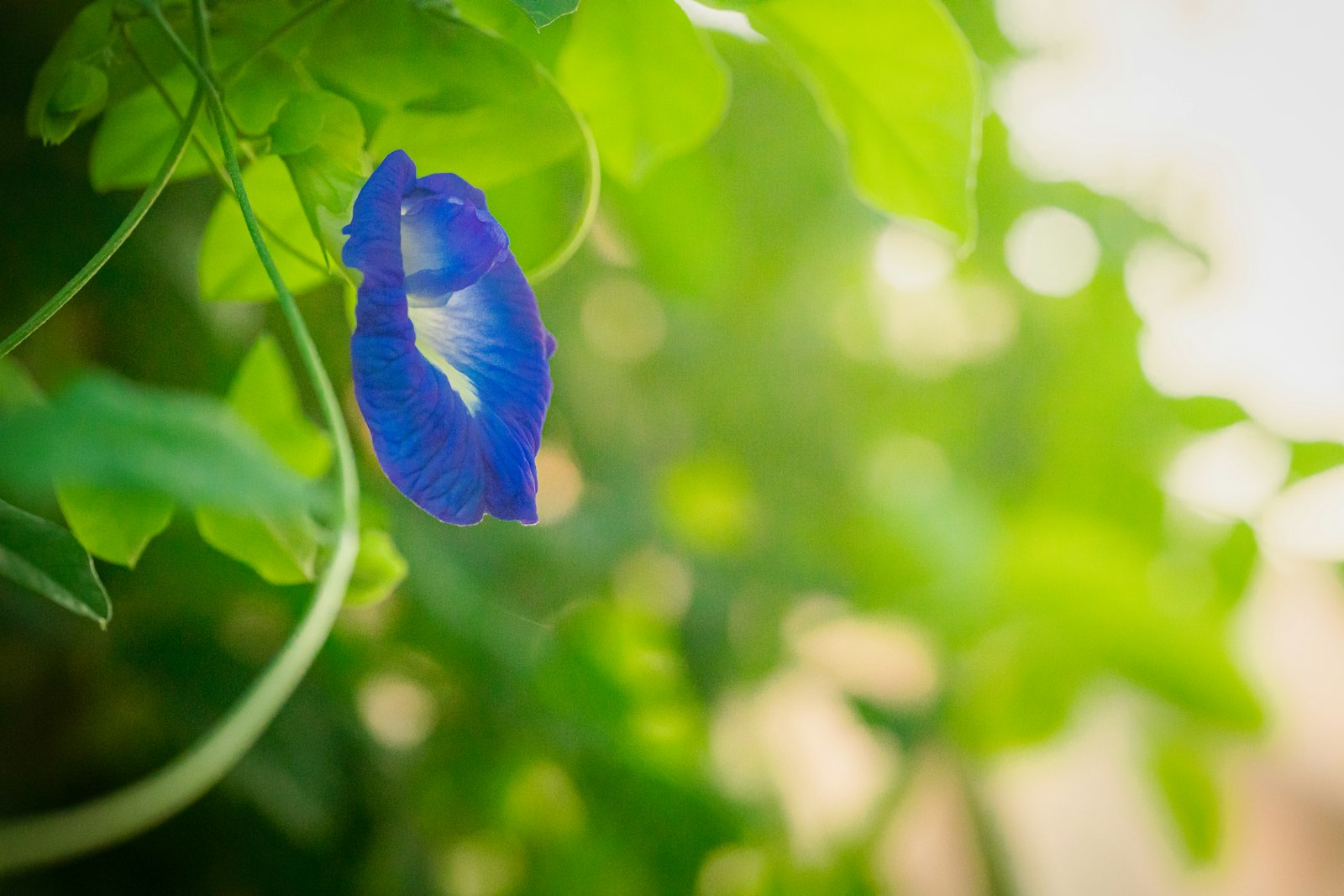
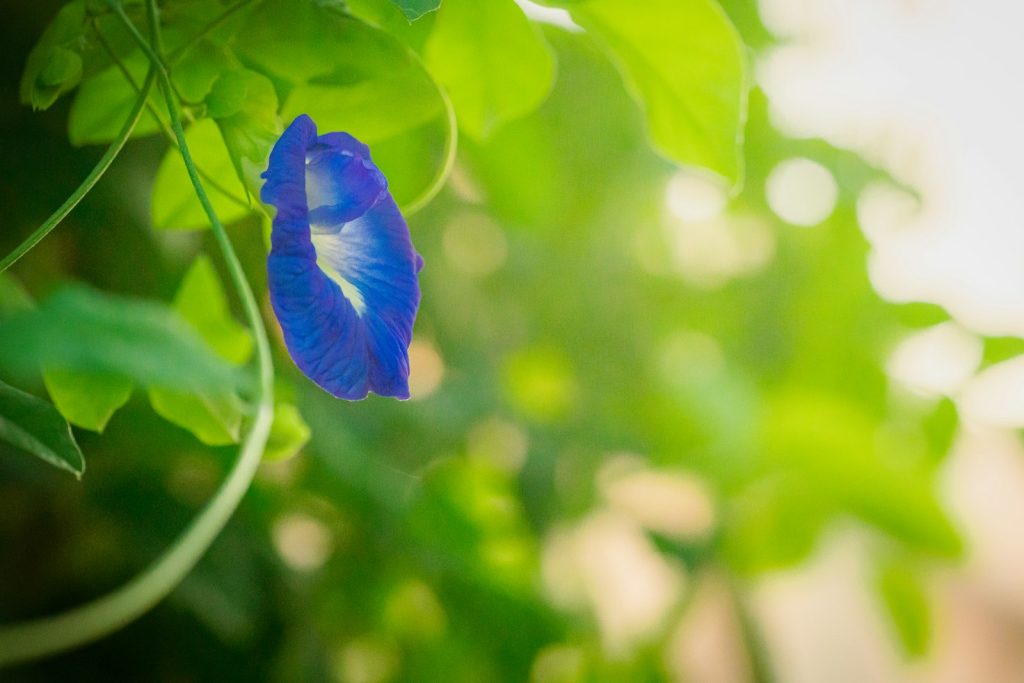
Butterfly pea flower (Clitoria ternatea L.) is grown as a perennial climbing legume, reaching roughly 3 m on a trellis, and producing deep-blue pea-shaped flowers approximately 5 cm across. Understanding how the crop is cultivated and what happens on the drying floor is not background reading — it is the single most reliable predictor of whether the flowers you receive will be vivid blue or disappointingly brown. This page covers both, separating verified botany from the grower guidance and practice-based norms that make up most of what circulates in the trade.
Botanical Profile: What Clitoria ternatea Actually Is
Clitoria ternatea sits in the family Fabaceae — the legumes. That family membership matters commercially: like other legumes the plant fixes atmospheric nitrogen, which reduces its fertiliser dependency and makes it a popular intercrop or cover crop in smallholder systems across Southeast Asia. It is a twining, herbaceous climber — an evergreen perennial under tropical conditions, though it behaves as an annual in cooler highland plantings or where water stress is severe.
The flowers are the commercially valuable part. They are papilionaceous (butterfly-shaped), typically five-petalled, deep blue with a pale yellow or white central mark, and appear singly or in pairs at the leaf axils. Missouri Botanical Garden records the plant to approximately 3 m, occasionally 4.5 m with vigorous support. Leaves are compound and odd-pinnate, carrying five to nine leaflets depending on growing conditions and ecotype.
Range and Climate Requirements
The species is pantropical in distribution — roughly 20°N to 24°S latitude, from sea level to about 1,600 m altitude. According to PROSEA (Plant Resources of South-East Asia), the practical growing parameters are:
- Mean annual temperature
- 19–28°C (optimal range; the plant tolerates stress outside this but yield and colour quality suffer)
- Rainfall
- Survives on ~400 mm/year but optimal production requires approximately 1,500 mm/year, ideally well-distributed
- Soil pH
- 5.5–8.9 — a broad tolerance that puts Clitoria ternatea cultivation within reach of most tropical red latosols and alluvial soils
- Light requirement
- Full sun; shading reduces flower output substantially
Indonesia — with its equatorial latitude, volcanic soils and year-round rainfall in most provinces — fits these parameters across most of Java, Bali, Lombok, Flores and parts of Sumatra and Sulawesi. Thailand, the current dominant export origin, has comparable conditions in its northern highlands and central plains.
A Note on Geographic Origin: Contested, Not Settled
Buyers sometimes ask whether butterfly pea is truly native to Indonesia, or whether the name “ternatea” in the species name confirms Ternate (North Maluku) as the origin. Wikipedia does cite the Indonesian island of Ternate as one referenced origin point. PROSEA, however, is blunter: the true origin of Clitoria ternatea has been obscured by centuries of cultivation across the pantropics, and no single region holds a clear claim as the native source.
The practical implication for buyers: “Indonesian-origin butterfly pea” is a legitimate and accurate trade description. “Native to Indonesia” or “originally from Ternate” is a claimable-but-contested assertion, not settled botanical fact. We flag this not to undermine Indonesian origin product — which is real and commercially significant — but because sourcing desks that present contested history as settled fact erode their own credibility over time.
Clitoria ternatea Cultivation: From Seed to Harvest
Most smallholder production in Indonesia and Thailand begins from seed, direct-sown or transplanted as seedlings once the rainy season is established. The plant grows quickly under good conditions, typically reaching the trellis and beginning to flower within eight to twelve weeks of planting. In perennial management — the more common approach for dedicated flower production — the same root stock is retained across multiple seasons, with periodic pruning to stimulate new lateral growth and flower production.
Trellis or fence support is standard. Without it the vine sprawls across the ground, making picking difficult and increasing disease risk from soil splash. Wire-and-post systems, bamboo frames or integration with living fence-posts are all common in SE Asian smallholder settings.
Fertilisation practice varies considerably. The plant’s nitrogen-fixing capacity means phosphorus, potassium and micronutrient management tend to matter more than straight nitrogen application. Irrigation is typically supplementary — in high-rainfall zones the crop manages on natural precipitation; in drier periods even modest drip or furrow irrigation maintains flower output through what would otherwise be a stress gap.
Flowering and Yield
Flower production is continuous under tropical conditions. A well-managed planting flowers year-round, which is part of its commercial appeal: unlike many herbal crops with a single harvest window, butterfly pea can supply flowers across the calendar, allowing progressive drying and inventory build. Individual flower longevity is short — a fully opened flower is at peak colour and anthocyanin content for roughly one day before wilting and colour degradation begin. That biology directly dictates the harvest protocol described in the next section.
Yield data for dedicated butterfly pea flower production is sparse in the public literature. Figures circulating in the trade are largely grower-reported and not derived from controlled agronomic trials, so we do not cite specific kg/ha numbers as if established. What is consistent across grower accounts is that whole-flower yield is highly sensitive to picking frequency, trellis management and irrigation timing.
Hand-Picked Butterfly Pea Flowers: The Harvest Protocol
Premium whole-flower grade is hand-picked. There is no mechanical harvesting approach in general commercial use for flowers destined for food or tea — the flower’s small size, continuous-flowering habit and the need to select only fully open blooms make selective manual harvesting the practical standard.
Note on what follows: morning harvesting and immediate processing are widely described in grower guidance and repeated across the trade. They represent established practice, not outcomes from published controlled trials. We present them as defensible norms backed by sound reasoning from anthocyanin biochemistry, not as species law.
The standard practice: flowers are picked fully open and fresh in the early morning, before the heat of the day wilts them and before direct sun exposure accelerates pigment degradation. Picking at midday or later, or leaving picked flowers exposed in the field, measurably shortens the window before browning begins. The anthocyanins — specifically the ternatins responsible for the intense blue colour — are reactive compounds. Elevated temperature, oxygen exposure and UV light all accelerate their breakdown. Morning harvest into shaded collection baskets or trays, moving quickly to the drying stage, is the practical answer to that chemistry.
What “Hand-Picked” Means for Grade and Price
The hand-picking labour cost is the primary reason whole-flower butterfly pea commands a premium over broken petals, fines or powder. A careful picker selects fully open, undamaged flowers and leaves buds, partially open blooms and damaged material behind. An indiscriminate pick — or a mechanical stripping approach — produces a mixed stream that must then be sorted, incurring further cost, or sold at the lower broken/fines price point.
For buyers, “hand-picked” on a specification or COA is a starting point, not a guarantee. The more meaningful assurance is the physical grade inspection: what percentage of the batch is intact whole flowers versus fines and stems? Premium food-grade whole-flower specifications typically require at least 90% intact flowers. Always ask for a reference sample before committing to volume.
Need to compare grade definitions in detail? Our grades and quality page walks through moisture, colour standards and the QC tests a serious buyer should require.
Butterfly Pea Flower Drying: Where Value Is Made or Lost
Drying is where most quality failures happen. Get it right and you have a product with vivid deep-blue flowers, high ternatin content and an 18–24 month shelf life under proper storage. Get it wrong — too hot, too slow, too much light — and you get brown, low-value material that no amount of downstream processing can fully recover.
Why Drying Conditions Matter: The Anthocyanin Chemistry
The blue colour of butterfly pea flowers comes from ternatins: a family of polyacylated delphinidin-3,3′,5′-triglucosides, a structurally distinct class of anthocyanins verified by multiple PMC-indexed studies and confirmed in the plant’s Wikipedia entry. Ternatins are what give the flower its pH-dependent colour-change behaviour — blue in neutral/alkaline solution, shifting toward purple and pink as acidity increases — and they are the target compound buyers in tea, beverage, natural-colorant and food applications are paying for.
Anthocyanins in general are degraded by:
- High temperature — accelerates enzymatic and non-enzymatic breakdown; prolonged exposure above approximately 60–70°C causes rapid and largely irreversible pigment loss
- Oxygen — oxidative degradation proceeds faster at higher temperatures and is accelerated by moisture
- Light, especially UV — direct sunlight both heats the flower and provides photon energy that breaks down pigment bonds
- High moisture during drying — slows the drying process, extending exposure time to all of the above
Browning during drying is not a surface aesthetic problem. It signals ternatin degradation — a reduction in the blue pigment content that directly reduces the value of the dried product in any colour-dependent application.
Sun-Dried vs Machine-Dried Butterfly Pea Flower
Sun-drying is the most common approach in smallholder SE Asian production because it requires no energy input and no capital equipment. Flowers are spread on drying racks or mats and exposed to direct sunlight. Under good conditions — low humidity, moderate temperatures, good air circulation — sun-drying can produce a commercially acceptable product. But the combination of direct UV, variable temperature spikes and limited process control makes consistent high-colour output difficult to achieve.
Low-temperature or shade drying — whether natural shade with airflow, or forced-air tunnels at controlled low temperatures — preserves colour better. The principle is straightforward: remove moisture without the concurrent UV and high-heat exposure that degrades ternatins. The tradeoff is slower throughput, more infrastructure and higher per-kg cost at the processing stage.
The table below summarises the practical tradeoffs buyers encounter:
| Drying method | Typical equipment | Colour retention | Process control | Cost implication | Common use |
|---|---|---|---|---|---|
| Open sun-drying | Bamboo/net racks, mats | Variable — UV + heat spikes risk browning | Low; weather-dependent | Low capex, zero energy | Smallholder, standard grade |
| Shade / tunnel drying | Shaded racks, airflow fans | Good — reduced UV, lower ambient temp | Moderate; airflow managed | Low capex, minimal energy | Mid-grade colour-sensitive product |
| Low-temp oven / tray dryer | Electric/gas dryer with temperature control | Consistently good at controlled butterfly pea flower drying temperature of 50–60°C | High; temperature and time managed | Medium capex, energy cost | Export grade, colourimetry-tested |
| Freeze-drying (lyophilisation) | Industrial freeze-dryer | Excellent — near-fresh colour | Very high | High capex, high energy | Premium extract/pharmaceutical intermediate |
The Official Thai Temperature Standard
One documented specification exists in the public record: Thailand’s Department of Agriculture, in the context of flowers exported from Thailand to Indonesia, requires oven-drying at 50–60°C for 8–10 hours. This was reported by Nation Thailand and represents a single-source, official regulatory requirement rather than a broadly harmonised international standard — we present it for what it is, not as if it were an ISO or Codex norm.
The specified range — 50–60°C — is consistent with the biochemical rationale above. It is warm enough to drive moisture out of the flower tissue efficiently and inhibit microbial activity, but below the temperature zone where anthocyanin breakdown becomes rapid and irreversible. At 70°C or above, ternatin degradation accelerates sharply; at 80°C+ it becomes commercially damaging within the same drying duration.
Buyers evaluating Indonesian suppliers should ask whether a formal drying temperature protocol is documented and what temperature monitoring equipment is in place. The answer reveals quite a lot about process maturity.
Moisture Content After Drying
There is no published species-specific moisture standard for dried butterfly pea flowers. No ISO or Codex specification covers this product (the absence of formal ISO or Codex grading for butterfly pea is one of the honest realities of working in this trade, addressed directly on our grades and quality page). The defensible norms drawn from general dried-herb and Codex practice, and used in serious B2B contracts in this category, are:
- Premium grade: moisture content ≤10%
- Standard grade: moisture content ≤12%
- Water activity: ≤0.6 ideal for mould inhibition and shelf stability
These are defensible specifications, not documented species law. Buyers should request moisture content on the COA and, for high-value contracts, request water activity measurement as a more direct indicator of microbial stability risk. High moisture content is the single most common cause of mould and mycotoxin issues in this category — often invisible at receipt and only apparent weeks later in storage.
From Drying Floor to Export Grade: The Quality Chain
The drying protocol is not the end of the quality story. After drying, properly handled butterfly pea flowers are sorted to remove stems, broken petals, foreign matter and any discoloured material. This sorting step — often done by hand in smallholder supply chains, mechanically in larger processor operations — is where the distinction between whole-flower premium grade and broken/fines grade is finalised.
Packaging matters as much as the drying and sorting that precede it. Properly dried flowers must be sealed quickly after drying and sorting to prevent re-absorption of atmospheric moisture and ongoing oxygen exposure. Standard export packaging uses inner food-grade polyethylene or polypropylene bags, often vacuum-compressed to reduce bulk density (dried flowers are light and bulky — roughly analogous in bulk density to dried chamomile or hibiscus, meaning containers fill by volume before approaching weight limits). Outer cartons of 10–20 kg net are typical.
Shelf life under proper airtight, cool, dark and dry storage is widely stated at 18–24 months from production date. This figure is consistent across supplier documentation and general dried-herb norms, though it is not derived from peer-reviewed stability studies specific to butterfly pea. We present it as a defensible commercial norm. Buyers placing large contracts commonly use a 24-month shelf-life clause measured from production date, with a minimum remaining shelf life at delivery of 12–18 months.
If you are evaluating a supplier proposal or working up a specification sheet, our enquiry form or WhatsApp at +62 811 3942 14563 can connect you with the desk. We route serious B2B inquiries to vetted partners who can provide samples, COAs and documented drying protocols before any commercial commitment.
What to Ask Every Supplier About Cultivation and Drying
Visiting the drying floor is ideal. Most buyers cannot do that for an initial inquiry. These questions — asked in writing and compared against the COA and sample — separate suppliers who know their process from those quoting a brochure:
- What drying method is used — sun, shade, tray dryer, other? At what temperature and for how long?
- Is temperature monitored and logged during drying? Can you share a drying log or process validation record?
- What is the moisture content of the batch on the COA? Is water activity also measured?
- When are flowers picked relative to opening — and at what time of day?
- What is the interval between picking and the start of drying?
- What sorting step separates whole flowers from fines? What is the whole-flower percentage by weight in this lot?
- What is the production date and packaging date on this batch? What remaining shelf life will be guaranteed at delivery?
A supplier who cannot answer these questions in writing is probably not operating at export-grade process maturity — regardless of price.
Frequently Asked Questions
How long does butterfly pea flower take to grow before it can be harvested?
Under tropical conditions, Clitoria ternatea typically begins flowering within eight to twelve weeks of planting from seed. In perennial managed plantings — the most common approach for dedicated flower production — the same root stock produces flowers continuously across the growing season, meaning harvest can begin in the first season and continue for multiple years with good management.
What is the best drying temperature for butterfly pea flower to preserve colour?
The documented official specification — Thailand’s Department of Agriculture export standard for flowers destined for Indonesia — requires oven-drying at 50–60°C for 8–10 hours. This range is consistent with the anthocyanin biochemistry: warm enough for efficient moisture removal, below the threshold where ternatin breakdown becomes significant. Temperatures above approximately 70°C and sustained sun exposure with direct UV both cause measurable colour loss in butterfly pea flowers.
Is sun-dried butterfly pea flower lower quality than machine-dried?
Not necessarily — but it is more variable. A skilled sun-drying operation in low-humidity conditions, with shaded racks and controlled airflow, can produce colour-retentive whole flowers. The problem is process control: sun-drying is weather-dependent, and a single afternoon of high heat combined with direct UV can brown a batch that was heading toward premium quality. Machine drying with temperature control and a documented protocol produces more consistent output. Buyers who need colour consistency for cocktail or food-colorant applications should ask specifically about drying method and request colourimetry data on the COA.
Is “Clitoria ternatea” native to Indonesia?
This is genuinely debated. Wikipedia references the Indonesian island of Ternate as one cited native origin — and the species name does reflect that historical association. However, PROSEA notes that the plant’s true geographic origin has been obscured by centuries of cultivation across the tropics, and botanists do not hold a consensus on native range. Indonesian-origin butterfly pea is commercially established and the country is a meaningful export source. The claim that it is definitively “native to Indonesia” is contested rather than settled.
How does drying quality connect to the grades I see in wholesale listings?
Directly. The whole-flower premium grade — which typically commands the highest FOB price and is specified for visible applications like loose-leaf tea and cocktail garnish — depends on intact flowers with high blue-colour intensity. Both of those properties are products of careful drying: low temperature, controlled airflow, minimal UV and rapid moisture removal. Browning is a signal that drying temperature was too high, drying was too slow, or sun exposure was excessive — and it corresponds to reduced ternatin content, which is exactly what buyers in colour-sensitive applications are paying for. Our grades and quality page covers the full grade hierarchy, moisture specifications and QC lab tests in detail.