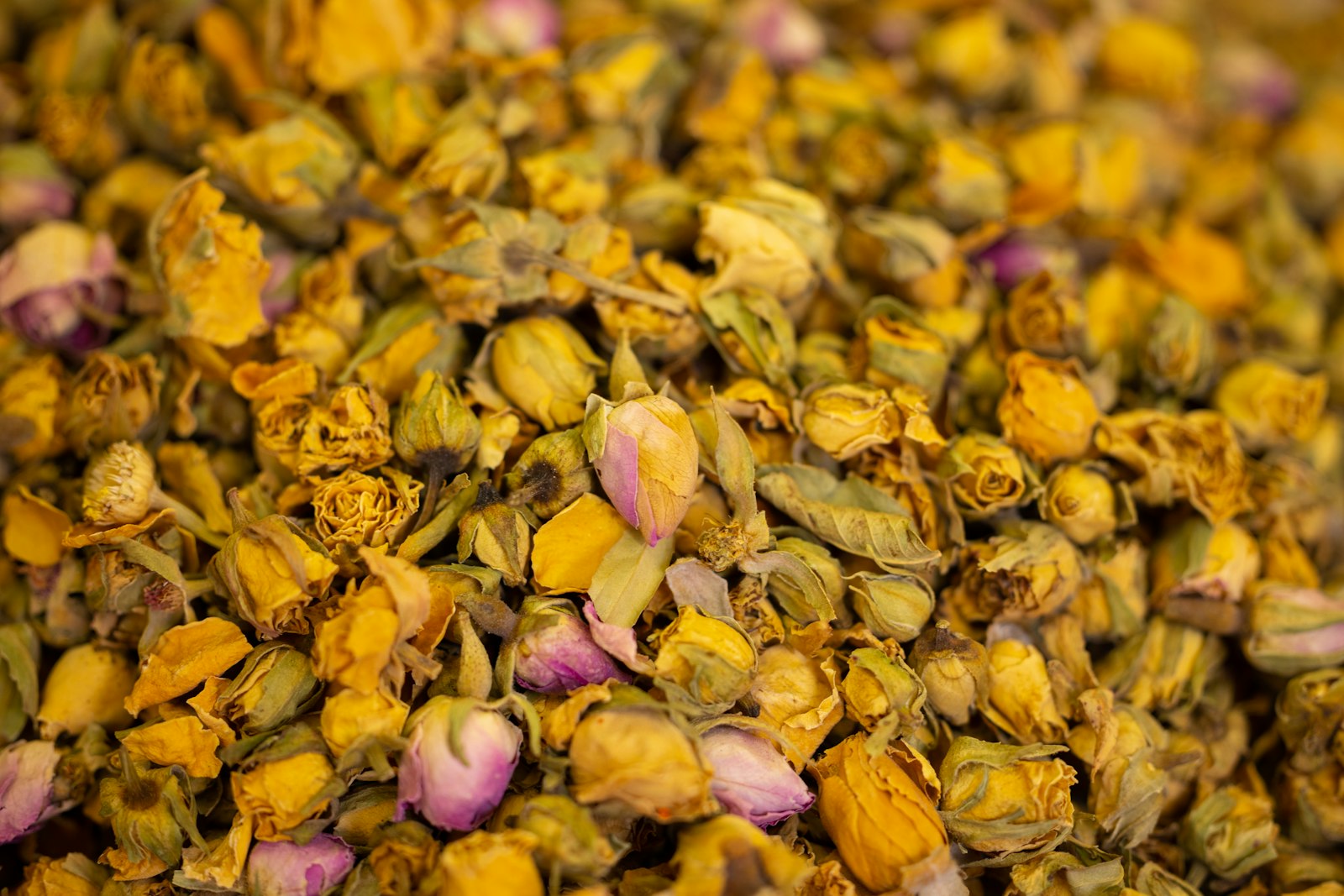
Independent sourcing note: We are an independent butterfly pea flower tea B2B sourcing desk — we curate verified Indonesian growers and tea makers and route your RFQ to a vetted partner; we are not the manufacturer, exporter of record, or freight forwarder. Butterfly pea is dried Clitoria ternatea flowers, graded by colour and moisture and also sold as petals, powder, and extract. Figures (MOQ, FOB per kg, lead times) are indicative ranges and vary by grade, season, and volume — final terms are by quote. Compliance (pesticide-residue limits, organic certification, food-contact, and import status such as EU novel-food, which is uncertain) is your responsibility to verify with the supplier and a licensed customs broker — this is general trade information, not legal or regulatory advice. We may earn a sourcing commission on referred orders (referral disclosure).
Organic butterfly pea flower wholesale is a category where the gap between marketing language and verifiable evidence is unusually wide. A buyer sourcing Clitoria ternatea at B2B volume needs to understand exactly what certification covers, what it does not cover, and which documents actually transfer legal risk from their supply chain to a certified body — before a purchase order is raised.
This page works through each layer: what organic certification actually means under USDA NOP and EU Regulation 2018/848, what food-safety systems a serious supplier should run, which laboratory tests a careful importer should demand, and — critically — why even a fully certified organic shipment cannot solve a fundamental regulatory problem for buyers importing into the European Union. That problem is addressed first, because it is the kind of detail that can stop a container at the border.
Clitoria ternatea as a food ingredient (herbal tea, colorant, beverage ingredient — not a supplement) is currently NOT authorized in the European Union under the Novel Food Regulation (EU) 2015/2283. A traditional-food notification was filed; the European Food Safety Authority raised safety objections (EFSA opinion EN-7084); and the European Commission terminated the authorization procedure (Commission Decision C(2026)776). Active enforcement is underway via RASFF notifications — Austria 2025.0444, Belgium 2024 actions against Cambodian-origin butterfly pea flowers, and reported product recalls in EU member states. Marketing butterfly pea as a food or tea in the EU is currently illegal and high-risk. Supplement rules vary by member state and are uncertain and jurisdiction-specific. Organic certification does not override this ban. EU buyers must verify current regulatory status with their own regulatory counsel and the competent authority in their destination member state before placing any order. This is trade information, not legal or regulatory advice.
What “Organic” Actually Means for Butterfly Pea
The word “organic” on a supplier’s website or specification sheet is meaningless unless it is backed by a certified operator in the supply chain. Claiming chemical-free cultivation without a paper trail traceable to an accredited certifier is, at best, aspirational marketing — and at worst, a compliance liability for the importer who relies on it.
There are two dominant organic frameworks relevant to most wholesale buyers of butterfly pea flower:
USDA National Organic Program (NOP)
Under the USDA NOP, the supplier — meaning the farm, any processor, and any handler who takes title to or substantially transforms the product — must hold a current certificate of organic operation issued by a USDA-accredited certifying agent. The certifying agent conducts annual on-site inspections and reviews input records. For an Indonesian or Thai supplier to sell USDA organic butterfly pea flower wholesale into the United States, the exporting processor must itself hold NOP certification from an accredited body. A certificate from a body operating under a different national standard is not automatically equivalent.
When you receive a supplier’s USDA organic certificate, the minimum checks are:
- Confirm the certifying agent is USDA-accredited (the USDA maintains a searchable public registry of accredited certifiers).
- Confirm the certificate scope covers the specific product form you are buying — dried whole flower, broken petals, and powder are distinct operations and may not all be covered under a single certificate.
- Verify the certificate is current. Certificates have issue and expiry dates. Request an update if a certificate is more than 12 months old.
- Cross-check the operator name on the certificate against the entity you are contracting with. Intermediaries frequently attach suppliers’ certificates to their own offers; that does not transfer the certification to the intermediary’s operation.
EU Organic Regulation 2018/848
For any buyer sourcing an EU organic butterfly pea flower supplier — subject to the EU novel-food caveat addressed above — the governing framework since 2022 is EU Regulation 2018/848. Third-country operators exporting organic product into the EU must hold a Certificate of Inspection (COI) issued through the TRACES NT electronic system. This is not optional paperwork; without a valid COI the organic claim cannot be made on the EU market.
The exporting country’s certification body must be recognized under EU equivalence arrangements or approved under the EU’s list of recognized control bodies for third countries. Indonesia and Thailand have certification bodies operating under recognized frameworks, but the specific certifying agency and the equivalence pathway matter — “certified organic” by a local body that is not on the EU’s recognized list does not unlock EU organic import status.
USDA NOP and EU organic are not automatically equivalent to each other either. There is a trade arrangement allowing some equivalence between the two programs, but it has specific scope conditions. A supplier certified under USDA NOP by a US-accredited body is not automatically EU-organic-eligible without additional documentation. Buyers shipping into both markets should clarify which certification applies to which destination at the purchase-order stage.
What Organic Certification Does Not Cover
This is where “chemical-free” marketing diverges sharply from what a certificate actually guarantees. Organic certification under either NOP or EU 2018/848 covers the use of prohibited substances during cultivation and processing. It does not, in itself, certify:
- The absence of pesticide residues below destination-market MRLs (background contamination from neighbouring non-organic plots is a documented issue in tropical smallholder agriculture).
- Heavy metal limits, microbial safety, or mycotoxin absence.
- Drying temperature or moisture content.
- Colour and anthocyanin integrity.
- Botanical identity — that the material is actually Clitoria ternatea and not adulterated or species-substituted.
Each of these requires separate laboratory evidence, which is why a CoA (Certificate of Analysis) covering those parameters is a non-negotiable complement to an organic certificate, not an alternative to it.
The Evidence Stack a Careful Importer Should Demand
Below is the minimum document and test set that a diligent importer sourcing organic butterfly pea flower wholesale should request before accepting any shipment. No single document replaces the others; they address different risk dimensions.
Certificate of Analysis (CoA)
The CoA is the primary lot-level quality document. It should be issued by an independent ISO 17025-accredited laboratory — not an in-house lab — and should identify the specific batch, production date, and product description. A CoA covering only moisture and colour is inadequate for an import scenario. The parameters a thorough CoA should address are listed below.
Multi-Residue Pesticide Testing
This is the test most commonly absent from supplier documentation and most consequentially demanded by regulators. Even certified organic product can carry residue from drift, shared equipment, or historical soil contamination. The test method matters: LC-MS/MS (liquid chromatography tandem mass spectrometry) and GC-MS/MS together cover the broadest panel of modern agricultural chemicals, including systemic insecticides and fungicides that are common in tropical smallholder contexts.
The reporting limit and the pass/fail threshold need to match your destination market’s Maximum Residue Levels (MRLs). The EU’s MRL framework under Regulation 396/2005 applies different limits than US EPA tolerances. Both are publicly accessible databases. For butterfly pea specifically, there is no specific MRL for most pesticides on this crop in most jurisdictions, which under EU rules means the default MRL of 0.01 mg/kg applies — a very low threshold that an untested lot from a smallholder environment can easily breach. Buyers supplying the US market should check EPA MRLs for the relevant pesticide families against current 40 CFR part 180 entries; the absence of a specific tolerance does not mean a residue is acceptable.
Request a full panel test result, not a summary statement. The statement “below detection limits” is only meaningful when accompanied by the method detection limits (MDLs) for each analyte.
Heavy Metal Analysis
Lead, cadmium, arsenic, and mercury are the four elements of routine concern in botanical ingredients. The method of choice for multi-element analysis is ICP-MS (inductively coupled plasma mass spectrometry). Reporting limits should be below the action levels in your target market. The EU has general limits for contaminants in food under Regulation 1881/2006, with specific entries for some botanical products; the US relies on FDA action levels and the GRAS framework, but absence of a specific limit does not mean a buyer’s customer will accept elevated heavy metals — particularly not for wellness-positioned products where consumer scrutiny is high.
Soils around industrial zones in Java and parts of Thailand can carry cadmium and lead from historic agricultural chemical use. This is not a reason to avoid those origins but it is a reason to test every lot, not just every supplier.
Microbiological Panel
Dried botanical ingredients are low-water-activity products, but they are not sterile. The minimum microbiological panel for butterfly pea flower should include total plate count (TPC or APC), yeast and mould counts, and the absence criteria for Salmonella (absent/25g) and generic E. coli (absent/g, or below a defined CFU/g threshold per your market standard). High-risk lots — those with elevated moisture readings, off-odours at intake, or compromised packaging — should also be screened for mycotoxins, particularly aflatoxins and ochratoxin A, as moulds grow during transit or storage rather than only at origin.
The microbiological parameters need to align with whatever standard your finished-product manufacturer or end customer requires. NSF, USP, and FCC specifications differ. Request the relevant method reference (e.g., AOAC, BAM, ISO) alongside the numerical result.
Botanical Identity Verification
Species substitution and adulteration are real risks in any botanical commodity trading at a price premium. For butterfly pea, there is also the question of synthetic dye addition to enhance apparent colour. Botanical identity can be confirmed by HPTLC (high-performance thin-layer chromatography) using an anthocyanin fingerprint, or by LC-MS anthocyanin profiling — the ternatins (polyacylated delphinidin-3,3′,5′-triglucosides) produce a characteristic pattern distinct from other blue anthocyanin sources. DNA barcoding is the most definitive method for species authentication but adds cost and turnaround time; it is justified for high-value or large-volume contracts. A simple pH colour-response test — confirming the blue-to-purple/pink shift with acid — is a useful quick screen but is not a substitute for analytical ID.
Colour Strength Measurement
Absorbance at approximately 560–620 nm (the ternatin absorption range) against a standardized extraction method gives a measurable colour unit that can be written into purchase specifications. This is the parameter that most directly determines value in colour-critical applications. No published species-standard exists for minimum absorbance, so buyers should establish their own specification baseline from reference lots and write it into their supplier agreements.
Food-Safety Management Systems: HACCP and ISO 22000
Laboratory test results are lot-specific snapshots. Food-safety management systems are the process framework that makes clean lots repeatable rather than lucky. Two certifications are standard across the ingredient trade.
HACCP
Hazard Analysis and Critical Control Points is a preventive food-safety approach mandated under Codex Alimentarius principles and increasingly required by both regulatory frameworks (US FSMA preventive controls, EU food hygiene regulation 852/2004) and by retail and food-service buyers. A supplier with a documented, audited HACCP plan will have identified the critical control points in their drying, sorting, packaging, and storage operations — the points where a hazard (microbial contamination, pesticide residue, foreign matter) could enter and should be controlled. Requesting the HACCP certificate and, where possible, the most recent third-party audit report, is a reasonable buyer expectation for any B2B volume purchase.
ISO 22000 / HACCP ISO 22000 Butterfly Pea
ISO 22000 integrates HACCP with a management-system framework comparable to ISO 9001. It covers the full food-safety management system: policy, objectives, traceability, prerequisite programs, HACCP plan, internal audits, and management review. For buyers whose own QA function requires certified supply-chain partners, ISO 22000 certification from an accredited certification body (not self-declaration) is the standard minimum. The certification body’s accreditation status should be verifiable through the IAF MLA (International Accreditation Forum Multilateral Recognition Arrangement).
A word on self-reported certifications: a significant share of the butterfly pea supplier listings visible in search results and on B2B platforms state certifications — organic, HACCP, ISO 22000, GMP — without providing verifiable certificate numbers, certifying-body names, or issue and expiry dates. These claims cannot be relied on without independent verification. Requesting the actual certificate document, cross-checking the certifying body’s accreditation status, and confirming the certificate scope are all steps a careful buyer should complete before the first purchase order, not after it. [VERIFY at source for every supplier]
GMP (Good Manufacturing Practice)
GMP is the baseline operational standard for food-ingredient processing. In the botanical-ingredient trade it covers facility hygiene, personnel practices, pest control, water quality, equipment cleaning, and documentation. GMP is a prerequisite for HACCP and ISO 22000, but GMP alone is not a substitute for either of those system certifications. In practice, buyers sourcing from smaller Indonesian processors who have not yet achieved ISO 22000 should look for current GMP evidence — audit reports, facility inspection records, or a third-party GMP certificate — alongside the CoA.
Traceability: From Farm to Export Document
One underappreciated requirement in organic certification is lot-level traceability. Under NOP, a certified operator must be able to demonstrate the organic integrity of a lot through the supply chain: from the farm’s organic certificate and field records, through the processor’s intake documentation, to the export batch. This traceability chain is what a USDA audit would examine and what US Customs and Border Protection looks for in organic import enforcement actions.
In practice, butterfly pea flower is frequently aggregated from smallholders through an intermediate collector before reaching the export processor. Each hand-off point is a potential traceability gap. A processor with a robust organic program will have documented farmer agreements, incoming lot records keyed to each smallholder’s certified fields, and segregation records to prevent commingling with non-organic material. Asking a supplier to walk you through their traceability documentation — even a summary — is a legitimate due-diligence step, and a credible supplier will be able to do it.
US Market Specifics: What FDA Requires
For buyers importing butterfly pea flower into the United States, the regulatory picture is materially different from the EU. The dried flower in its whole form is treated in practice as a conventional herbal tisane, relying on safety history and GRAS status rather than a formal pre-market authorization. There is no FDA enforcement action on record against the dried flower itself as of the date of this page. The water extract of dried petals was approved by the FDA in 2021 as a color additive exempt from certification, codified at 21 CFR 73.69, with approved use categories subsequently expanded. Buyers should confirm the exact current approved food categories in the Code of Federal Regulations rather than relying on secondary sources, including this page, since 21 CFR is updated and the exact scope at any point in time requires direct reference. [FLAG — confirm current CFR text with your regulatory counsel or directly at ecfr.gov]
Regardless of organic status, all imported botanical ingredients are subject to:
- FDA Prior Notice (Bioterrorism Act) — electronic submission before a shipment arrives at a US port of entry.
- FSMA Foreign Supplier Verification Program (FSVP) — the importer of record must conduct hazard analysis and supplier verification for the food. In practice this means maintaining a documented FSVP file including the CoA, supplier audit, and, if the supplier is foreign, a mechanism for verifying the food meets US safety standards.
- Foreign facility registration with FDA — the exporting facility must be registered.
- Pesticide MRL compliance — EPA tolerances under 40 CFR part 180 apply. The absence of a specific tolerance for butterfly pea on a given pesticide defaults to a very low limit under EPA regulations.
On labelling, avoid disease-structure or health claims on butterfly pea products for the US consumer market. Any claim implying the product treats, cures, or prevents a disease would constitute an unapproved drug claim under FDA rules. Wellness positioning (caffeine-free, antioxidant-associated, clean-label) is common industry practice, but the buyer’s legal counsel should review any specific claim language before it goes to print.
The Organic Premium: What You Actually Pay For
Buyers sometimes expect organic-certified butterfly pea flower to simply cost more while being otherwise equivalent to conventional. The premium — typically meaningful but supplier-dependent and by-quote only, since there is no published price board — reflects real incremental costs: certifier annual fees, additional record-keeping, more intensive traceability documentation, potentially lower yield from not using synthetic inputs in high-pressure growing environments, and the opportunity cost of longer certification tenure for new farmers. The premium exists for reasons.
What the premium does not automatically buy is superior colour, lower moisture, or better microbiology. Those parameters are determined by drying practice and process discipline, not certification status. The best whole flowers from a well-managed non-certified operation will outperform a poorly dried organic lot on every CoA parameter that matters commercially. Buyers who understand this tend to weight the CoA results at least as heavily as the certification status — which is the right priority order for ingredient procurement.
As a rough orientation: indicative FOB price premiums for USDA organic butterfly pea flower wholesale relative to standard food-grade whole flower are a buyer-and-volume-specific negotiation. Published indicative ranges for standard non-organic whole flower run approximately USD 6–12/kg (Indonesia/Vietnam positioning), with premium and organic select whole running approximately USD 10–20/kg at the top end of Thai-origin positioning. These are indicative bracket ranges only; they are not firm quotes, and they vary considerably by season, volume, supplier, and market conditions. Request a live quote for any actual purchase. [All price figures sourced from sparse public listings and analogous herb trade; FLAG as indicative only, not a price board]
If you want to understand where your sourcing sits on the cost-quality curve, send us an enquiry with your volume, destination, and certification requirements and we will route you to our vetted partner for a scoped quote with CoA and sample.
A Comparison of What Different Certifications Actually Cover
| Certification / Document | What It Covers | What It Does NOT Cover | Who Verifies |
|---|---|---|---|
| USDA NOP Certificate | Prohibition on synthetic inputs during cultivation & processing | Residue levels, heavy metals, microbiology, colour, moisture | USDA-accredited certifying agent (annual inspection) |
| EU Organic (2018/848) + COI | Prohibition on prohibited substances; supply-chain integrity; TRACES documentation | EU novel-food authorization; residue MRL compliance; safety parameters | EU-recognized control body; COI in TRACES NT |
| ISO 22000 / HACCP | Food-safety management system; hazard identification and CCP control; traceability | Pesticide residue levels; specific lot test results; organic input status | IAF MLA-accredited certification body (periodic audit) |
| CoA (independent lab) | Specific lot: moisture, micro, pesticide residues, heavy metals, colour, botanical ID | Production process; next lot; organic status; regulatory approval | ISO 17025-accredited laboratory |
| Phytosanitary Certificate | Pest and disease status at export; consignment inspection by NPPO | Chemical residues; food-safety parameters; organic or certification status | National Plant Protection Organisation of origin country |
Pesticide Residue Testing in Detail: What “Pesticide-Free” Claims Usually Miss
The phrase “pesticide residue tested butterfly pea flower” appears in supplier materials with varying degrees of rigor behind it. A single-analyte test for one pesticide family is very different from a multi-residue screen covering 200–500 compounds. In tropical smallholder growing environments — which is where the majority of commercially available butterfly pea originates, in Indonesia, Thailand, and Vietnam — the pesticide inputs applied by neighbouring farms, historical use on the same land, and shared irrigation water can all contribute to residue presence in a product that was genuinely not treated.
The practical standard for serious buyers in 2025–2026 is a multi-residue panel run by LC-MS/MS and GC-MS/MS covering at least the analyte lists specified by your target market’s enforcement agency — EUCP for the EU, FDA for the US, FSANZ for Australia/New Zealand. These lists are publicly available and update annually as new pesticides are registered or banned. Buyers importing into multiple jurisdictions simultaneously need to understand which jurisdiction’s MRLs are most restrictive for the specific compounds likely present in tropical botanical sources, and test to that level.
One practical note on timing: pesticide testing typically adds 5–10 working days to CoA turnaround for a full multi-residue panel. Factor this into your order timeline. A supplier who cannot provide multi-residue results within a reasonable timeline either lacks the laboratory access or is not planning test cycles into their production cadence — both are supplier quality signals.
Organic Does Not Fix the EU: The Novel-Food Prohibition in Detail
Because organic butterfly pea flower for the EU market is a search intent this page is likely to receive, it is worth being explicit about exactly what the European regulatory position means for a buyer, not just flagging it once and moving on.
The EU novel-food framework requires that foods not consumed to a significant degree in the EU before 15 May 1997 receive a formal authorization before they can be sold as food. Clitoria ternatea flowers and their extracts fall into this category. An authorization application was made; EFSA’s scientific assessment (EFSA opinion EN-7084) raised safety objections; the Commission, citing those objections, terminated the authorization procedure via Decision C(2026)776. The procedure being terminated is not a pause — it means the applicant would need to submit a new, substantially different application addressing EFSA’s concerns, with no current timeline for that.
Enforcement is real. Austrian authorities filed a RASFF notification (2025.0444). Belgium has taken action against Cambodian-origin butterfly pea teas with reported recalls. The RASFF database is publicly searchable, and the pattern of enforcement notifications indicates that EU border authorities and market surveillance bodies have been specifically looking for this product.
What about supplements? Supplement regulation in the EU is primarily national — a product authorized as a food supplement in one member state may face a different status in another. The position is genuinely jurisdiction-specific, and the fact that a butterfly pea supplement appears on retail shelves somewhere in the EU does not mean it is compliant, authorised, or safe from enforcement action. Any buyer considering the EU supplement route should obtain a specific legal opinion in each target member state, not rely on the apparent existence of products in the market as evidence of legality.
What about the colour additive route? The EU has not authorized butterfly pea extract as a food colour under Regulation 1333/2008. That route is also blocked at present.
The honest position for this page to take is: EU-bound butterfly pea flower at food/tea use level, regardless of organic status, is currently a non-viable import. Buyers with existing EU contractual commitments should take legal advice now, not at port.
Verifying Supplier Certifications: The Due-Diligence Minimum
This desk does not fabricate supplier names or endorse unverified certifications. What we can describe is the verification process a buyer should follow independently for any supplier they are evaluating.
For USDA NOP: The USDA’s online organic integrity database at ams.usda.gov/organic-integrity allows anyone to search by operator name or certifier and pull the current certificate status. If a supplier’s name does not appear in that database under a current certificate, the USDA organic claim is unverified. [VERIFY every supplier independently]
For EU organic: TRACES NT is the document system; the certificate should reference a recognized control body. The EU publishes its list of third-country recognized control bodies under Article 46 of Regulation 2018/848. If the certifier on the document is not on that list, the EU organic equivalence claim does not hold.
For ISO 22000 and HACCP: Request the certificate, certifying body name, and certificate number. Then contact the certifying body directly to confirm the certificate is current and that the scope covers the operation you are buying from. Most IAF-member certification bodies maintain a public certificate verification tool.
For CoA: The issuing laboratory’s ISO 17025 accreditation status is verifiable through national accreditation bodies — KAN (Indonesia’s national accreditation body), UKAS (UK), A2LA or NVLAP (US), DAkkS (Germany), and so on, most of which publish a searchable certificate database. If a CoA bears a laboratory name you cannot verify against an accreditation registry, treat the results as indicative only.
The pattern of listing certifications without verifiable certificate details is common enough in the butterfly pea supplier space that a buyer who performs basic certificate verification will immediately identify which suppliers have real documented systems and which are presenting aspirational claims. That gap is commercially useful information.
Ready to start verifying real supplier documentation? Contact us via WhatsApp at +62 811 3942 563 or email [email protected] — or complete our enquiry form — with your destination market, certification requirements, and target volume. We route qualified RFQs to our vetted partner and may earn a referral fee on introductions at no extra cost to you. The buyer always verifies independently.
Frequently Asked Questions
Is USDA organic butterfly pea flower the same as EU organic butterfly pea flower?
Not automatically. USDA NOP and EU Regulation 2018/848 operate under separate frameworks with a limited equivalence arrangement that covers specific conditions. A supplier certified under USDA NOP is not automatically eligible to export as EU organic — the export processor needs to hold certification under a control body recognized by the EU for third-country equivalence, and a Certificate of Inspection (COI) must accompany each shipment through TRACES NT. More importantly, EU organic certification does not override the EU novel-food non-authorization currently blocking Clitoria ternatea food imports into the EU. Even a perfectly certified EU organic shipment of butterfly pea tea cannot legally enter the EU food market under current rules.
A supplier says their butterfly pea flower is “pesticide-free” — is that enough?
No. A verbal claim of pesticide-free status is not a testable standard. What the claim should translate into is a multi-residue panel run by LC-MS/MS and GC-MS/MS covering at least 200 analytes, performed by an ISO 17025-accredited laboratory, with reporting limits at or below the MRLs for your destination market. For EU-bound material (where the novel-food status allows it at supplement level), the default MRL of 0.01 mg/kg applies to compounds without a specific MRL — a very low threshold. For US buyers, EPA tolerances under 40 CFR part 180 apply. Always request the full test report with analyte list and method detection limits, not a summary statement.
What documents should I ask for before placing a first bulk order of organic butterfly pea flower?
The minimum document set for a first order is: (1) current organic certificate from an accredited/recognized certifying body with scope confirmed for your product form; (2) a recent CoA from an ISO 17025-accredited laboratory covering moisture, water activity, total plate count, yeast and mould, Salmonella absent/25g, E. coli absent/g, multi-residue pesticide panel, and heavy metals (Pb, Cd, As, Hg by ICP-MS); (3) HACCP or ISO 22000 certificate with the certifying body and certificate number; (4) a traceability summary linking the batch to certified farm records; (5) phytosanitary certificate from the exporting country’s NPPO; (6) for US imports, confirmation the facility is FDA-registered. Each document should be independently verifiable — request certificate numbers, not just scanned images of documents that could be altered.
Can I import organic butterfly pea flower into the EU for use as a supplement?
Possibly, but the answer is genuinely uncertain and jurisdiction-specific. EU supplement regulation is primarily national law. Some member states have allowed butterfly pea products under supplement frameworks, while others have not. The enforcement situation has tightened following EFSA’s safety objections and the RASFF notifications. An import that may have been tolerated in a particular member state two years ago may now face enforcement action. Any buyer considering this route needs a specific legal opinion in each target member state from a regulatory counsel familiar with food supplement law there — not a general statement of practice from a supplier or broker. This is trade information, not legal advice.
Does HACCP ISO 22000 certification mean a butterfly pea supplier has been audited recently?
It means the certification body conducted an audit within the certification cycle — typically annually for surveillance audits and every three years for recertification under ISO 22000. It does not guarantee the audit was recent unless you check the certificate issue date. Certification bodies can also suspend certificates without immediately cancelling them. The correct practice is to request the certificate, note the issue and expiry dates, and then contact the certifying body directly to confirm the certificate is current and the scope covers the operation and product category you are purchasing. Self-reported HACCP or ISO 22000 status, without a verifiable certificate from a named IAF-member body, should be treated as unverified. [VERIFY at source for each supplier]