Independent sourcing note: We are an independent butterfly pea flower tea B2B sourcing desk — we curate verified Indonesian growers and tea makers and route your RFQ to a vetted partner; we are not the manufacturer, exporter of record, or freight forwarder. Butterfly pea is dried Clitoria ternatea flowers, graded by colour and moisture and also sold as petals, powder, and extract. Figures (MOQ, FOB per kg, lead times) are indicative ranges and vary by grade, season, and volume — final terms are by quote. Compliance (pesticide-residue limits, organic certification, food-contact, and import status such as EU novel-food, which is uncertain) is your responsibility to verify with the supplier and a licensed customs broker — this is general trade information, not legal or regulatory advice. We may earn a sourcing commission on referred orders (referral disclosure).
Butterfly pea flower FOB price per kg is the export price at which dried Clitoria ternatea flowers are loaded onto a vessel at an Indonesian, Thai, or Vietnamese port — all seller costs up to and including that point, none of the ocean freight, insurance, or import costs beyond it. The honest answer to what that number is: it depends. Grade, certification, origin, and how many kilograms you are buying all move the figure materially, and real B2B trades are negotiated privately with no posted price board. This page presents the most transparent indicative range this desk can publish — reasoned from sparse public listings, analogous dried-herb benchmarks, and trade contacts — but every figure here is illustrative. All ranges on this page are indicative only and must not be treated as firm quotes. A live quote from a vetted exporter is required for any real purchase decision.
If you have already read enough and want a specific price for your volume and grade, send us your RFQ or reach us on WhatsApp at +62 811 3941 4563. The rest of this page explains how prices are built and what moves them.
Why There Is No Published Price Board for Butterfly Pea Flower
Seasoned commodity buyers arriving from spice or coffee markets sometimes expect a posted benchmark — a Platts equivalent, a weekly price bulletin, something to anchor negotiation. Butterfly pea has none. The market is fragmented: a few hundred smallholder farms, dozens of processors of varying scale across Thailand, Indonesia, and Vietnam, and a buyer base that ranges from a five-kilogram tea brand to a multinational beverage colorant buyer. Volume is too thin and too diffuse for a credible price-discovery mechanism to exist.
What exists instead is a long tail of public listings — mostly B2B marketplace entries — that are noisy, inconsistently labelled, and often not updated to reflect current stock or pricing. The buyer who takes those headline numbers at face value is going to have a bad day. This desk has reviewed the publicly visible reference points and flagged each one honestly below.
The Reference Points and Why Most Are Unreliable
- Generic marketplace listings under USD 5/kg: These appear on pan-Asia B2B platforms and in some cases represent dried fines or broken petals of undisclosed origin and moisture content rather than export-ready food-grade whole flowers. Whether they represent actual transacted prices or listing-page anchoring is unverifiable. Flag: treat as a noise floor, not a reliable benchmark. [VERIFY]
- Listings around USD 17.9/kg for powder: Single-source, origin and specification not confirmed. Butterfly pea powder price per kg varies considerably by mesh size, anthocyanin content, water-solubility spec, and whether it is spray-dried extract or simply ground dried flower. This figure should be treated as one unverified data point. [VERIFY]
- A “USD 20/kg” listing: Consistent with the top end of the premium organic whole-flower range, but without grade, origin, certification, or volume context this number cannot be verified or trusted as a market midpoint.
- A supplier listing with FOB price withheld: Vinahugo and other exporters who decline to publish FOB figures publicly are common in this trade. Withheld pricing is not a red flag — it is standard for negotiated B2B commodity trade — but it means the buyer must request a quote.
- HerbCo whole flower listed around USD 70–81/kg: This is retail-bulk pricing for consumer-facing packed product in small quantities, not export FOB. Comparing this to a wholesale FOB range is like comparing a supermarket spice jar to a 25-tonne container of cardamom. It is not a valid export benchmark and should be set aside for this analysis entirely.
The takeaway: the public data is sparse, heterogeneous, and frequently unverified. The ranges below are drawn by combining what sparse listings exist with analogous dried-herb pricing logic and trade desk contacts. They are more honest than most of what is published in this category, but they remain indicative.
Indicative FOB Price Ranges by Grade and Origin
The table below presents the desk’s current indicative ranges. These are not firm quotes. They reflect a reasonable bracketing of where negotiated B2B prices have been observed or inferred for bulk export lots in 2024–2025. Volume, certification, grade, and origin all move the figure within and outside these brackets. Request a live quote before making any purchasing decision.
| Grade / Form | Origin | Indicative FOB Range (USD/kg) | Notes |
|---|---|---|---|
| Standard food-grade whole flower, non-organic, bulk | Vietnam / Indonesia | ~USD 6–12/kg | Widest range; grade and moisture content vary significantly within this bracket |
| Standard food-grade whole flower, non-organic, bulk | Thailand (standard positioning) | ~USD 8–15/kg | Thai origin commands a modest premium over Vietnamese/Indonesian at comparable spec |
| Premium select whole flower, organic or high-grade | Thailand (top end) | ~USD 12–20/kg | USDA NOP or EU organic certification, high intact-flower ratio (commonly ≥90%), verifiable CoA; supply is limited and seasonal |
| Broken petals / fines / blend-grade | Indonesia / Vietnam / Thailand | ~USD 6–10/kg | Suits extract feedstock or blends; color yield per kg can be similar to whole if anthocyanin content is intact, but appearance grade is lower |
| Butterfly pea powder (ground dried flower) | Southeast Asia (various) | Indicative range varies; single-source “~USD 17.9/kg” [VERIFY] noted; spray-dried extract commands higher | Mesh size, water solubility, and anthocyanin strength spec drive value; get multiple quotes |
All figures are indicative by-quote ranges. They are not firm offers, are not guaranteed to be current, and may not reflect your specific lot, grade, or destination. A live quote is required for any transaction.
What Moves the Butterfly Pea Flower Price Per Kg
Understanding the price levers lets you negotiate intelligently and avoid surprises when a quote comes back higher than you expected.
Grade: The Single Biggest Driver
Butterfly pea has no formal ISO or Codex grading system — trade grades are industry-norm descriptions, not legal standards. But the commercial distinction is real. Premium food-grade whole flower, dried correctly to maintain deep uniform blue color with minimal browning, minimal broken petals, and no foreign matter (stems, leaves, insect fragments), commands a significant premium over commodity-grade fines. A buyer who specifies “whole flower, ≥90% intact, moisture ≤10%, CoA required” will pay more per kilogram than a buyer who accepts whatever broken petal grade the packer happens to have. That premium is legitimate: it reflects the sorting and drying labor, the higher rejection rate on the production line, and the limited supply of truly premium lots.
Color depth matters commercially. Deep, uniform blue signals high ternatin content — ternatins are the polyacylated anthocyanin pigments responsible for the characteristic color and pH color-change. Buyers paying for color-change applications (cocktails, colorant, premium tea) should specify minimum color strength (absorbance at ~560–620 nm in a standard dilution) in their CoA requirements, not just rely on visual inspection. A lot that looks blue enough in a photo may not perform consistently in production.
Organic and Certification Premium
USDA NOP or EU organic certification — where it is genuine and verifiable — adds meaningfully to FOB price. The certification costs upstream (inspection, record-keeping, transition period) are real, and certified lots command a premium of roughly USD 3–8/kg over non-certified equivalent grade in most herb and botanical markets. For butterfly pea, the premium at the top end of the Thai certified market pushes prices toward and occasionally beyond USD 20/kg. That is not a rip-off; it is cost recovery for a supply chain operating under a documented certification protocol.
A word of caution: certification claims are self-reported by suppliers until verified. Any seller can type “USDA organic” on a listing. Before paying an organic premium, request the valid certification body document, confirm the certifying body is accredited, and verify the certificate number independently with the issuing body. The desk does not publish organic claims for named suppliers without that verification step.
Volume Tiers and the Sample-to-FCL Journey
Volume is where butterfly pea pricing behaves like every other commodity: the more you buy, the less you pay per kilogram, up to a point. The practical tiers look like this:
- Sample (0.5–2 kg)
- Priced well above FOB — sometimes equivalent to or above retail-bulk rates. You are paying for handling, documentation, air freight, and the seller’s time on a non-economic order. Sample cost is sunk; its purpose is de-risking a larger order, not setting a price benchmark.
- Small wholesale (20–50 kg)
- Airfreight-viable. Prices sit toward the top of the FOB range for the grade, or slightly above, because the seller’s per-unit overheads are high at this volume. A Vietnam Alibaba listing noted an MOQ of 50 kg in 5 kg PE bags [single-source, VERIFY]. This is a reasonable working reference for the small-lot floor.
- Pallet-range B2B (100–500 kg)
- The range where FOB pricing starts to make commercial sense for the buyer. Ocean LCL (less-than-container-load) consolidation is typically more cost-efficient here than air for most trade lanes. Price per kg should come down versus the small-lot tier. The seller can run a proper production batch, reduce per-unit documentation overhead, and still maintain margins. This is the range where most first-time importers should be negotiating.
- FCL (full container load — roughly 3–5 MT in a 20-foot container, 6–10 MT in a 40-foot)
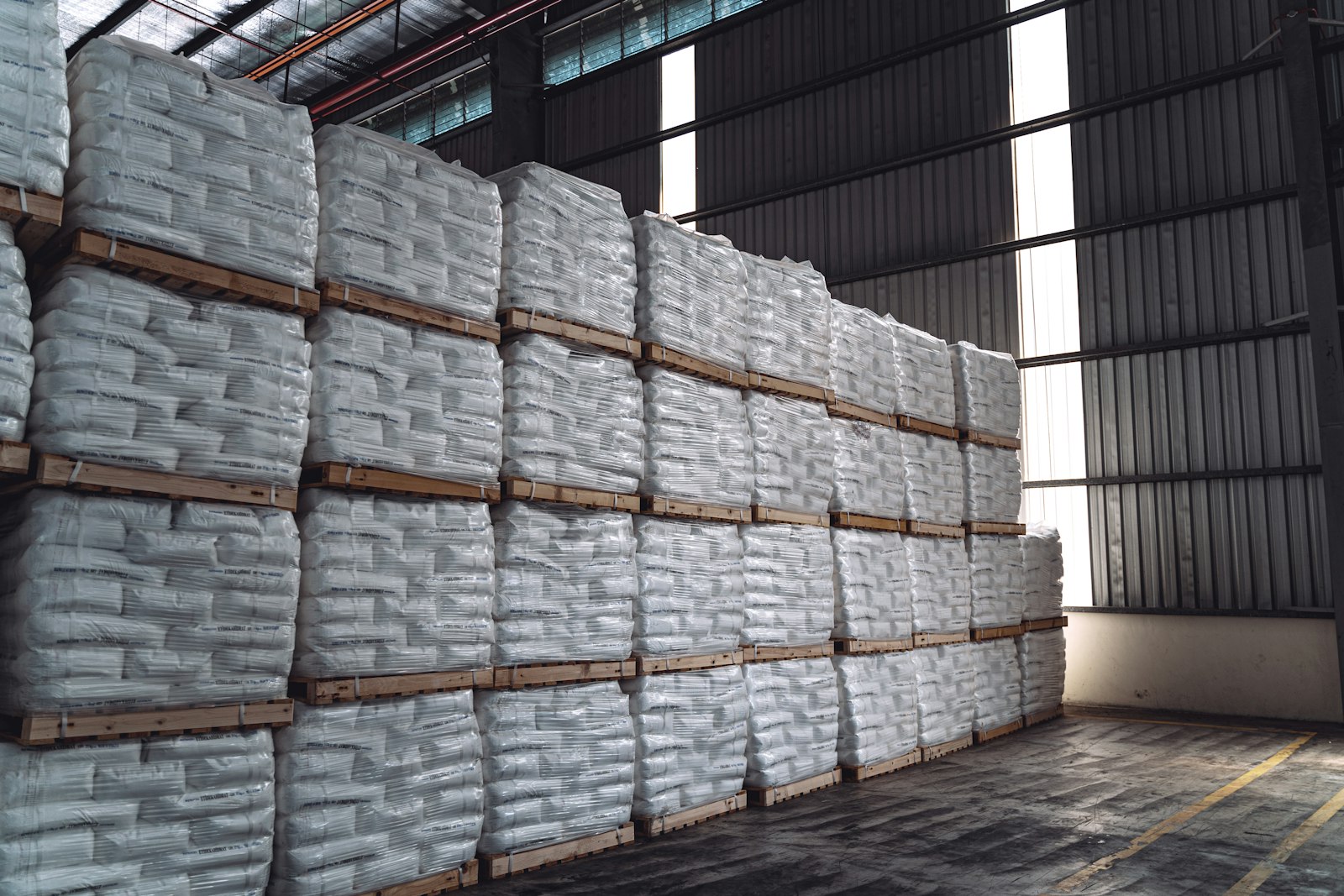
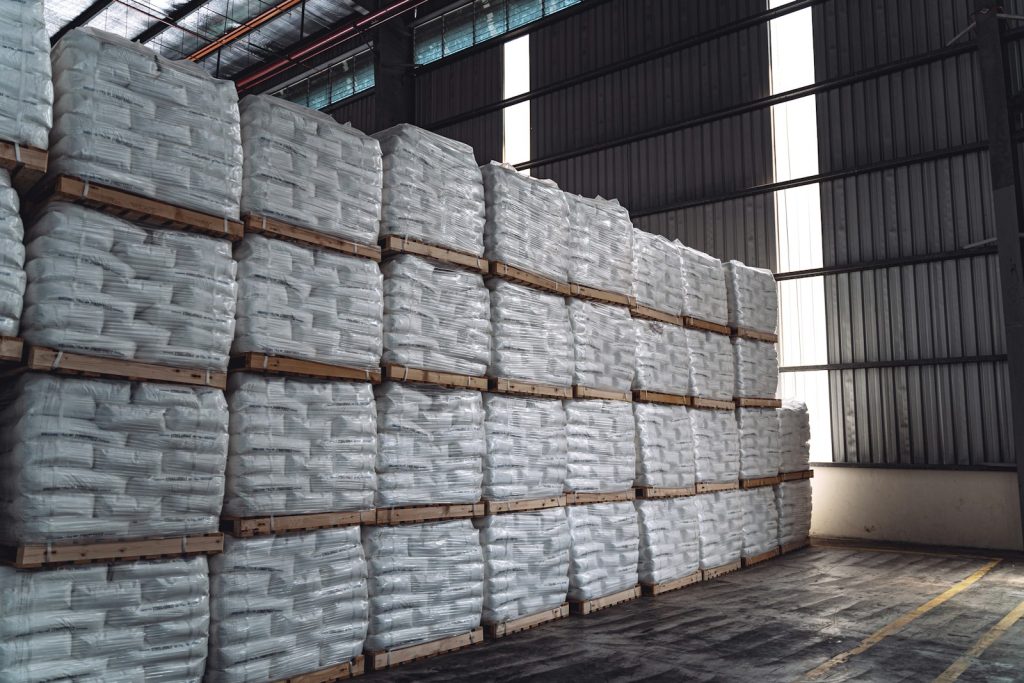
- FCL brings the lowest per-kg FOB price from a given supplier, but the volume commitment is significant. Note that dried butterfly pea flowers are light and bulky — bulk density is roughly 100–150 kg per cubic metre (inferred from analogous dried botanicals; no butterfly-pea-specific figure is published). A 20-foot container cubes out at roughly 3–5 MT of dried flowers, far below its 28-tonne payload limit. You are paying for a full box by volume, not by weight — factor this into your landed-cost arithmetic before committing to FCL pricing.
Seasonality and Stock Availability
Butterfly pea is a perennial climber, but flowering peaks vary by growing region and year. A supplier running on existing dry stock can usually quote faster and deliver sooner; a supplier who is pricing production-against-order will factor in their current drying-floor throughput and harvest timing. Seasonal flush periods can suppress spot prices briefly as supply increases; off-season production-to-order quotes may run higher. This is consistent with general herb commodity pricing behavior, not butterfly-pea-specific sourced data. Your forwarder and the supplier’s sales team are the best sources of current seasonal context.
Origin Premium: Indonesia vs Thailand vs Vietnam
Thailand is the dominant and best-known origin for butterfly pea in international trade. Government herbal promotion, deep domestic cultivation history, and established export infrastructure all support Thai suppliers commanding a modest premium. Indonesia is a significant but secondary origin — competitive on price, with value positioning that often overlaps Vietnam, but with less brand recognition in Western buyer markets. International buyers sometimes treat Indonesian product as generic “SE Asian origin” rather than premium-country-of-origin material.
This is a market reality, not a quality claim. Indonesian product at equivalent grade and moisture is not intrinsically inferior. The gap is positioning, traceability documentation, and buyer familiarity — all of which can close with a proper CoA, GMP certification, and clear traceability to farm and batch. If you are willing to do the verification work, Indonesian origin offers a real price advantage at comparable spec.
Vietnam sits broadly alongside Indonesia on price positioning. Named Vietnamese exporters appear across B2B platforms, but verification of specific company capabilities and pricing requires direct engagement — the desk does not endorse specific suppliers without verification.
What FOB Does Not Include: Your Landed Cost Is Always Higher
The FOB price stops at the ship’s rail at the Indonesian loading port. It does not include:
- Ocean freight: On light, bulky cargo like dried flowers, freight can represent 15–30% of the FOB value at lower volumes — more if the trade lane is congested or the carrier has fuel surcharges. Do not treat FOB as a proxy for landed cost.
- Marine insurance: Your decision, but skipping it on a premium certified lot is poor risk management.
- Destination terminal handling charges (THC): These vary by port and carrier and can add USD 150–400+ per container.
- Import duty: Varies by HS code and destination country. The US generally has low duties on dried botanicals under HS 1211; confirm with a broker. The EU duty question is secondary to the novel-food legality question — if the product cannot legally enter as a food, duty rate is not the problem.
- US FDA Prior Notice, FSVP compliance, and foreign facility registration: Not a cash cost per shipment, but non-compliance has real consequences. Budget for a qualified FSVP consultant if you are new to US food importing.
- Customs clearance and inland delivery at destination: Your broker and drayage provider charge separately.
A rough rule of thumb from herb commodity trade: expect landed cost to run 25–50% above FOB for ocean-freight shipments from Southeast Asia to US or EU ports, depending on volume, route, and service level. This is a planning heuristic, not a guarantee — get a full freight quote from your forwarder before building your cost model.
EU Buyers: Price Is Not Your Primary Problem
Any EU buyer reading this page should understand something clearly before they get to the price negotiation stage: Clitoria ternatea used as a food — including as a tea, food colorant, or ingredient — is currently a novel food not authorized for sale in the EU under Regulation 2015/2283. EFSA raised safety objections (reference EFSA EN-7084) and the European Commission terminated the authorization procedure (Decision C(2026)776). Enforcement has been active: RASFF notifications were issued for Austria (2025.0444) and Belgium, and Belgium has reportedly recalled butterfly pea teas from retail.
Organic certification, a clean CoA, and a low FOB price do not override novel-food status. A well-priced shipment that lands in Rotterdam and gets seized is not a good deal. Confirm current regulatory status with an EU food law specialist before you place any order for EU food-market distribution. This is the single most important piece of information this desk gives to EU-targeted buyers, and we give it before price.
Looking to get a quote in place now? Submit your product specification and target volume via our enquiry form and we will route your inquiry to a vetted export partner who can issue a live FOB quote with CoA. Or reach out directly on WhatsApp at +62 811 3941 4563.
How to Get a Realistic Quote
The gap between an indicative range and a live quote is not a formality — it can be several dollars per kilogram. Sellers set their actual prices based on your specific order, and the information you provide determines whether you get a competitive quote or a conservative one. Here is what to have ready before you approach a supplier or this desk:
- Product form: Whole flower, broken petals, powder, or extract. Each has a different price structure.
- Grade specification: Minimum intact-flower percentage, target moisture content, color strength requirement (if any), and whether you are requesting a CoA before commitment.
- Certification requirement: Non-organic, USDA NOP organic, EU organic (2018/848), HACCP, ISO 22000 — or some combination. Each certification requirement narrows the qualifying supply pool and changes the price.
- Volume and frequency: One-time trial order or ongoing program? Annual volume target? Suppliers price differently for a one-off 200 kg trial versus a committed 2 MT per month program.
- Destination port and Incoterm: If you want FOB, name the Incoterm explicitly. If you want the seller to arrange freight (CFR or CIF), state the destination port.
- Timeline: When do you need the goods at destination? Working backward from your required date gives the supplier the lead-time context to price accurately.
A supplier who cannot give you a price when you provide all of the above is either not a real exporter or is testing whether you know what you are doing. A supplier who gives you a price without asking about any of the above is giving you a number, not a quote.
Frequently Asked Questions
What is a typical butterfly pea flower FOB price per kg for food-grade whole flower?
The indicative range for standard food-grade whole flower, non-organic, at bulk export volumes is roughly USD 6–12/kg for Indonesia and Vietnam origin and roughly USD 8–15/kg for Thai standard positioning. Premium organic certified Thai top-end lots can reach USD 12–20/kg. These are by-quote estimates only — they are not firm prices, are not guaranteed to be current, and vary with grade, volume, certification, and season. Request a live quote from a vetted exporter before making any purchase commitment.
Is the butterfly pea flower wholesale price USD the same as the landed cost?
No — FOB price stops at the loading port. Landed cost adds ocean freight, marine insurance, destination port charges, import duty, and clearance fees on top of the FOB figure. For light, bulky cargo like dried flowers shipping Southeast Asia to the US or EU, expect landed cost to run roughly 25–50% above the FOB price depending on volume, trade lane, and service level. Always build a full landed-cost model with your forwarder before committing to an order.
How do butterfly pea flower bulk discount tiers work?
There is no published tier schedule — discounts are negotiated privately between buyer and seller based on volume, frequency, grade, and relationship. The general pattern: sample-quantity pricing is well above FOB export levels; small wholesale (20–50 kg) sits near the top of the FOB range for that grade; pallet-range B2B orders (100–500 kg) typically achieve the mid-range; full container loads (3–5 MT in a 20-foot container) reach the lower end of the FOB range. The only way to know where your volume lands in practice is to request a quote for your specific specification and volume.
What is the butterfly pea powder price per kg compared to whole flower?
Butterfly pea powder pricing is more variable than whole flower because it depends on processing method (simply ground dried flower versus spray-dried water-soluble extract), mesh size, anthocyanin content specification, and moisture control. A single-source unverified listing has noted a figure around USD 17.9/kg for powder [VERIFY], but this cannot be confirmed as representative. Spray-dried water-soluble extract commands a meaningfully higher price per kilogram than ground powder because of the additional processing step. Request quotes for your specific powder specification — do not assume a flower price translates directly to a powder price.
Should EU buyers proceed with butterfly pea imports based on a favorable FOB price?
Not before confirming the regulatory position. Clitoria ternatea as a food ingredient, tea, or colorant is currently not authorized under EU novel-food Regulation 2015/2283. EFSA raised safety objections and the European Commission terminated the authorization procedure. Active enforcement has occurred in Austria and Belgium. A competitive FOB price does not resolve a novel-food legal barrier. Consult an EU food law specialist before placing any order intended for EU food-market distribution. If you are considering non-food applications — cosmetics, for instance — the regulatory framework is different and requires separate specialist advice.