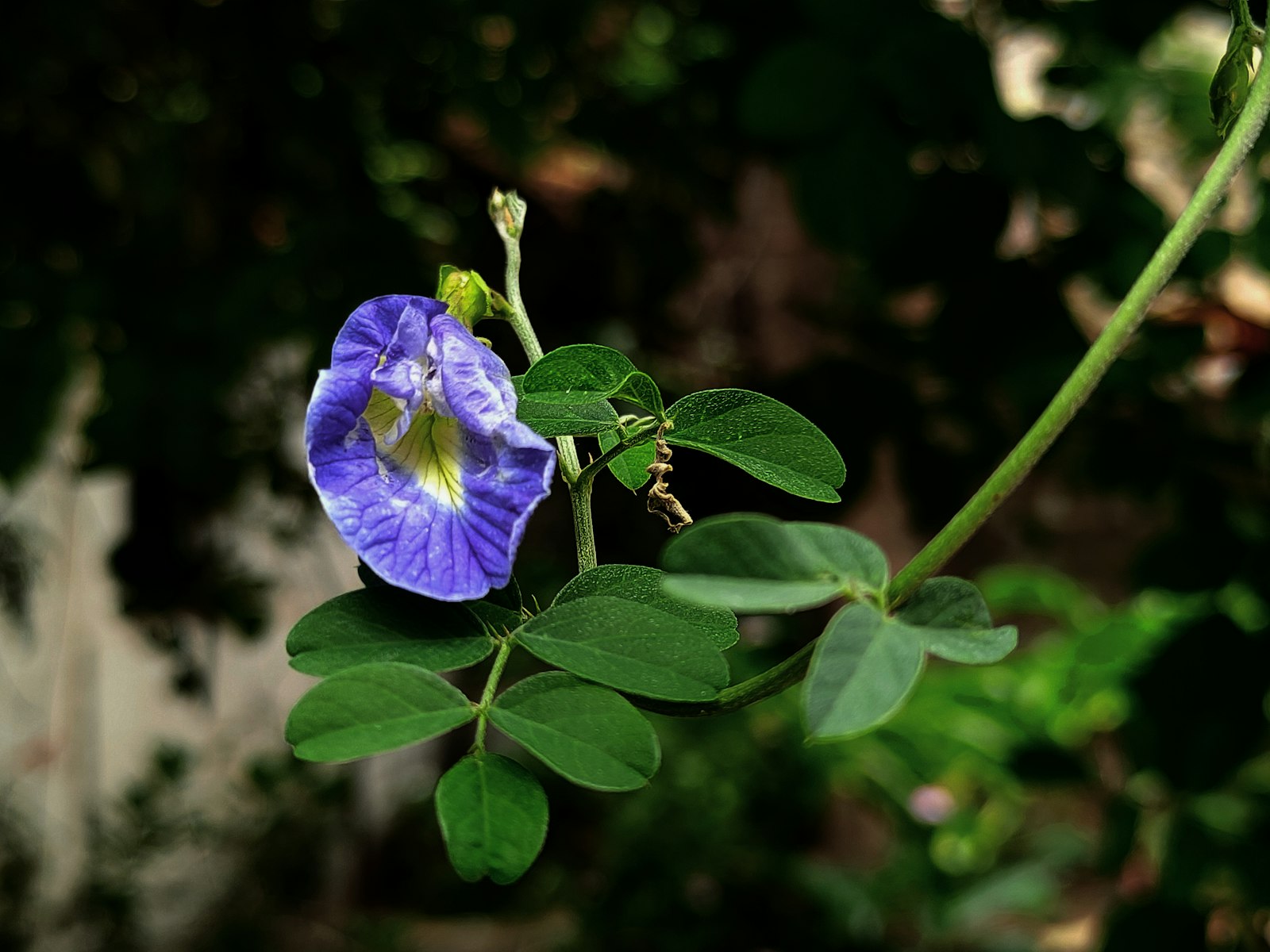
When a formulator asks about butterfly pea versus other natural blue colorants, the core question is not which pigment is “best” — it is which pigment can survive the specific pH, heat, light, and regulatory conditions of a particular product. Butterfly pea (Clitoria ternatea) produces ternatins, a class of polyacylated delphinidin-based anthocyanins that give a vivid blue in neutral-to-alkaline conditions, shift to purple then pink as acidity rises, and degrade measurably under high heat, oxygen, and prolonged light. No other commercially available natural blue colorant works quite the same way, and that is both its chief advantage and its most important constraint.
This page compares butterfly pea at a high, candid level with the main alternatives clean-label formulators are actually considering: phycocyanin from spirulina, and the synthetic certified dyes that many product developers are trying to replace. Where comparative data exists from published sources, we cite it. Where it does not, we say so plainly. We are not here to sell you a drum of butterfly pea powder at any cost — we are here to help you decide whether it fits your formulation before you order samples.
The Pigment: What Makes Butterfly Pea Blue
The blue color in Clitoria ternatea flowers comes from ternatins — polyacylated delphinidin-3,3′,5′-triglucosides. These are an anthocyanin subclass, but unusual ones. Most anthocyanins in food (red grape skin, hibiscus, red cabbage) give red-to-purple colors. Ternatins are heavily acylated, which shifts their absorption spectrum toward the blue end and gives them slightly better stability than simpler anthocyanins — though “better” here means relative to other anthocyanins, not relative to synthetic dyes.
The defining optical behavior is pH dependence. At neutral pH (around 6–7), the flower infusion reads as a clear blue. Add lemon juice, a citric acid drop, or a tonic mixer, and the pH falls toward 2–3: the color shifts through violet into pink or red. This is the “color-change cocktail” trick behind butterfly pea’s rise in mixology and visual-beverage marketing. For a tea brand or a cocktail creator, this is a selling point. For a beverage developer who needs a consistent blue through the product’s shelf life at pH 3–4, it is a serious technical problem that no amount of sourcing quality will fix.
Heat matters too. Anthocyanins in general, and ternatins in particular, degrade when exposed to temperatures above roughly 60–80°C for extended periods, especially in aqueous solution with dissolved oxygen present. This affects not just the flower itself during drying (a drying temperature above 60°C risks browning the raw material) but also any product that is hot-filled, retorted, or UHT-processed. The color loss may be acceptable at low processing intensity; in high-heat applications it is typically substantial and difficult to predict without lab trials on the specific formulation.
Light is the third degradation driver. Stored in opaque, airtight packaging away from UV, dried butterfly pea flowers maintain color for a period that suppliers commonly state as 18–24 months — a figure drawn from general herb-trade norms rather than published species-specific trials, so treat it as a defensible commercial guideline rather than a pharmacopeial spec. In an end product (a clear glass bottle, a retail pouch exposed to fluorescent light), light-driven fading will be faster than that.
Butterfly Pea vs Spirulina Blue (Phycocyanin): The Real Comparison
For clean-label formulators, the butterfly pea vs spirulina blue question comes up constantly, and the two pigments are genuinely different tools.
Phycocyanin is extracted from Spirulina platensis (cyanobacteria). It is a protein-bound pigment — specifically a biliprotein — with a vivid, somewhat bright sky-blue hue at its peak absorption around 615–620 nm. That blue is different in character from butterfly pea’s blue: phycocyanin tends to look brighter and more “electric” at moderate concentrations, while butterfly pea gives a deeper, more indigo-toned blue at comparable color depths.
pH Behavior
Phycocyanin is stable in a narrow pH window — roughly pH 4.5 to 8, with the best results between pH 5 and 7. Below pH 4 the protein structure denatures and the color degrades rapidly. Butterfly pea ternatins are not stable at low pH either — they shift color but do not disappear entirely at pH 3–4; phycocyanin at that range tends to lose color altogether rather than change hue. For an acidified beverage (pH 3.0–3.5, which covers most carbonated soft drinks, RTD teas, lemonades, and fruit beverages), neither butterfly pea nor phycocyanin gives a robust blue on shelf. This is the fundamental challenge with natural blue food coloring in the acidic beverage category.
Heat Stability
Phycocyanin is notably heat-labile. As a protein, it begins to denature at temperatures above approximately 45–50°C in liquid applications, with rapid color loss at pasteurization temperatures. This limits its practical use to cold-process applications: no-bake confections, frozen products, cold-filled beverages, ice cream and frozen desserts. Butterfly pea ternatins, being small-molecule anthocyanins rather than proteins, are somewhat more heat-tolerant but still vulnerable — they can withstand short moderate-heat processing better than phycocyanin but deteriorate significantly under extended high-heat treatment.
In practical terms: if your process involves pasteurization above 72°C for 15 seconds in a dairy beverage, neither colorant is straightforward. Phycocyanin will lose color faster; butterfly pea extract will shift and fade. Suppliers of both sometimes offer stabilized or microencapsulated versions that extend usable range — something to investigate with your specific supplier if your application sits at the edge.
Color Hue and Application Match
The hue difference matters in product development. Phycocyanin at higher doses can look almost turquoise or cyan; butterfly pea reads more as navy-to-indigo, especially in concentrated form. For a “natural blue” visual in a confection or ice cream that a consumer recognizes as “blue,” phycocyanin often gets closer to the familiar synthetic-blue reference point. Butterfly pea in a neutral-pH system gives a richer, more complex blue — which some brands prefer aesthetically, while others find it slightly darker than expected.
For applications that want the color-change drama (cocktails, mocktails, lifestyle beverages with an added-acid ritual), butterfly pea has no equivalent. Phycocyanin does not shift color on acid addition; it just loses it. That dynamic shift from blue to purple to pink is exclusive to anthocyanin-based colorants and is the single most defensible differentiator butterfly pea holds against every alternative.
Cost-Per-Color-Unit
Direct cost comparisons require live quotes and are highly formulation-specific, so we will not invent numbers. What we can say from general market knowledge: phycocyanin extract at food-grade quality is typically priced significantly higher per kilogram than butterfly pea whole flower or even spray-dried butterfly pea powder, because the extraction and concentration process is more technically intensive. However, phycocyanin is used at very low dosages to achieve color — effective use levels in beverages are often in the range of 50–200 ppm, while butterfly pea extract dosage varies considerably by application. Cost-per-color-unit depends on your target color depth, format, and the specific supplier’s concentration grade. Request samples with color-strength data and run your own cost-per-batch calculation rather than relying on per-kg headline prices.
Quick Reference: Butterfly Pea vs Spirulina Blue
| Factor | Butterfly Pea (Ternatins) | Spirulina Blue (Phycocyanin) |
|---|---|---|
| Pigment class | Polyacylated anthocyanin | Protein-bound biliprotein |
| Blue hue character | Deep indigo-navy | Bright sky / turquoise-blue |
| pH stability (best range) | ~pH 5–8 (blue); shifts purple/pink below ~4 | ~pH 4.5–8; loses color below ~4 |
| Acid color-change effect | Yes — blue to purple to pink (key differentiator) | No; just fades |
| Heat lability (aqueous) | Moderate; degrades above ~70–80°C prolonged | High; denatures above ~45–50°C |
| Cold-process suitability | Good | Good |
| Typical best applications | Blue tea, cocktails, cold beverages, neutral-pH formats, baking (pH>5) | Ice cream, frozen desserts, no-bake confections, cold-fill beverages |
| US regulatory status | Water extract approved as color additive exempt from certification (21 CFR 73.69) [FLAG: confirm current categories] | Generally recognized as safe for food use; spirulina listed as color exempt from certification (21 CFR 73.530) |
| EU regulatory status | Novel food — NOT currently authorized for food use; enforcement active [HIGH RISK] | Permitted as food ingredient and color in EU (subject to conditions); check current positive lists for your application |
This table presents general comparative trade information for planning purposes. Neither column constitutes regulatory advice. Confirm current regulatory status for every destination market with a qualified regulatory specialist before product launch.
What About Gardenia Blue and Indigo Carmine?
Clean-label formulators working on the blue colorant problem sometimes encounter two additional options worth brief mention.
Gardenia blue is produced by reacting gardenia fruit extract with amino acids in an enzymatic process. The resulting colorant — a blue pigment in the iridoid-derived class — shows better heat stability than phycocyanin and is less pH-sensitive than butterfly pea anthocyanins. It is used in several Asian markets, particularly Japan and some Southeast Asian countries. However, its regulatory pathway in the US and EU is not straightforward for many food categories; confirm with your regulatory counsel. It is also less widely available from Southeast Asian export channels than butterfly pea or spirulina.
Indigo carmine (FD&C Blue No. 2 in the US; E132 in the EU) is a synthetic certified dye — not a natural colorant — but it is the blue that many clean-label reformulation projects are explicitly trying to move away from. It offers very good heat and light stability, full pH stability across most food applications, consistent color delivery batch to batch, and regulatory clearance in a wide range of food categories in both the US and EU. Its weakness, from the clean-label formulator’s standpoint, is the “artificial color” declaration it requires in both markets. Products whose brand positioning relies on “no artificial colors” cannot use it, which is precisely why the natural blue colorant market exists at all.
Brilliant Blue FCF (FD&C Blue No. 1; E133) is the other synthetic benchmark — typically used where a brighter turquoise-blue is needed. Same clean-label constraints apply.
The Regulatory Divide That Decides Usability
For many formulators, the stability and hue discussions above become secondary once the regulatory picture comes into focus. This section is the most consequential part of any natural blue food coloring comparison for a buyer with a real product pipeline.
United States
In 2021, the FDA approved butterfly pea flower water extract as a color additive exempt from certification under 21 CFR 73.69. This means it qualifies as a “natural” color and does not need the batch-by-batch certification required for synthetic dyes. The approved food categories have been expanded over time and now include a range of beverages, yogurt, candy, pretzels, and other applications. We have noted in our sourcing fact file that the exact current list of permitted categories should be confirmed directly against the current CFR text, because the scope has evolved and we did not directly verify the complete list at time of writing. Confirm with a regulatory specialist or check 21 CFR 73.69 for your specific product category before formulating.
The dried flower sold as herbal tea is treated in US commerce as a conventional food (herbal tisane) relying on general safety and history of use, not a formal color additive approval. Many US brands sell butterfly pea tea without incident. Avoid disease or structure/function claims that would shift the product into the drug category under FDA definitions.
Phycocyanin from spirulina holds its own color exemption (21 CFR 73.530 covers spirulina extract as a color additive). Both butterfly pea and spirulina can therefore carry “color added” declarations in the US without “artificial” language, which is the operative commercial advantage over FD&C dyes for clean-label products.
European Union
The EU situation for butterfly pea is materially different and demands explicit attention. Clitoria ternatea in food (other than supplements with uncertain member-state rules) is classified as a novel food and is not currently authorized in the EU. A traditional-food notification was filed; EFSA raised safety objections (EFSA EN-7084); and the European Commission terminated the authorization procedure (C(2026)776). This is not a pending approval — it is a concluded non-authorization, with active enforcement evidenced by RASFF border-rejection notifications including an Austrian notification in 2025 and Belgian enforcement action involving Cambodian-origin flowers. Belgium has reportedly recalled butterfly pea teas.
Marketing butterfly pea as food for the EU market is currently illegal and high-risk across the food category. This applies regardless of country of origin — Indonesian, Thai, or Vietnamese butterfly pea is all caught by the same novel-food classification. If you are formulating for EU food markets, butterfly pea is not a usable option at this time. This may change if a new authorization procedure is successful, but there is no timeline for that, and we would not build a product launch around it.
Spirulina blue (phycocyanin), by contrast, is permitted in the EU as a food ingredient and color for a range of applications under the EU color additive directive — subject to specific conditions and permitted food categories that should be verified against the current positive list for your application. From a regulatory risk standpoint, phycocyanin is the clearer EU path for natural blue food coloring where butterfly pea cannot go.
Gardenia blue’s EU status is application-specific; confirm before formulating.
If you are sourcing butterfly pea for non-EU markets and want to discuss grading, certification, and RFQ options, use our enquiry form or reach us directly on WhatsApp at +62 811-3982-4563.
Where Butterfly Pea Wins the Comparison
Setting aside applications where it simply cannot compete on stability or regulation, butterfly pea does have a defensible and growing use case that the alternatives cannot replicate.
The color-change format — beverages, cocktails, and ritual-driven products designed around the pH shift — is one butterfly pea owns outright. A gin-and-tonic that turns from blue to pink on the pour, a lemonade that changes color with the squeeze, a mocktail served in stages: these are butterfly pea’s territory. No synthetic dye, no phycocyanin, no gardenia extract does this.
Clean-label blue tea (herbal, caffeine-free, visible whole flower) is another category where butterfly pea has a distinct product identity that spirulina extract does not touch. The aesthetic of the whole dried flower in a glass teapot, the deep blue infusion, the origin story — these are brand assets built around the plant itself, not just its extracted pigment.
Neutral-to-mildly-acidic applications at moderate processing intensity — some frostings, mochi, glutinous rice dishes, cold-fill beverages at pH above 5, smoothies — butterfly pea extract can deliver a consistent enough blue with adequate shelf life if the formulation is managed well. This is the broad middle ground where both butterfly pea and phycocyanin compete, and the right choice depends on target hue, exact pH, cost tolerance, and regulatory destination market.
What a Careful Buyer Should Ask Before Choosing
The comparison table above is a starting framework, not a purchasing decision. Before choosing between butterfly pea and any alternative, a formulator should answer these questions specifically for their product:
- What is the product’s final pH? Below 4.0, butterfly pea will not give you a blue. Neither will phycocyanin. Above 5.5, butterfly pea is genuinely viable.
- What thermal processing does the product undergo? UHT or retort processing rules out both butterfly pea and phycocyanin without significant encapsulation or process modification. Hot-fill at moderate temperatures (around 70°C for short hold times) may be feasible for butterfly pea extract with testing; it will likely destroy phycocyanin.
- What is the destination market? For the EU food market, butterfly pea is not currently a legal option. Verify phycocyanin’s permitted categories for your specific application type.
- Does the brand’s story depend on the color-change behavior? If yes, butterfly pea is the only option.
- What target color depth and shelf life does the product require? Natural blues in general (especially in clear, oxygen-permeable, light-exposed packaging) will fade faster than synthetic dyes. If your shelf-life specification is 24 months in a clear PET bottle on a lit retail shelf, none of the current natural blues will reliably hold color throughout without careful reformulation and packaging work.
On Quality: Not All Butterfly Pea Extract Is the Same
Even when butterfly pea is the right colorant for an application, the sourcing quality of the raw material shapes what a formulator gets. The ternatin content of a finished extract depends heavily on how the flowers were dried. I’ve watched this firsthand: flowers that sat in a drying room running too hot — above 60°C when cooler and longer would have sufficed — come out brown at the edges and dull rather than the deep, saturated blue that good drying produces. That dull flower goes through extraction and produces a dull extract. No downstream processing fixes it.
What to look for when sourcing butterfly pea for colorant use:
- Anthocyanin color strength data — expressed as absorbance at approximately 560–620 nm. Demand this on the CoA. Without it, you are buying by weight, not by color yield.
- pH color-response test — adjust a diluted extract solution to pH 3 and pH 7 and observe the visual shift. This confirms ternatins are present and active.
- Moisture below 10% (industry-norm spec for premium grade; no formal ISO or Codex standard exists for this species). High moisture in the raw flower accelerates both mold risk and anthocyanin degradation before extraction.
- Multi-residue pesticide testing against the MRLs of your destination market, and heavy metal analysis by ICP-MS. Smallholder-grown butterfly pea from Indonesia and Thailand can carry pesticide residues if not third-party tested. Organic certification reduces but does not eliminate this risk without test evidence.
- A CoA with traceability to the harvest batch. Not a generic document with company letterhead but no lot number.
We work with Indonesian-origin butterfly pea and route qualified RFQs to a vetted partner who can supply CoAs, sample lots, and pesticide/heavy-metal testing documentation. If you are at the ingredient-evaluation stage and want to run a head-to-head comparison between butterfly pea extract and another colorant in your own lab, start with a properly characterized sample — not a generic promotional pouch. Message us on WhatsApp at +62 811-3982-4563 or email [email protected] with your target application, required color depth, and destination market, and we will route your inquiry to a partner who can supply a documented sample.
FAQs: Natural Blue Food Coloring Comparison
Is butterfly pea a clean-label blue colorant in the United States?
Yes, in the US, butterfly pea flower water extract is approved as a color additive exempt from certification under 21 CFR 73.69, which allows it to appear on labels as a natural color without “artificial” language. The dried flower sold as herbal tea is treated as a conventional food. Confirm the specific approved food categories under 21 CFR 73.69 with a regulatory specialist for your product type, as the approved category list has expanded over time and the exact current scope should be verified against the live CFR text.
Can I use butterfly pea instead of FD&C Blue No. 1 or Blue No. 2 in a reformulation?
Functionally, it depends entirely on your product’s pH and heat profile. Butterfly pea will not give a blue in low-pH acidic beverages (the typical pH 3–3.5 range of most carbonated soft drinks or fruit drinks) — the color shifts to purple or pink. In neutral-to-mildly-alkaline applications such as frostings, mochi, or cold-fill beverages at pH 5.5 and above, butterfly pea can substitute for synthetic blue with testing, but expect some color fade on shelf compared to the synthetic benchmark. A lab reformulation trial is essential before any commercial claim of equivalence.
Is butterfly pea extract legal in the EU?
No. As of mid-2026, Clitoria ternatea in food products (other than certain supplement categories where member-state rules may vary) is classified as a novel food and is not authorized in the EU. EFSA raised safety objections (EFSA EN-7084), and the European Commission terminated the authorization procedure (C(2026)776). Active enforcement is ongoing through RASFF notifications and reported recalls in Belgium. Do not formulate for EU food markets with butterfly pea at this time without obtaining specialist regulatory advice confirming any change in status.
How does butterfly pea compare to spirulina blue for ice cream?
For ice cream, phycocyanin from spirulina is generally the more practical choice. Both colorants survive freezing, but ice cream production involves heating the mix during pasteurization (typically 73–85°C), which is far more damaging to phycocyanin than to butterfly pea ternatins in theory — yet the low pH of many ice cream formulations (around pH 4–5 in fruit bases) also compromises butterfly pea color. For a neutral-pH vanilla or plain ice cream base, butterfly pea can work at the pasteurization hold step if the extraction is applied after heat treatment in a cold-mix step. For mass-market ice cream production with standard hot processes, phycocyanin in a microencapsulated form is usually the more viable path. Both require formulation trials; neither is a drop-in replacement for synthetic blue.
What is the cost difference between butterfly pea colorant and phycocyanin?
We publish indicative FOB ranges for butterfly pea whole flower and powder on our FOB price guide page; we do not publish phycocyanin pricing because it is outside our sourcing scope. On a per-kilogram basis, food-grade phycocyanin extract typically commands a significant premium over butterfly pea powder because the extraction and concentration process is more technically intensive. However, the relevant metric is cost-per-unit-of-color at your target application dose, not headline per-kg price. A formulator buying phycocyanin at a high per-kg price but using it at 100 ppm may find it cheaper per batch than butterfly pea powder at a lower per-kg price used at a much higher dose rate. Request color-strength data (absorbance values) from any supplier and calculate your actual cost-per-liter or cost-per-kilogram of finished product before making a sourcing decision on price alone.