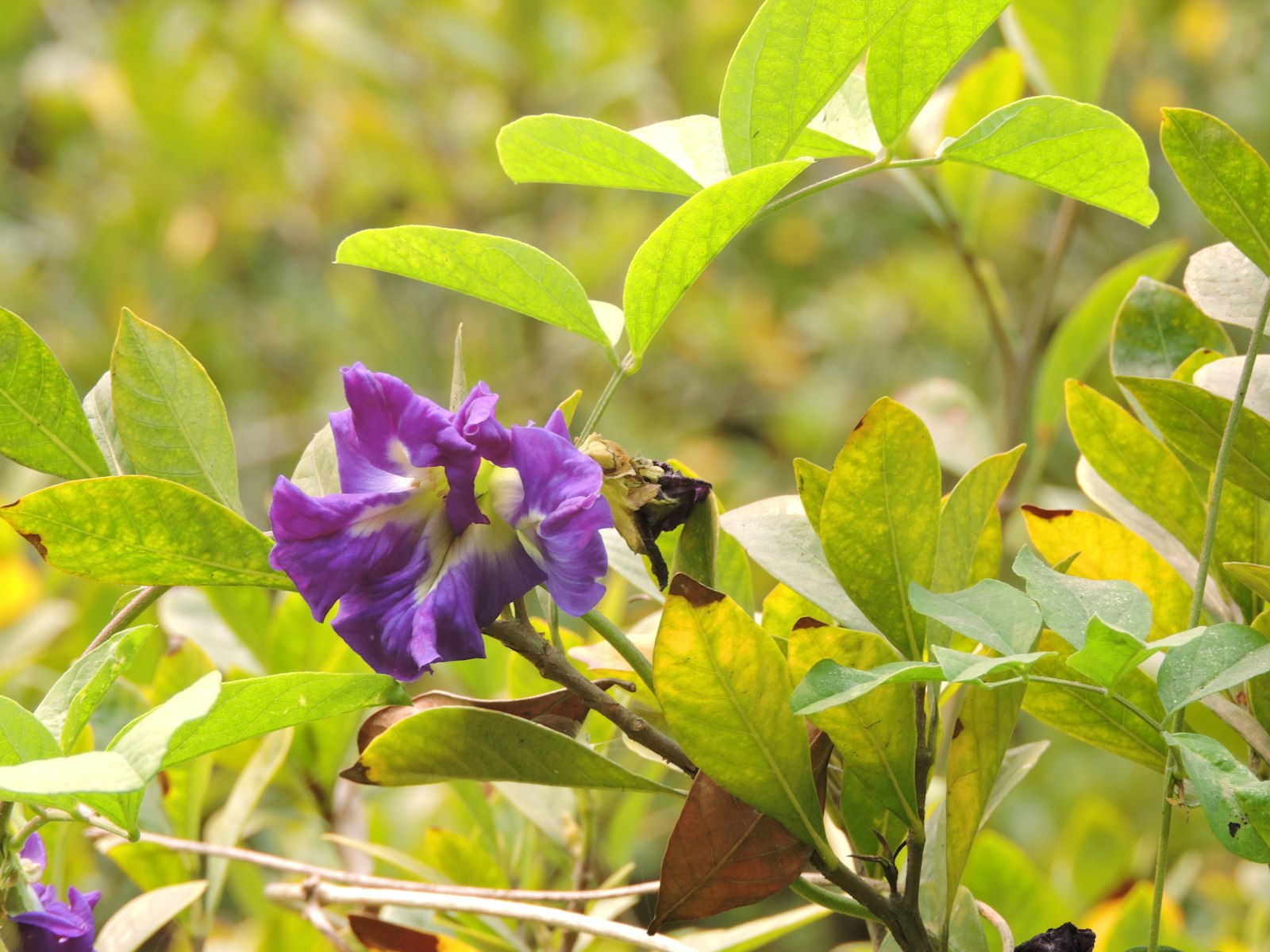
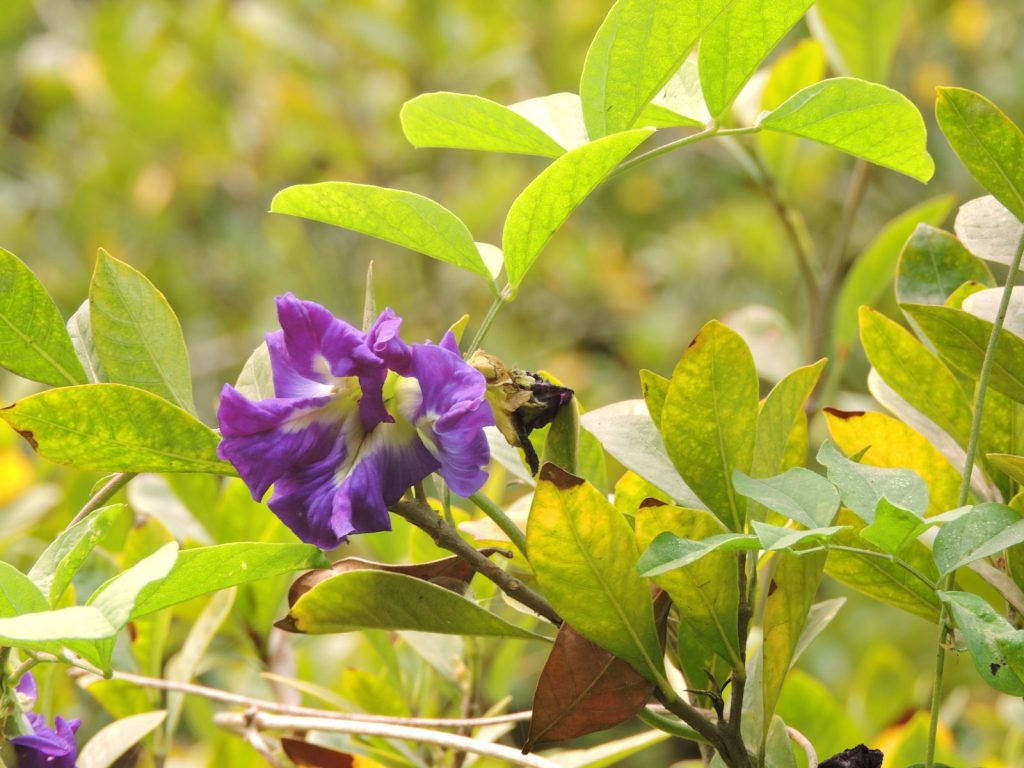
Butterfly pea for cosmetics application means sourcing Clitoria ternatea flower material — whole dried flowers, powder, or concentrated extract — for use as a natural blue or purple colorant and botanical ingredient in skincare, haircare, soap, and personal-care formulations. That is the working definition. The appeal is straightforward: the plant’s ternatin anthocyanins produce a deep, saturated blue that shifts to purple and pink with pH changes, and the color comes from a named botanical, not a synthetic dye. For formulators chasing clean-label and “natural colorant” positioning, that combination matters commercially.
What this page will not do is make skin-benefit or efficacy claims. Those claims carry real regulatory liability in cosmetics law and this desk does not write them. We will also not advise on cosmetic ingredient compliance — the rules governing what can go into a rinse-off facial wash in California differ from what the EU Cosmetics Regulation permits, and differ again from ASEAN or Gulf market requirements. Cosmetic regulation is a separate regime from food regulation: the EU novel-food ban and the US food color-additive rules that govern butterfly pea on the food side do not directly apply to cosmetics. That regulatory separation is useful to understand, but it does not make cosmetic compliance simple or universal. Verify what is permissible in your destination market with the relevant cosmetics authority and your own regulatory counsel before formulating or importing. This page is trade information, not regulatory or formulation advice.
The food-side EU novel-food non-authorization of Clitoria ternatea and the US FDA food color-additive rules under 21 CFR 73.69 govern food and food ingredients, not cosmetics or personal care products. Cosmetic ingredient and colorant rules are governed by separate frameworks (EU Cosmetics Regulation 1223/2009, US FDA 21 CFR Part 700 series, national cosmetics laws in destination markets). This desk does not interpret or advise on cosmetic compliance. Buyers must verify permissibility for their specific formulation, concentration, product type, and destination market with the relevant authority and their own regulatory counsel. Holding a CoA from an Indonesian supplier does not constitute regulatory clearance in any cosmetic market.
Why Cosmetics Buyers Come to Butterfly Pea
The demand driver is color. Formulators who have spent years working with synthetic colorants — FD&C Blue No. 1 on the US side, various permitted food and cosmetic colorants in other markets — find that retail buyers and brand owners are increasingly reluctant to print synthetic dye names on the ingredient list. “Clitoria ternatea flower extract” reads differently on a label than “Brilliant Blue FCF.” That is not a scientific distinction; it is a marketing one. But it has real commercial force in mass-market and premium skincare alike.
The chemistry behind the blue is well-established. Butterfly pea flowers contain ternatins — polyacylated delphinidin-3,3′,5′-triglucosides belonging to the anthocyanin class of pigments. These are the same compounds responsible for the dramatic pH-dependent color change that makes butterfly pea famous in beverages: the blue in alkaline or neutral conditions shifts toward purple and then pink as pH drops. In cosmetic formulations, pH determines which color the product will express. A face toner formulated at pH 5.5 will show a different hue than a shampoo at pH 7. That sensitivity cuts both ways: it is a selling point in products designed around color-shifting aesthetics, and a stability challenge in products where consistent blue is the goal.
Heat, oxygen, and light compound that challenge. Anthocyanins in general, and ternatins specifically, degrade under high temperatures, exposure to oxygen, and ultraviolet light. A beautifully blue raw extract that arrives at a formulation lab can fade, brown, or shift in hue during processing, filling, packaging, or shelf storage if those variables are not managed. This is not unique to butterfly pea — it is a general property of anthocyanin pigments — but formulators sourcing butterfly pea for its color need to account for it in both their process and their packaging choices.
Haircare is worth a specific mention. The color-shift aesthetics and the botanical credential have attracted significant interest from the haircare category, particularly in shampoos, conditioners, scalp treatments, and rinse-off masks. The colorant can give these products a distinctive on-shelf appearance in clear or translucent formats. Buyers in haircare tend to prefer extract over whole flower, since a filterable liquid or spray-dried powder integrates into aqueous formulations far more easily than rehydrated whole flowers.
Skincare applications — masks, serums, soaps, face washes — use the ingredient primarily for colorant effect and botanical positioning. Sheet masks and wash-off formats are common starting points because the regulatory exposure around rinse-off products is generally simpler than for leave-on products in most markets (though “simpler” is relative and still requires proper assessment). Soaps and scrubs where the whole dried flower is used decoratively or visibly are a distinct category from formulations where extract provides the color.
Regulatory Separation: Food Rules Do Not Govern Cosmetics
This distinction is worth dwelling on because the butterfly pea category is dominated by food and beverage coverage. When cosmetics buyers search for sourcing information, they keep running into food-side warnings: the EU novel-food non-authorization, the specific food categories in the US FDA color-additive approval. These are food rules. They apply to food and food ingredients sold for ingestion.
Cosmetics in the EU are regulated under Regulation (EC) 1223/2009, not under the novel-food framework or food color-additive regulation. The US regulates cosmetics under 21 CFR Part 700 series, separate from the food color-additive regulations at 21 CFR Part 73. A butterfly pea extract approved as a food color in the US under 21 CFR 73.69 is not automatically an approved or cleared cosmetic ingredient — those are different regulatory questions answered by different parts of the code. Equally, the EU novel-food non-authorization for butterfly pea as food does not, of itself, prohibit use of butterfly pea extract in an EU-market cosmetic — but it does not permit it either. Whether a specific butterfly pea ingredient at a specific concentration in a specific product type is permissible in a given EU member state’s cosmetic market requires separate analysis under the applicable cosmetics framework.
The desk takes no position on what is or is not permissible in any cosmetic market. The point here is that food-side regulatory status is not a proxy for cosmetic regulatory status, and buyers should not assume either that a food-use prohibition automatically bans cosmetic use, or that the absence of a food-use problem automatically clears cosmetic use. Each framework asks its own questions.
Choosing the Right Form: Whole Flower, Powder, or Extract
The three commercial forms of butterfly pea — whole dried flower, powder, and extract — each serve different formulation purposes. Matching form to use case is the first practical decision for a cosmetics buyer.
Whole Dried Flowers: Visible and Decorative Uses
Whole flowers have a place in cosmetics, but it is narrow and specific. The main legitimate use is decorative or tactile: a whole dried butterfly pea flower pressed into a facial mask sheet for visual appeal, or floated in a clear soap loaf for on-shelf distinctiveness, or included in a bath product where the visible flower is part of the product aesthetic. In these applications, the flower is an ingredient you see, not necessarily one that does the heavy lifting on color in the formulation itself.
Premium whole-flower grade — typically specified as around 90% intact flowers with deep uniform blue coloration and minimal browning or foreign matter — is what buyers should request for visible uses. Broken petals or fines deliver the same anthocyanin chemistry but lack the visual integrity that justifies using whole flowers in the first place. If you are putting whole flowers in a transparent soap bar, a crushed petal or a brown-tipped flower defeats the point.
Whole flowers are not efficient color delivery vehicles for formulations where the flower is not meant to be seen. The color extraction yield from a whole flower dropped into an aqueous formulation is highly variable and process-dependent. If the goal is consistent, measurable blue color in a serum or shampoo, powder or extract will give the formulator far more control.
Powder: Versatile but Stability-Sensitive
Ground butterfly pea powder is the mid-point form. It delivers a concentrated source of ternatins that disperses into aqueous formulations more readily than whole flowers, at a lower unit cost than a concentrated extract. Cosmetic formulators use it in wash-off masks, scrubs, and some soap formats. The powder also appears in bath products where color is the primary contribution — a bath bomb or bath soak that turns the water blue-to-purple.
Stability is the primary challenge with powder in cosmetics. Because the ternatin anthocyanins are sensitive to heat, light, and oxygen, powder incorporated into a formulation without adequate protective measures — opaque packaging, antioxidant systems, appropriate pH management — can fade, brown, or shift color before the product reaches the consumer. This is a formulation stability question, not a sourcing question per se, but it starts with sourcing: a well-dried, low-moisture powder that has been stored properly will give the formulator a better baseline than one that has already oxidized in transit or warehousing.
Mesh or sieve size matters for dispersion in formulations. Coarser powder may give a speckled or uneven color distribution; finer mesh gives more uniform dispersion. Buyers should specify the mesh size required and confirm it against the supplier’s CoA. This specification is rarely offered as a default; it needs to be requested.
Extract: The Formulation-Ready Form
Butterfly pea extract — available as a water extract (liquid or spray-dried to a soluble powder) or as a concentrated liquid — is the most formulation-friendly form for cosmetic manufacturers who want consistent, measurable color delivery. The extraction process concentrates the ternatins and removes much of the inert plant material, giving the formulator a defined input rather than a raw botanical with inherent lot-to-lot variability in anthocyanin content.
Spray-dried water-soluble extract is the standard commercial form for serious cosmetic ingredient buyers. It dissolves readily in aqueous formulations, it can be characterized by absorbance at the relevant wavelength (approximately 560–620 nm for ternatins), and it enables the formulator to control dosing with precision. A formulator working with spray-dried extract can run color-strength tests on each incoming lot and adjust dosing to hit a target hue — something that is far harder to do with raw powder, where anthocyanin content varies with growing conditions, harvest timing, and drying quality.
This is also the form most aligned with the US FDA context on the food side — 21 CFR 73.69 approved butterfly pea flower water extract as a food color additive — though again, cosmetic use is a separate question from food color use and buyers should not conflate the two regulatory tracks. The takeaway on form selection is practical: if you are a cosmetics manufacturer who needs a reliable, measurable colorant for commercial production, extract is almost always the right starting point. Whole flowers and powder serve specific niche uses within cosmetics; extract is the general-purpose formulation tool.
| Form | Primary Cosmetic Use | Color Control | Stability Notes |
|---|---|---|---|
| Whole dried flower | Decorative (soaps, masks, bath) | Low — visual, not formulation colorant | Degradation visible as browning; protect from light/oxygen |
| Powder (ground flower) | Masks, scrubs, bath products, soaps | Moderate — mesh size and lot-to-lot anthocyanin variation | Sensitive to heat/light/oxygen; specify moisture ≤10% and water activity ≤0.6 |
| Water extract (spray-dried or liquid) | Serums, shampoos, conditioners, toners, wash-off formats | High — characterizable by absorbance at 560–620 nm | Better than raw powder; still pH- and light-sensitive in formulation |
Color Chemistry: What pH Does to Your Formulation
Formulators who are new to butterfly pea sometimes discover the pH sensitivity mid-development, which is an expensive place to discover it. It is worth mapping the behavior before the first trial batch.
Ternatins are anthocyanins, and anthocyanins are structural color-shifters. At neutral to slightly alkaline pH (roughly 7 and above), the ternatins express a deep blue. As pH drops below neutral — into the mildly acidic range typical of many leave-on skincare products, around pH 5 to 5.5 — the color shifts toward purple. At lower acidic pH, the shift continues toward pink or red tones. The exact transition points depend on the specific ternatin composition of the extract batch and on other formulation components that interact with the pigment.
For a product where blue is the commercial goal — a blue shampoo, a blue-tinted toner — this means the formulation pH needs to be managed carefully to stay in the blue range. For a product where the color shift itself is the feature — a mask that changes color as it dries and the pH equilibrates with skin, for example — the pH sensitivity is a design asset. The key is knowing which outcome is intended before sourcing, because the extract specification (concentration, solvent system) and the formulation design (pH, buffer system, co-solvent compatibility) flow from that decision.
The other variable is processing temperature. Many cosmetic formulations involve heating phases — emulsification, solubilization, filling at elevated temperatures. Anthocyanins degrade faster at higher temperatures, and that degradation is accelerated in the presence of oxygen. Adding butterfly pea extract at a cool-down phase, below roughly 40–50°C, is standard practice in botanical-colorant formulation; adding it to a hot phase will drive faster pigment loss. Formulators should request heat-stability data from suppliers when available, and run their own stability testing under the planned process conditions. No sourcing document, including this one, substitutes for bench-level formulation stability work.
What to Demand from a Supplier: CoA and Testing Minimum
The buyer-facing due diligence requirements for a cosmetic ingredient do not look dramatically different from what a food-ingredient buyer would request, though the specific parameters and limits will be set by the applicable cosmetics regulation rather than food law. The CoA minimum for a butterfly pea ingredient going into a cosmetic formulation should address the following.
Identity and Purity
Botanical identification should be confirmed: Clitoria ternatea L., plant part (flower or petal), form (whole, powder, or extract with solvent system and extraction ratio specified). Without botanical ID, you do not know what you bought. For extract, the extraction ratio and the anthocyanin or ternatin content as measured by absorbance or HPLC should be reported. For powder, mesh size and anthocyanin content matter.
Moisture and Microbiology
Moisture content matters because high moisture is the precondition for mold, and mold is an invisible risk that becomes a very visible problem on shelf. Industry practice for premium dried herb and botanical ingredients targets moisture at or below 10%, with a water activity of 0.6 or lower as the more reliable measure of shelf-stable conditions. These are defensive norms drawn from general dried-herb practice, not species-specific published standards for butterfly pea — no formal ISO or Codex grade exists for this material — but they are defensible and reasonable to specify in a purchase contract.
Microbiology panels for cosmetic ingredients typically cover total aerobic plate count (TAPC), total yeast and mold count, and specific pathogens that the applicable cosmetics regulation designates for the product category and intended use. Exact limits are determined by the relevant cosmetics framework and the product’s intended consumer and use pattern. Request a full microbiology CoA and compare it against the limits your regulatory counsel specifies for the target market. Do not assume food-ingredient micro limits are the same as cosmetic-ingredient micro limits.
Contaminant Testing
Heavy metals — lead, cadmium, arsenic, mercury — are a standard contaminant concern for botanical ingredients going into cosmetics, especially those with any potential for skin contact or lip use. Multi-residue pesticide testing is equally standard: butterfly pea is grown predominantly by smallholders in Indonesia, Thailand, and Vietnam, where pesticide practices are not uniformly certified or documented, and destination-market MRL limits for cosmetic-use botanical ingredients need to be confirmed against the relevant regulatory framework.
These tests are not optional for a serious cosmetic manufacturer. A supplier who provides a CoA without heavy-metal and pesticide data is not a supplier set up for cosmetic-ingredient supply chains. Expect that a well-prepared Indonesian exporter can provide these; request them explicitly, not as an afterthought. If they are not on the standard CoA, they need to be added as a purchase requirement.
For buyers sourcing extract specifically, solvent residue data is also relevant if the extraction method uses anything other than water. Confirm the extraction solvent and whether any residue limits apply under the target cosmetics regulation.
GMP and Traceability
For a cosmetic ingredient, ISO 22716 (Good Manufacturing Practice for Cosmetics) is the relevant GMP standard, distinct from food-industry ISO 22000 or HACCP. Not every Indonesian botanical exporter is certified to ISO 22716 — in fact, most botanical ingredient suppliers operate under food-grade GMP and may not have a cosmetics-specific certification. That does not automatically disqualify them, but it means the cosmetic manufacturer needs to conduct their own supplier audit or rely on a pre-qualified ingredient distributor to bridge the gap. Traceability to farm, harvest batch, and processing lot is a minimum requirement for any recall or quality-event investigation. Ask for it explicitly.
If you want to discuss what a vetted Indonesian butterfly pea supplier for cosmetic-grade ingredient sourcing looks like in practice, reach us on WhatsApp at +62 811 3941 4563 or at [email protected]. We route qualified inquiries to our vetted partner and may earn a referral fee on introductions at no extra cost to you. Alternatively, use our enquiry form to outline your volume, form, and application and we will route the RFQ appropriately.
Color Stability in Packaging: What Protects the Blue
The color stability challenge does not end when formulation is complete. It extends through filling, packaging, and shelf life. Butterfly pea color in a finished cosmetic product is subject to the same ternatin degradation chemistry as in raw ingredient form: heat, light, and oxygen all work against it.
Opaque packaging is the most straightforward protective measure. A blue serum in a clear glass vial on a brightly lit retail shelf is a stability experiment running in real time. The same formulation in an opaque, light-blocking tube or bottle is significantly better protected. Amber-glass formats, which are common in the herbal and botanical skincare segment for exactly this reason, offer intermediate protection.
Airtight, moisture-barrier closures matter especially for powder-containing products and for formulations where the color expression depends on maintained pH. Oxygen ingress during repeat consumer use can accelerate pigment degradation; airless pump formats reduce this for leave-on serums and lotions.
Shelf-life stability testing under the intended storage conditions — not just ambient, but the realistic retail and consumer-home conditions of the target market — is the only way to establish an evidence-based use-by period. The generally cited shelf life for properly stored dried butterfly pea flower ingredient is 18 to 24 months (supplier-stated and consistent with general herb norms; not peer-reviewed for this species specifically). What that translates to in a finished cosmetic formulation is a formulation stability question, not a raw-ingredient specification. Expect to run a full panel of accelerated and real-time stability tests, not to extrapolate from ingredient shelf life.
Indicative Pricing Ranges for Cosmetic Buyers
Pricing for butterfly pea as a cosmetic ingredient follows the same dynamics as the food-ingredient market, because the raw material is the same plant and the same growers. There is no separate “cosmetic grade” price list; what cosmetic buyers pay reflects the form, certification, and volume tier of the underlying material, plus any value-added processing by the extract manufacturer.
Indicative FOB USD/kg ranges for the relevant forms — presented as planning brackets, not firm quotes, and dependent on origin, grade, certification and volume:
- Whole dried flower, standard non-organic (Indonesia/Vietnam origin)
- Approximately USD 6–12/kg FOB. Premium or organic select whole flower from Thailand-origin suppliers tends to run USD 10–20/kg. These ranges are indicative and reasoned from sparse public listings; real B2B prices are negotiated privately.
- Ground powder (standard grade)
- Approximately USD 6–10/kg FOB. Powder pricing overlaps with broken-petals/fines grade because powder is typically produced from lower-grade or off-spec flower material. Single reference data points for powder pricing exist in the market but vary widely and should not be taken as market-clearing prices.
- Water extract or spray-dried extract
- Pricing for standardized extract involves value-added processing on top of raw flower cost and varies considerably by concentration (expressed as extraction ratio or anthocyanin percentage), solvent system, drying method, and batch volume. No reliable market-price range for cosmetic-grade butterfly pea extract is available from the sourcing research behind this desk. Request a quote against a defined specification. A quote that does not specify the anthocyanin content or extraction ratio is not comparable to one that does.
None of these figures should be used as a firm basis for a purchase order or a budget line without a live quote. Cosmetic ingredient buyers should also factor in the cost of the additional testing typically required — microbiology, heavy metals, pesticides, and for extract, solvent residues and identity confirmation — which may or may not be included in the supplier’s standard pricing. Some suppliers quote CoA testing separately; others include it. Clarify this before comparing quotes.
Form-to-Application Reference for Cosmetics Buyers
Here is the practical matching guide this desk uses when routing cosmetic buyers to the right product form.
Facial Masks (wash-off, sheet, peel-off)
Powder is the common choice for powder-format wash-off masks and mixing masks, where the color expression in the dried or applied product is the aesthetic. Sheet masks use extract in the saturation liquid; whole flowers can be pressed into sheet masks decoratively. Formulation pH will determine the color; most masks are mildly acidic on skin contact, which will shift blue extract toward purple. If consistent blue is the marketing message, test pH and consider a buffering approach.
Serums and Toners
Extract is the only practical choice. Whole flower and raw powder will not give a clear, characterizable result in an aqueous serum or toner format. Spray-dried water-soluble extract disperses cleanly, and the color can be measured and standardized by lot. Leave-on products in many markets carry higher regulatory scrutiny than wash-off formats; verify permissibility in your target market before advancing to commercial production.
Soaps (melt-and-pour, cold-process)
Whole dried flowers are a popular decorative element in artisan soap, particularly in clear melt-and-pour bases where the flower is visible. Cold-process soap is highly alkaline during saponification, which will destroy or shift the ternatin pigments; the color result in finished cold-process soap is not predictable from the raw flower color and typically fades significantly. Powder added to melt-and-pour at low-temperature cool-down phases gives better color retention than hot-process addition. Extract behaves similarly to powder but is more consistent lot to lot.
Shampoos, Conditioners, Scalp Treatments
Extract is the standard choice. Shampoos are typically near-neutral to mildly acidic pH, which places them in the purple-to-pink range of the ternatin color shift rather than deep blue. Conditioners are often more acidic still. Buyers who want a blue-appearing shampoo need to understand that the in-bottle color (controlled by formulation pH) and the on-hair or lather color may differ. Extract concentration, pH, and the presence of other colorants or optical brighteners all interact. This is formulation development work, not something resolvable from ingredient sourcing alone.
Haircare Treatments and Hair Masks
Extract and powder both appear in this category. Rinse-out hair masks frequently incorporate botanical ingredients for colorant positioning and the butterfly pea blue-to-purple shift can be a distinctive aesthetic in a translucent mask. Buyers in this application should assess color stability under the formulation pH range and the heat used during any hot-fill process.
Sourcing Indonesia-Origin Butterfly Pea for Cosmetics: What Differs from Food Sourcing
The fundamentals of sourcing butterfly pea from Indonesian producers do not change dramatically when the end use is cosmetic rather than food. The same crop, the same drying floors, the same growers. What changes is the quality and documentation specification on arrival, and the GMP framework that governs processing.
Indonesia is a significant but secondary origin compared to Thailand in global butterfly pea trade, with competitive pricing that often overlaps with Vietnamese material and positions below premium Thai flower. For cosmetic-grade extract sourcing specifically, the buyer is typically dealing not with a raw-flower grower but with an extract processor or an ingredient distributor who sources flower from multiple growing regions. Indonesia has extract processing capacity, though verifying GMP status for cosmetics — ISO 22716 rather than food-grade ISO 22000 — requires explicit due diligence.
For butterfly pea skincare ingredient sourcing from Indonesia, the practical implication is that buyers are more likely to find suitable suppliers among ingredient distributors and extract processors than among flower growers dealing directly. A flower grower optimized for dried tea export can produce the raw material; the processing step to a characterized, stable extract is a separate operation. Some integrated producers do both; many do not. Confirming which you are dealing with matters for the CoA you will receive.
For more on product forms and how they compare, see our butterfly pea powder wholesale page and the applications overview. For grade specifications applicable to the raw material, the grades and quality page covers the physical and chemical parameters a careful buyer should specify, including the industry-norm moisture and anthocyanin specs that apply equally whether the downstream use is food or cosmetic.
Frequently Asked Questions
Is butterfly pea extract allowed in cosmetics in the EU?
The EU novel-food non-authorization for Clitoria ternatea as a food applies to food and food ingredients, not to cosmetics. EU cosmetics are governed by Regulation (EC) 1223/2009, which is a separate framework. Whether a specific butterfly pea ingredient at a specific concentration in a specific product type is permissible in a cosmetic marketed in the EU requires analysis under that regulation, not under novel-food law. This desk does not interpret cosmetic compliance. Verify permissibility with the relevant cosmetics authority and your own regulatory counsel before formulating or importing for the EU market.
What form of butterfly pea is best for skincare and haircare formulations?
Spray-dried water-soluble extract is the most formulation-ready form for cosmetics manufacturers who need consistent, measurable color delivery in aqueous systems like serums, toners, shampoos, and conditioners. It is characterizable by absorbance at approximately 560–620 nm and enables dosing control across production lots. Powder serves well in powder masks, scrubs, and bath formats where some variability in color depth is acceptable and where the lower cost per kilogram is a factor. Whole dried flowers are a niche choice for decorative or visible applications in soaps and sheet masks. For formulations where consistent blue is the commercial claim, extract is the standard tool.
Why does butterfly pea change color in my formulation?
The color change is driven by pH. Ternatin anthocyanins in butterfly pea extract express deep blue at neutral to slightly alkaline pH (around 7 and above) and shift progressively toward purple, then pink, as pH decreases. Most leave-on skincare products are formulated in the pH 4.5–6 range for skin compatibility, which places the ternatin color in the purple-to-violet zone rather than blue. Wash-off and rinse-off products may have different pH profiles. Heat and oxygen also accelerate ternatin degradation, causing browning or fading over time. Managing pH, temperature during filling, and packaging oxygen exposure are the three main levers a formulator has for maintaining intended color.
What certifications should I require from a butterfly pea supplier for cosmetic use?
At minimum: a full CoA covering botanical identity, moisture content, water activity, total aerobic plate count, yeast and mold, specific pathogens as required by your target market’s cosmetics regulation, heavy metals (lead, cadmium, arsenic, mercury) and multi-residue pesticide testing. For extract, request extraction ratio, anthocyanin or ternatin content by absorbance or HPLC, solvent system, and solvent residue data if applicable. GMP certification for cosmetics-grade ingredient supply would ideally be ISO 22716; if the supplier operates under food-grade ISO 22000 or HACCP only, a full supplier audit against cosmetics-appropriate standards is necessary. No certification from a supplier constitutes regulatory clearance in any cosmetics market; compliance is the manufacturer’s responsibility.
Where can I request a sample of butterfly pea extract or powder for formulation trials?
Contact us on WhatsApp at +62 811 3941 4563 or at [email protected] with the form (whole flower, powder, or extract), target specification (anthocyanin content, mesh size, or extraction ratio), and your intended application and destination market. We route qualified requests to our vetted partner who can provide samples, CoA documentation, and a quote. We are an independent sourcing desk and may earn a referral fee on introductions at no extra cost to you. Sample pricing is by quote and not published; see our enquiry form to start the process.