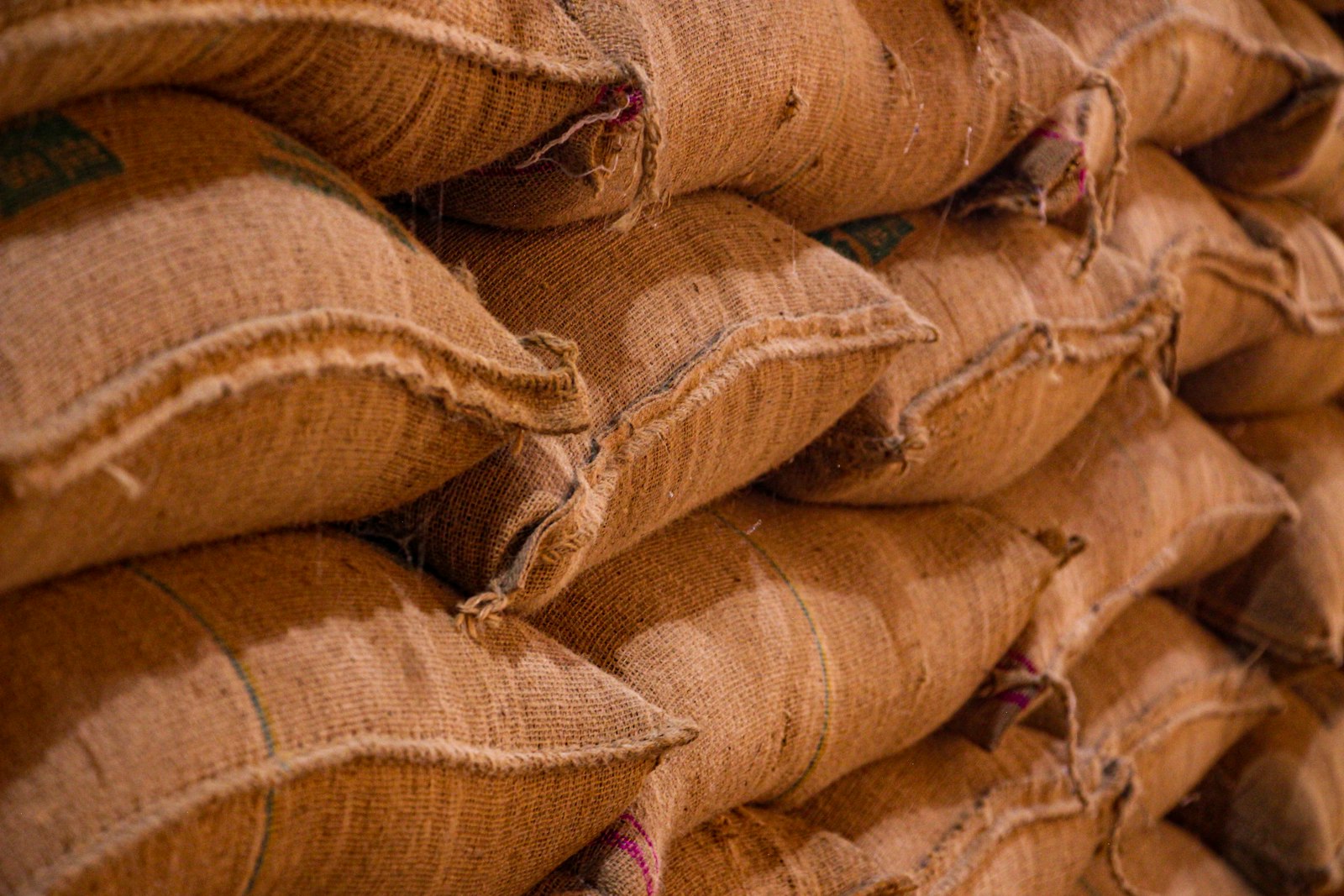
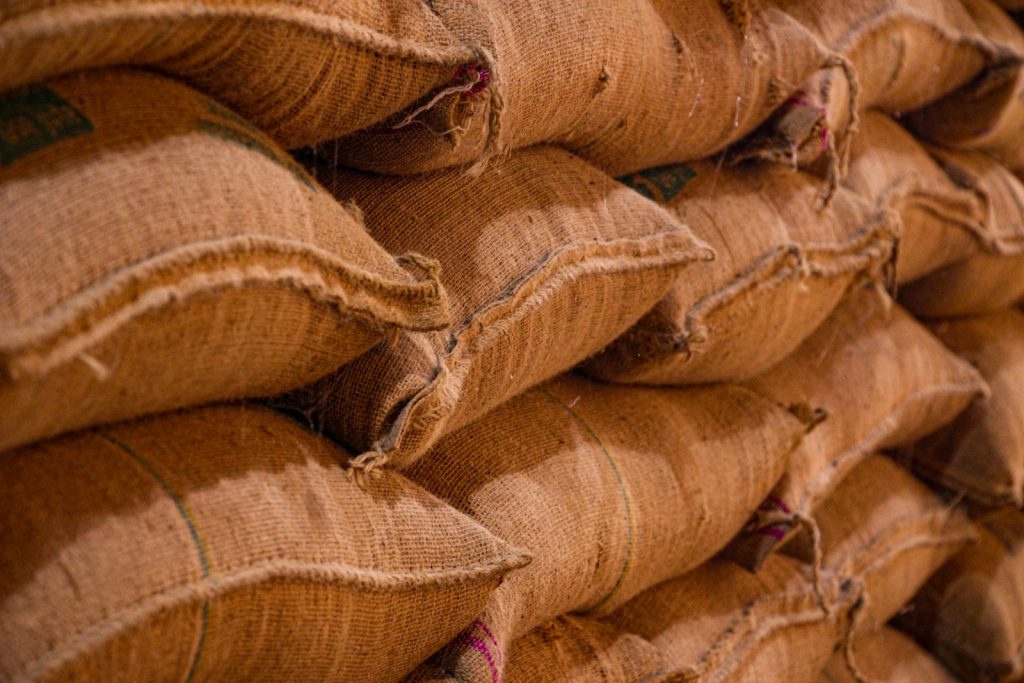
Independent sourcing note: We are an independent butterfly pea flower tea B2B sourcing desk — we curate verified Indonesian growers and tea makers and route your RFQ to a vetted partner; we are not the manufacturer, exporter of record, or freight forwarder. Butterfly pea is dried Clitoria ternatea flowers, graded by colour and moisture and also sold as petals, powder, and extract. Figures (MOQ, FOB per kg, lead times) are indicative ranges and vary by grade, season, and volume — final terms are by quote. Compliance (pesticide-residue limits, organic certification, food-contact, and import status such as EU novel-food, which is uncertain) is your responsibility to verify with the supplier and a licensed customs broker — this is general trade information, not legal or regulatory advice. We may earn a sourcing commission on referred orders (referral disclosure).
Bulk dried butterfly pea flower (Clitoria ternatea) is the whole or broken dried petal of the tropical climbing vine, traded as an ingredient in herbal tea, natural blue food colorant, cocktail applications and cosmetic formulations. In B2B trade the term specifically means dried, not fresh, and in petal form — not powder or extract — purchased in quantities that trigger ex-factory or FOB pricing, typically starting at 20 kg and scaling to full-container loads.
This guide covers what buyers actually need to know before they commit to a bulk purchase: realistic minimum order quantities by buyer type, standard packing configurations, the sample-to-pallet-to-FCL journey, and the regulatory flag that EU-based importers must check before placing any order at all. Prices and MOQs on this page are indicative and supplier-dependent; they exist to help you ask better questions, not to substitute for a live quote.
Why MOQ Transparency Is Rare in This Category
Search any variation of “butterfly pea flower MOQ” and you will find catalogue listings that hide the minimum behind a “contact us” button, or marketing copy that conflates retail pouches with wholesale cartons. There is no central exchange, no published price index, and no formal grading standard — the market for wholesale bulk blue pea flowers is negotiated bilaterally between buyer and supplier, in private, on terms that change with the season, the harvest quality, and the volume bracket you can commit to.
That opacity is frustrating for buyers doing due diligence. The goal here is to lay out what the market actually looks like in ranges, sourced where possible and flagged honestly where the data is thin.
MOQ Tiers: What to Expect by Buyer Type
There is no single “correct” minimum order. Supplier minimums reflect their processing batch economics, not a regulation. A small artisan drier in West Java sets a different floor than an ISO-22000 certified export facility in Chiang Mai. With that caveat, three tiers describe most of the market:
Tier 1 — Small Wholesale (roughly 20–50 kg)
This bracket covers food-service buyers, specialty tea brands launching a SKU, and cosmetic formulators testing market fit. At this scale, most suppliers ship in food-grade PE or PP inner bags of 1–5 kg, packed into outer cartons of 10–20 kg net weight. A 25 kg carton is a common unit; you will encounter dried butterfly pea flower 25 kg bulk carton as a standard listing format on Asian B2B platforms.
One Vietnam-origin listing on Alibaba showed an MOQ of 50 kg in 5 kg PE inner bags — that is a single data point and should be treated as illustrative, not representative of all Vietnamese suppliers. Indonesia and Thailand MOQs at this tier are broadly inferred from herb-trade norms and sparse public listings; treat 20–50 kg as a reasonable starting-point question to ask, not a guaranteed floor.
Pricing at Tier 1 is at the top of the FOB range. Standard food-grade whole flower, non-organic origin from Vietnam or Indonesia, has been seen quoted around USD 6–12 per kilogram; Thai premium positioning tends toward USD 8–15 per kilogram at this scale. These are indicative figures drawn from public catalogue data and analogous herb pricing — not firm offers. A live quote will differ.
Tier 2 — Serious B2B / FOB (roughly 100–500 kg)
Once you move into three-digit kilograms, the conversation shifts. Suppliers with HACCP or ISO 22000 certifications typically require this bracket before they will issue a proper Certificate of Analysis, run a dedicated drying batch, or agree to private-label specifications. It is also the threshold at which FOB pricing becomes meaningful: the per-kilogram rate drops, the supplier commits production capacity, and documentation (phytosanitary, COO, micro and pesticide CoA) is more routinely included.
At 200–500 kg, buyers are typically shipping one to several pallets via LCL (less-than-container load) sea freight or, for perishability-sensitive consignments, groupage air. Packing at this tier usually mirrors Tier 1 inner bags but on a pallet build of 20–25 cartons. Some buyers ask for vacuum-compressed inner bags to reduce volume, which matters because dried butterfly pea flowers are a voluminous, low-density cargo — the container fills by volume long before it fills by weight.
Self-reported MOQs from named Thai exporters have been cited in market commentary at around 90–100 kg. Those figures are competitor-reported and unverified by this desk; treat them as a reference point rather than a benchmark you can hold a Thai supplier to without their own written confirmation.
Tier 3 — Full-Container (FCL) Volume
At FCL scale, dried butterfly pea flower behaves as a volume-limited cargo. The bulk density of dried botanical flowers is estimated at roughly 100–150 kg per cubic metre — comparable to chamomile or hibiscus — which means a standard 20-foot container carries approximately 3–5 metric tonnes of dried flower before it runs out of space, far short of the container’s structural payload of 20–28 MT. A 40-foot container lifts roughly 6–10 MT under the same constraints.
These volumetric estimates are inferred from analogous herb categories; no butterfly-pea-specific bulk density study has been published to this desk’s knowledge. Confirm with your freight forwarder using a sample carton’s dimensions and net weight before committing to a container booking.
FCL buyers at this tier are typically extractors, co-manufacturers, or large-format tea blenders. They negotiate directly with farms or cooperatives, specify drying method (shade vs. oven; Thai Department of Agriculture guidance references 50–60 °C for 8–10 hours for export), and require full batch traceability. MOQ is less relevant at this level than harvest timing, quality consistency across the full container, and lead time against seasonal availability.
| Buyer Type | Indicative MOQ Range | Typical Shipment Mode | Key Docs Usually Required |
|---|---|---|---|
| Specialty tea brand / food-service | 20–50 kg | Courier / air parcel / LCL | CoA (moisture, micro), phytosanitary |
| B2B importer / private-label | 100–500 kg | LCL sea / groupage air | CoA, pesticide panel, COO, GMP/HACCP cert |
| Extractor / large blender / retailer | 500 kg–FCL | FCL 20 ft or 40 ft sea | Full batch traceability, COO, organic cert (if applicable), FSVP / FSMA docs (US) |
All figures are indicative and supplier-dependent. Prices and MOQs require a live quote. No single supplier is named or implied by these ranges.
Packing Norms: From Inner Bag to Outer Carton
No species-specific packaging regulation governs dried butterfly pea flower. What follows reflects general dried-herb trade practice, not a statutory requirement unique to this botanical.
Inner Packaging
Food-grade low-density polyethylene (LDPE) or polypropylene (PP) bags are standard. Bags are typically heat-sealed and, for premium grades, vacuum-compressed or flushed with nitrogen to displace oxygen. Anthocyanin pigments — the ternatins responsible for the flower’s blue colour — degrade under heat, oxygen and light, so packaging decisions directly affect shelf life. Inner bag weights of 1 kg, 2 kg and 5 kg are the most common unit sizes; 10 kg inner bags exist but are less frequent for whole-flower grades because larger units increase handling stress on delicate petals.
Outer Cartons
Double-walled corrugated cartons, typically 10–20 kg net weight, are the export norm. A 25 kg carton is used by some suppliers and matches the common “dried butterfly pea flower 25 kg bulk carton” search intent — but 25 kg is on the heavy end for a product this voluminous; confirm the actual gross weight and carton dimensions before planning a pallet build. Cartons should be moisture-resistant, clearly labeled with net weight, batch number, production date, best-before date, and country of origin.
Master Packing for Pallets
Cartons are stacked and strapped or shrink-wrapped on standard EUR (80×120 cm) or ISPM-15 treated wood pallets. Given the low bulk density of dried flowers, a standard pallet load will reach height limits before weight limits. Experienced freight teams routinely use half-height stacking or interleaved cardboard sheets to protect lower cartons from compression. Confirm pallet dimensions with your freight forwarder early — volumetric surcharges on air freight apply below the IATA threshold of 167 kg/m³, which dried flowers fall well under.
The Buyer Journey: Sample to Pallet to FCL
Buying bulk dried butterfly pea flower for the first time follows a predictable arc. Compressing any step tends to create problems downstream.
Step 1 — Carton Sample (100–500 g)
A properly qualified sample should be drawn from an actual production batch, not from display stock. Request the CoA that corresponds to the sample batch. Basic evaluation: colour intensity (deep uniform blue, no browning), moisture on arrival (should not feel damp), intact-flower percentage for premium grades (often specified at ≥90% intact), absence of visible foreign matter, and aroma (clean botanical, no mould or fermentation note). Send the sample to an independent lab for moisture content, water activity, and a basic micro screen before proceeding.
Step 2 — Trial Order (20–50 kg)
A trial order confirms that the production batch matches the sample and that the supplier can execute documentation correctly. This is where phytosanitary certificates, certificates of origin and batch CoAs are tested in practice, not just promised. If the supplier cannot produce a clean pesticide panel result and a micro panel (at minimum TPC, yeast & mould, Salmonella absent/25 g, E. coli absent/25 g) at trial-order scale, that is an early warning sign.
Step 3 — Repeat B2B Order (100–500 kg)
Once the supplier relationship is established and regulatory documents are confirmed to meet your importing country’s requirements, scaling to LCL pallet orders becomes straightforward. Lead times from stock are typically 1–3 weeks ex-factory; production-against-order runs 4–8 weeks depending on harvest timing. Allow an additional buffer around harvest peaks (butterfly pea flowers in Indonesia tend to be harvested year-round in irrigated gardens, but smallholder supply can fluctuate seasonally). These lead times are inferred from general herb-trade practice, not butterfly-pea-specific data.
Step 4 — FCL or Programme Business
Programme buyers lock in a quarterly or annual volume at a negotiated price, with scheduled shipments against a master purchase order. At this level, buyers typically request factory audits (HACCP, GMP, ISO 22000, or equivalent), traceability documentation from farm to export, and sometimes an open-book cost structure. Shelf life on properly dried and packed flower is supplier-stated at 18–24 months from production date — 24 months is a common contract clause — though this is not independently peer-reviewed data; your quality team should verify against your own storage conditions.
At any stage in this journey, our sourcing desk can connect you with verified Indonesian suppliers who have exported to your destination market. Submit your enquiry via our enquiry form or reach us directly on WhatsApp +62 811 3942 1456 with your target volume, grade, and destination country — we will route you to the right production partner. No one can pay to change what we publish; if you proceed with a partner through our introduction, they may pay us a referral fee at no extra cost to you.
Pricing and MOQ: Why They Cannot Be Separated
There is no formal grading standard for dried butterfly pea flower — the trade grades in common use (premium whole flower, standard food-grade, broken/fines, colorant powder) are industry-norm descriptions, not legal categories. This matters for MOQ pricing because suppliers tier their minimums by grade as much as by volume.
- Premium whole flower, organic-certified, Thai origin
- Typically commands the highest per-kilogram price: indicatively USD 10–20 per kilogram at B2B FOB volumes. Thai suppliers with internationally recognized organic certification (USDA NOP or EU Reg. 2018/848) and consistent intact-flower percentages sit at the top of this range. MOQs for certified organic lots are often higher because certified batches require segregation from conventional production.
- Standard food-grade whole flower, non-organic, Vietnam or Indonesia origin
- Indicatively USD 6–12 per kilogram FOB at small-to-mid B2B volumes. Quality varies considerably; without a multi-residue pesticide panel from an accredited lab, do not assume smallholder-sourced product meets EU MRLs (Regulation 396/2005) or US EPA tolerances, even if it meets the destination country’s stated specs.
- Broken petals, blend-grade, or fines
- Indicatively USD 6–10 per kilogram. Suitable for extract production, powder manufacturing, or blended-tea applications where intact appearance is not a requirement. Moisture control is the same critical spec; broken surface area increases oxidation risk.
- Powder (spray-dried or milled)
- Pricing diverges significantly based on pigment concentration and processing method. Water-extract powder commands a different price curve entirely from milled dried-flower powder. Treat powder as a separate product category with separate sourcing logic.
All price ranges above are indicative, drawn from sparse public listings and analogous herb trade data. They will not match your live quote. Volume, grade, certification, origin, season, and your credit terms all move the number. Any supplier quoting a specific firm price without knowing your spec, volume, and destination is not being serious with you.
Incoterms for Bulk Buyers: FOB, CIF, and What They Actually Mean
Most B2B butterfly pea flower trades are quoted on FOB (Free On Board, named Indonesian or Thai port). Under FOB, the seller delivers the goods cleared for export and loaded on the buyer’s nominated vessel; risk and cost transfer at that point. The buyer arranges ocean freight, marine insurance, and all destination-side costs.
If a supplier quotes CIF (Cost, Insurance & Freight), they are paying ocean freight and arranging minimum marine insurance, but risk still transfers at the loading port — not at the destination. The price difference between FOB and CIF is freight plus insurance, not protection against in-transit loss on your behalf.
For first-time buyers at trial-order scale, EXW (Ex Works) is occasionally quoted — meaning the buyer carries everything from the supplier’s factory gate. EXW maximises buyer cost and administrative burden; it is rarely the right structure until you have an established freight-forwarding relationship in the origin country.
Key Indonesian export ports for herb and agricultural shipments include Tanjung Priok (Jakarta), the primary container hub, and Tanjung Perak (Surabaya) for East Java origin product. Routing is shipment-specific and should be confirmed with your freight forwarder; these are inferred from general Indonesian agricultural export logistics, not butterfly-pea-specific trade data.
EU Buyers: Read This Before You Place Any Order
This section is not a formality. It is the single most important regulatory fact in this guide.
Clitoria ternatea flower in food products (other than certain supplements) is classified as a novel food in the European Union and is not currently authorised. A traditional-food notification was filed and EFSA raised formal safety objections (EFSA EN-7084). The European Commission terminated the authorization procedure (Commission Decision C(2026)776). Active enforcement has followed: RASFF notifications have been issued against butterfly pea flower consignments (Austria 2025.0444; Belgium 2024 vs Cambodian-origin flowers); Belgium has reportedly recalled butterfly pea tea products from market.
This means that importing bulk dried butterfly pea flower into the EU for use as a food ingredient or herbal tea is currently illegal or high-risk. Supplement use may be handled differently depending on the member state, but that is jurisdiction-specific and uncertain — not a workaround to assume without your own legal review.
If you are an EU-based buyer, obtain qualified legal advice on novel-food status before committing to any bulk order. Do not rely on a supplier’s assurance that “we ship to Europe all the time.” Enforcement action lands on the importer, not the exporter.
This is trade information, not customs or legal advice. Confirm import requirements with a licensed customs broker and qualified legal counsel in your jurisdiction.
US Buyers: A Different Regulatory Picture
The US regulatory position is more permissive, though it has distinct requirements of its own. In 2021, the FDA approved butterfly pea flower extract (specifically a water extract of dried petals) as a colour additive exempt from certification under 21 CFR 73.69. Approved food categories have expanded over time to include beverages, yogurt, candy, dairy drinks, and other products — confirm the current authorised uses against the CFR before formulating, as the exact scope evolves.
The dried flower itself, sold as herbal tisane, has generally been treated as a conventional food relying on a history of safe use; no FDA enforcement action against the tea as such has been noted to this desk. That does not mean it is legally frictionless: all US food imports require FDA Prior Notice under the Bioterrorism Act, foreign facility registration, FSMA/FSVP compliance (importer hazard analysis and supplier verification programme), EPA pesticide tolerance compliance, and standard FDA import labeling. Avoid health claims — anything approaching disease prevention or treatment invites drug-claim scrutiny.
Quality Specifications to Require Before Signing an MOQ Contract
Because there is no formal grading standard, your purchase specification is the only enforceable quality document. At minimum, any bulk dried butterfly pea flower contract should specify:
- Moisture content: ≤10% for premium grade, ≤12% for standard. These are defensible industry-inference specs drawn from general dried-herb Codex practice — no butterfly-pea-specific published standard was found. A CoA moisture result >12% is a red flag for mould risk.
- Water activity: ≤0.6 is the general safe-harbour for dried botanicals; request this alongside moisture.
- Intact flower percentage: for premium tea-grade, typically ≥90% whole flowers; agree this in writing with the supplier before production.
- Colour specification: deep uniform blue, no browning. For extract-bound buyers, absorbance at ~560–620 nm (the anthocyanin absorption peak) is a quantitative proxy for pigment strength.
- Microbial panel: TPC, yeast and mould count, Salmonella absent per 25 g, E. coli absent per 25 g at minimum; consider mycotoxin testing for humid-origin lots.
- Multi-residue pesticide panel: LC/GC-MS/MS from an accredited independent laboratory, not the supplier’s in-house results. Specify that results must meet destination-country MRLs.
- Heavy metals: Pb, Cd, As, Hg by ICP-MS is increasingly standard for botanical ingredients entering regulated markets.
- Botanical identity: HPTLC or LC-MS anthocyanin fingerprint for high-value lots; DNA barcoding where species substitution risk is a concern.
Demand a Certificate of Analysis (CoA) covering the above from an accredited third-party lab — not just an in-house document — for every commercial shipment, not just the first one. Request GMP or HACCP certification from the facility and farm-level traceability documentation (batch number, harvest date, drying method, production facility ID).
Common Sourcing Mistakes at Each MOQ Stage
At Small-Wholesale Scale
Buyers at 20–50 kg frequently accept colour as a proxy for quality. Brown or faded flowers indicate over-hot drying or light damage, which cuts both anthocyanin content and appeal — but a deeply blue flower can still carry a pesticide residue that would fail MRL testing. Skipping the lab panel at trial-order stage because the volume is small is how problems scale into much larger refusals.
At B2B FOB Scale
The most common error is locking an MOQ price in a proforma invoice before agreeing the full spec document. Once a supplier has printed a proforma at USD X per kg, they have limited incentive to acknowledge a quality shortfall that would cost them margin. Write the spec first; sign the proforma second.
At FCL Scale
Programme buyers sometimes allow lead time to compress as they build familiarity with a supplier. A single out-of-spec FCL at programme volume — high moisture, excessive fines, or a pesticide result that fails at port of entry — carries both the cost of the rejected container and the downstream disruption of a supply hole. Pre-shipment inspection (PSI) from an independent party is worth the cost at FCL scale.
OEM and Private-Label Formats
Buyers who want to move beyond bulk ingredient into branded product have options across several formats. Contract manufacturers in Indonesia and Thailand typically offer whole loose flowers in 5–25 kg sacks for foodservice/B2B; retail pouches or tins in custom branding; pyramid tea bags in nylon, PLA or biodegradable mesh materials; butterfly pea plus lemongrass or citrus blends (which also trigger the colour-change effect with natural acidity); and powder formats for latte or colorant applications.
OEM MOQs are typically quoted per SKU in retail units (hundreds to low thousands for a retail pouch line) or per bulk ingredient batch (commonly 50–100 kg to justify a dedicated blend or pack run). OEM buyers should request the same CoA and pesticide documentation as bulk ingredient buyers, plus allergen declaration and GMO status statements, since private-label product carries the buyer’s brand and the associated liability.
The EU novel-food restriction applies to finished OEM products as much as to bulk ingredient. A private-label butterfly pea tea manufactured in Indonesia, by an Indonesian OEM, bearing a European retailer’s brand, imported into Germany, is subject to the same novel-food assessment as raw dried flower. The manufacturing origin does not change the import status.
How to Use This Desk to Get a Live Quote
We do not publish supplier names or firm prices. Identifying verified makers who can supply your destination market, grade, and volume is what this sourcing desk exists to do. The most useful initial enquiry includes:
- Target volume (kg or MT) and indicative frequency (one-off, quarterly, annual)
- Grade preference (premium whole flower, standard food-grade, colorant/extract-bound fines)
- Destination country and intended use (food ingredient, tea, colorant, cosmetic)
- Certifications required (organic, HACCP, ISO 22000, Halal, Kosher)
- Timeline: when do you need to receive the first shipment?
With those parameters, we can route your RFQ to production partners whose capacity, documentation and export history match what you are asking for. Use our enquiry form to submit the full detail, or open WhatsApp to +62 811 3942 1456 for a faster back-and-forth on logistics questions. No referral fee changes what we publish or which suppliers we recommend — if you use our introduction and proceed to purchase, the supplier may pay a referral fee at no additional cost to you.
Frequently Asked Questions
What is the minimum order for butterfly pea flower if I am just starting out?
Most commercial suppliers in Indonesia and Thailand will discuss orders starting at 20–50 kg, which is roughly one to two standard outer cartons. Below that threshold, you are typically in retail territory, not B2B wholesale. That said, MOQ is supplier-dependent — some producers in Vietnam have listed minimums as low as 50 kg in 5 kg PE inner bags on B2B platforms, but that is a single data point. Request a written MOQ from any supplier before investing time in their documentation process.
Can I buy a single 25 kg carton of dried butterfly pea flower at wholesale pricing?
A 25 kg carton is a standard outer-carton unit in the herb export trade, but whether a supplier prices it at wholesale rates depends on their minimum order policy. Many B2B suppliers treat a single carton as a trial-order quantity and price it accordingly — above their programmatic per-kilogram rate. The only honest answer is: ask the supplier directly, in writing, whether a single 25 kg carton qualifies for FOB pricing or whether a higher volume is required to trigger bulk rates.
Is there a formal grading standard for bulk dried butterfly pea flower?
No. There is no ISO, Codex, or government-mandated grading standard for dried butterfly pea flower as of this desk’s knowledge. The grade descriptions in common trade use — premium whole, standard food-grade, broken/fines, powder — are industry-norm conventions, not legal categories. This means your purchase specification document is the only enforceable quality benchmark. Write it in detail before you sign a proforma invoice.
Can EU buyers import bulk dried butterfly pea flower for use in herbal tea?
Not under current EU law. Clitoria ternatea in food products is classified as a novel food and is not authorised in the EU. EFSA raised safety objections to the traditional-food notification and the European Commission terminated the authorisation procedure in early 2026. Active enforcement has resulted in RASFF border notifications and product recalls in Belgium and Austria. EU buyers should seek qualified legal advice before placing any order. This is trade information, not legal advice.
How long does bulk dried butterfly pea flower stay usable after purchase?
Suppliers commonly state 18–24 months from production date under proper storage conditions: airtight packaging, cool temperature, away from light and humidity. A 24-month shelf-life clause is common in export contracts. That said, this figure is supplier-stated and based on general dried-herb norms rather than peer-reviewed butterfly-pea-specific stability data. Your own quality team should validate shelf life under your actual storage conditions, particularly if you are importing into a humid climate or your warehouse lacks climate control.