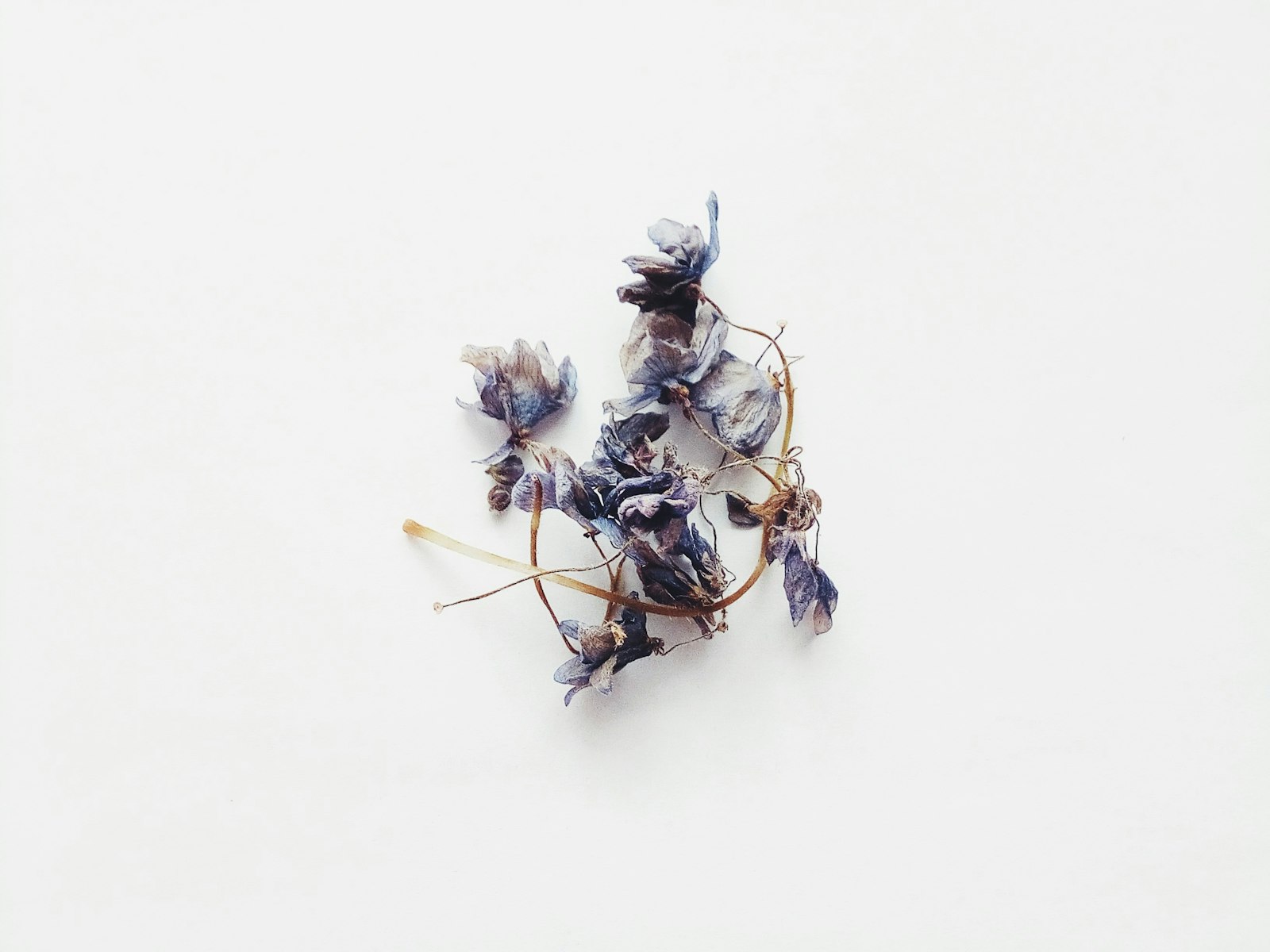
Butterfly pea as a natural blue food colorant means one specific thing in a regulatory and formulation context: the water extract of dried Clitoria ternatea petals, standardized for its ternatin anthocyanin content and used at measured doses to add blue color to food and beverage products. That definition matters because the plant comes in several commercial forms — whole dried flowers, ground powder, liquid or spray-dried water extract — and only the water extract holds explicit US FDA color-additive approval. Conflating the forms leads to sourcing the wrong material, regulatory exposure, or both. This guide is for formulators and ingredient buyers who need to understand what they are actually buying, what it can and cannot do, and where in the world they are legally permitted to use it.
The blue pigments are ternatins — polyacylated delphinidin-3,3′,5′-triglucosides, an anthocyanin subclass that sits on the blue end of the visible spectrum in neutral to mildly alkaline water. That chemistry is verified across multiple peer-reviewed sources. The instability that comes with it is equally real and equally documented: ternatins shift color under acid, degrade under heat and oxygen, and fade under prolonged light exposure. Understanding those constraints before you source is the point of this piece.
The US Regulatory Position: What 21 CFR 73.69 Actually Says
In 2021 the US FDA approved butterfly pea flower water extract as a color additive exempt from certification under 21 CFR 73.69. That is the precise legal event that opened the US food market to this colorant as a formal ingredient declaration rather than a food ingredient relying solely on general history of use. “Exempt from certification” means it does not require batch-by-batch FDA certification the way synthetic certified dyes do, which is operationally significant for a manufacturer building a clean-label product with “no artificial colors” positioning.
The approved food categories have been expanded since the original 2021 approval. At time of writing, the permitted uses are understood to cover a range of beverages, yogurt, candy, pretzels, dairy drinks, ready-to-eat applications, and others. However, the exact current list of permitted food categories should be confirmed directly against the live 21 CFR 73.69 text before you formulate — the source text was not directly verified here, the CFR is amended periodically, and the scope at any given time controls your regulatory position. [FLAG: verify current approved categories in 21 CFR 73.69 before use.] This is trade information, not regulatory advice; confirm with your regulatory counsel or directly with FDA.
Three things the approval does not do:
- It does not cover ground flower powder. Mechanically milled whole-flower powder is not the water extract defined in 21 CFR 73.69. If your product relies on that color-additive exemption, the extract form is what the regulation describes. Ground powder in a regulated food category may put you in a different regulatory position; check with counsel.
- It does not authorize health claims. The FDA color-additive approval permits color, not structure/function or disease claims. Butterfly pea has attracted extensive antioxidant and cognitive-benefit marketing copy in the consumer market. None of it flows from the 21 CFR 73.69 approval. Avoid disease and health claims in finished product labeling.
- It does not affect other import requirements. FDA Prior Notice under the Bioterrorism Act, FSMA/FSVP supplier verification, foreign facility registration, and EPA pesticide tolerance compliance all still apply to imported butterfly pea extract regardless of color-additive status.
For dried whole flowers used as herbal tea — which many US brands sell without incident — the product relies on conventional food status and a history of safe use rather than a formal color-additive approval. That is a workable path for the tea-bag category, but it is a different regulatory argument than 21 CFR 73.69.
The EU Position: A Clear Block, Not a Pending Approval
The EU situation demands explicit treatment because it catches buyers off guard. Clitoria ternatea in food — across all forms including water extract, powder, and dried flower — is classified as a novel food and is not currently authorized in the European Union. A traditional-food notification was filed. EFSA raised safety objections (EFSA EN-7084). The European Commission terminated the authorization procedure (C(2026)776). That is a concluded non-authorization, not a pending approval.
Enforcement followed. RASFF notifications have been filed, including Austria 2025.0444 and Belgian enforcement action involving Cambodian-origin flowers. Belgium has reportedly recalled butterfly pea teas. These are not theoretical risks; they are documented enforcement events.
The practical conclusion for EU formulators is direct: you cannot currently use butterfly pea water extract, whole flower, or powder as a food ingredient or food colorant for EU food-market products. This applies regardless of whether the butterfly pea originated in Indonesia, Thailand, or Vietnam. The novel-food classification is product-type-based, not origin-based. Organic certification does not override it. If you are formulating for EU distribution and natural blue food coloring is a requirement, butterfly pea is not available to you right now. Phycocyanin from spirulina (which holds its own EU color permissions) is the alternative most formulators turn to, subject to its own stability and hue constraints — addressed in detail on our butterfly pea vs other blue colorants page.
Supplement use in the EU may be treated differently depending on member state, but the rules are jurisdiction-specific and legally uncertain across the bloc. Do not assume supplement status is a clean pathway without jurisdiction-specific legal advice.
Extract vs Powder: What Changes for Colorant Applications
Buyers new to butterfly pea as a natural blue color additive sourcing exercise sometimes ask whether they can substitute ground flower powder for water extract in a colorant application. The short answer is: not interchangeably, and not for regulated US applications relying on 21 CFR 73.69. The fuller answer involves the formulation physics.
Ground flower powder is milled dried flower — the full plant matrix, including fiber, cell wall material, and ternatins. Color yield per gram depends entirely on how the source flowers were dried. A lot dried at excessive temperature (above 60–70°C) will have browned anthocyanins before the powder is even made. A well-dried lot at low temperature will yield significantly more color per gram. Mesh size matters too: finer grinds (100 mesh and above) disperse more evenly in aqueous systems but expose more surface area to oxidation. Coarser grinds behave more like a slow-infusing solid.
Spray-dried butterfly pea water extract is a different product. The extraction step concentrates the ternatins and removes most fiber and cell debris. Spray-drying with a maltodextrin carrier produces a water-soluble butterfly pea colorant that dissolves cleanly in liquid applications at controlled doses. Color concentration is higher per gram, dose-response behavior is more predictable batch to batch, and integration into a liquid manufacturing line is far cleaner than filtering a flower infusion. The headline per-kilogram price is higher, but cost-per-color-unit at production scale typically favors extract over powder.
Summary Comparison for Colorant Applications
| Attribute | Ground flower powder | Spray-dried water extract |
|---|---|---|
| Regulatory status (US colorant) | No FDA color-additive approval; relies on food ingredient status | Approved color additive exempt from certification, 21 CFR 73.69 [VERIFY current categories] |
| Color concentration | Moderate; varies with feedstock drying quality | Higher; standardizable to target absorbance |
| Dispersibility in liquid | Mesh-dependent; may need agitation | Good to excellent; designed for dissolution |
| Fiber content | High (full plant matrix) | Low to negligible |
| Typical cost-per-color-unit | Higher at scale (lower per-kg but lower concentration) | Lower at scale (higher per-kg, higher concentration) |
| EU food status | Novel food — NOT authorized [HIGH RISK] | Novel food — NOT authorized [HIGH RISK] |
Both price ranges are by-quote only. For verified pricing, use our enquiry form.
The Chemistry That Constrains Colorant Use
Ternatin anthocyanins give butterfly pea its defining behavior as a food colorant, and they impose three formulation constraints that no supplier can engineer around at the raw-material stage.
pH Dependence
In neutral to mildly alkaline water (roughly pH 5–8), the infusion or extract reads as a clear deep blue. As pH drops toward 3–4, the color shifts through violet into pink or red. This behavior is structurally determined by the anthocyanin molecular form at different proton concentrations. For a beverage developer creating a color-change cocktail or a pH-ritual lifestyle drink, this shift is a product feature. For a product that needs to hold a consistent blue at the pH 3.0–3.5 typical of most carbonated beverages, fruit drinks, or lemonades, it is a fundamental obstacle that extract quality cannot fix. The shift happens regardless of source quality or ternatin content. Measure your product’s final pH before committing to this colorant.
Heat Sensitivity
Anthocyanins in general degrade at elevated temperatures in aqueous solution, especially with dissolved oxygen present. Ternatins are somewhat more heat-tolerant than simpler anthocyanins due to their heavy acylation, but they are not heat-stable by any industrial standard. Drying temperatures above 60–70°C applied to the raw flower for extended periods will brown the material; the documented Thai Department of Agriculture export specification calls for oven-drying at 50–60°C for 8–10 hours precisely because higher temperatures risk this degradation. In a finished product context, hot-fill processing, pasteurization above 72°C, or UHT treatment will cause measurable color loss. Short moderate-heat exposure is generally manageable; retort or aseptic high-heat processing is not.
Light and Oxygen
Prolonged exposure to UV and visible light accelerates anthocyanin degradation. In a clear glass or PET bottle on a lit retail shelf, color fade over a 12–24 month shelf life is a real risk that formulation work and packaging selection address together. Opaque or UV-blocking packaging, tight fill with minimal headspace, and antioxidant co-ingredients are the common mitigation tools. Shelf life of 18–24 months is supplier-stated and general herb-trade norm for the raw material stored properly; it is not a peer-reviewed species-specific figure and does not translate directly to a finished product shelf life in retail packaging.
If these constraints fit your application, the colorant is genuinely workable. Cold-fill neutral-pH beverages, yogurt, some confectionery and frosting applications, blue latte bases at mild processing temperatures, and specialty baking at pH above 5 have all been demonstrated commercially in markets where the regulatory pathway is clear. If they do not fit — high-acid RTD beverages at pH 3–3.5, retorted products, products with 24-month clear-bottle shelf life requirements — no amount of sourcing quality will resolve the chemistry.
What to Look For When Sourcing Butterfly Pea Extract
Sourcing butterfly pea as a clean-label blue dye replacement means buying color yield, not just weight. A reputable extract supplier should provide the following with every commercial lot:
- Anthocyanin color strength
- Expressed as absorbance at approximately 560–620 nm. This is the number that tells you how much color per gram you are actually buying. Demand it on the CoA. Without it you are comparing kilograms, not color units, and any per-kg price comparison is meaningless.
- pH color-response confirmation
- A diluted solution adjusted to pH 7 (should show blue) and pH 3 (should shift to purple or pink). This simple test confirms ternatins are present and active in the lot you received — not degraded into brown breakdown products from poor drying.
- Moisture and water activity
- For spray-dried extract with a maltodextrin carrier, moisture uptake is a real risk given the hygroscopic carrier. Moisture at or below 5% and water activity below 0.6 are reasonable targets; confirm your specific supplier’s spec. High moisture in the extract accelerates both microbial risk and oxidative anthocyanin degradation.
- Microbiology panel
- Total plate count, yeast and mold, Salmonella absent per 25 g, and E. coli absent per 25 g are baseline requirements. Request the full panel, not just a generic “complies with food standards” statement.
- Pesticide multi-residue testing
- Smallholder-grown butterfly pea from Indonesia and Thailand can carry pesticide residues if not tested. Multi-residue analysis by LC/GC-MS/MS against your destination market MRLs is the correct test. Organic certification reduces but does not eliminate this risk without test evidence; a CoA from an accredited third-party lab matters more than a supplier’s organic claim on its own.
- Heavy metals
- Lead, cadmium, arsenic, and mercury by ICP-MS, benchmarked against your destination market limits. Not optional for food ingredients at commercial scale.
- Botanical identity
- For extract and powder forms where visual flower identification is no longer possible, HPTLC anthocyanin fingerprinting or DNA barcoding of the source material confirms you have Clitoria ternatea and not a substitute. Relevant for any regulated or high-value application.
For a practical walkthrough of this sourcing process — from first sample to first production lot — see our powder wholesale guide, which covers both ground flower powder and water-soluble extract in more detail.
If you are ready to discuss your specific application and get a live quote on extract or powder, use our enquiry form or reach us directly on WhatsApp at +62 811 3982 4563. Tell us your target application, processing conditions, destination market, and required certifications and we will route the inquiry to a vetted Indonesian partner who can supply a documented sample.
Where Butterfly Pea Extract Fits in a Formulator’s Color Toolkit
No single natural blue colorant solves every application. Phycocyanin from spirulina offers a brighter, more “electric” blue but denatures above approximately 45–50°C and fades in acidic conditions. Gardenia blue (used in some Asian markets) shows better heat stability but has regulatory complexity in the US and EU for many food categories. Synthetic certified dyes (FD&C Blue No. 1 and Blue No. 2) offer heat stability, pH stability, and batch-to-batch consistency that no current natural blue matches, at the cost of the “artificial color” label declaration that clean-label brands are specifically trying to remove.
Butterfly pea extract’s distinct position in that toolkit is threefold. First: it is the only color that provides the pH-triggered shift from blue to purple to pink — the color-change behavior that no alternative can replicate and that drives the product category for cocktail, lifestyle beverage, and ritual-drink formats. Second: in neutral-pH, cold-process, or moderate-heat applications where the pH and temperature constraints are met, it delivers a deep indigo-navy blue that reads as genuinely “natural” in appearance compared to the often brighter or more synthetic-looking character of phycocyanin at comparable doses. Third: in the US market, the 21 CFR 73.69 approval gives it a clear regulatory path as a “color additive exempt from certification” that allows clean-label declarations without “artificial” language — and that is a commercially significant distinction for the brands driving demand.
The limit is equally clear: where pH falls below 4, where heat is intensive, or where the EU food market is the destination, butterfly pea extract does not work without resolution of constraints that currently cannot be sourced around. Honest specification of those constraints is the starting point of any sourcing conversation worth having.
A full side-by-side comparison against spirulina blue, gardenia blue, and synthetic dyes across pH behavior, heat stability, cost, and regulatory status by destination market is available on our butterfly pea vs other blue colorants page.
Frequently Asked Questions
Is butterfly pea flower water extract approved as a food colorant in the United States?
Yes. The FDA approved butterfly pea flower water extract as a color additive exempt from certification under 21 CFR 73.69. This covers specific approved food categories that have been expanded over time since the original 2021 approval. The exact current list of permitted food categories should be confirmed directly against the live CFR text and with your regulatory counsel before you formulate, as the scope is subject to amendment. [FLAG: verify current 21 CFR 73.69 approved categories.] This is trade information, not regulatory advice.
Can I use butterfly pea extract as a natural blue food colorant in the EU?
No, not currently. Clitoria ternatea in food — including water extract — is classified as a novel food in the EU and is not authorized under current EU law. EFSA raised safety objections (EFSA EN-7084) and the European Commission terminated the authorization procedure (C(2026)776). Active enforcement through RASFF notifications and reported recalls confirms this is a live regulatory risk, not a theoretical one. If you are formulating for the EU food market, butterfly pea extract is not a viable colorant option at this time. Spirulina blue (phycocyanin) has a clearer EU color-additive pathway for many applications.
Why does the color change when I add lemon juice or citric acid to a butterfly pea drink?
The color shift is a direct consequence of the anthocyanin chemistry of ternatins. At neutral pH (around 6–7), the molecular structure of ternatins absorbs light in a way that reflects blue. As pH drops with added acid toward 3–4, the protonation state of the molecule changes, shifting absorption toward the red end of the spectrum — the color seen shifts to violet, purple, and ultimately pink or red. This is an intrinsic property of all anthocyanin-based colorants, though butterfly pea’s ternatins exhibit it more vividly and at a bluer baseline than most other food anthocyanins. It is not a defect; it is a chemistry-determined behavior that some formats exploit deliberately and others must account for as a constraint.
What is the difference between butterfly pea water extract and butterfly pea powder for colorant use?
Ground flower powder is milled dried whole flower and retains the full plant matrix. It carries no specific FDA color-additive approval and disperses less cleanly in liquid applications. Spray-dried butterfly pea water extract is produced by extracting the flowers in water, concentrating the extract, and spray-drying it with a carrier like maltodextrin. The extract form is what 21 CFR 73.69 covers for the US market, has higher ternatin concentration per gram, better water solubility, and cleaner dose-response behavior in manufacturing. For scale colorant applications, extract is generally the correct specification; ground powder suits nutraceutical capsule and dry-blend formats where the color-additive regulatory path is not the controlling factor.
How do I confirm the color strength of a butterfly pea extract lot before buying at scale?
Request the CoA from the supplier with absorbance data at approximately 560–620 nm — the wavelength range where ternatin anthocyanins absorb in neutral-pH aqueous solution. That figure, expressed as absorbance at a defined concentration, is your actual color yield per gram. Do not accept a CoA without it; you are then buying weight, not color. Additionally, run a simple pH color-response test on a diluted sample: confirm blue at pH 6–7 and a clear shift to violet or pink at pH 3. A lot where this shift is dull, brownish, or absent has degraded ternatins. Compare absorbance data across competing samples at the same concentration before committing to a supplier at volume.