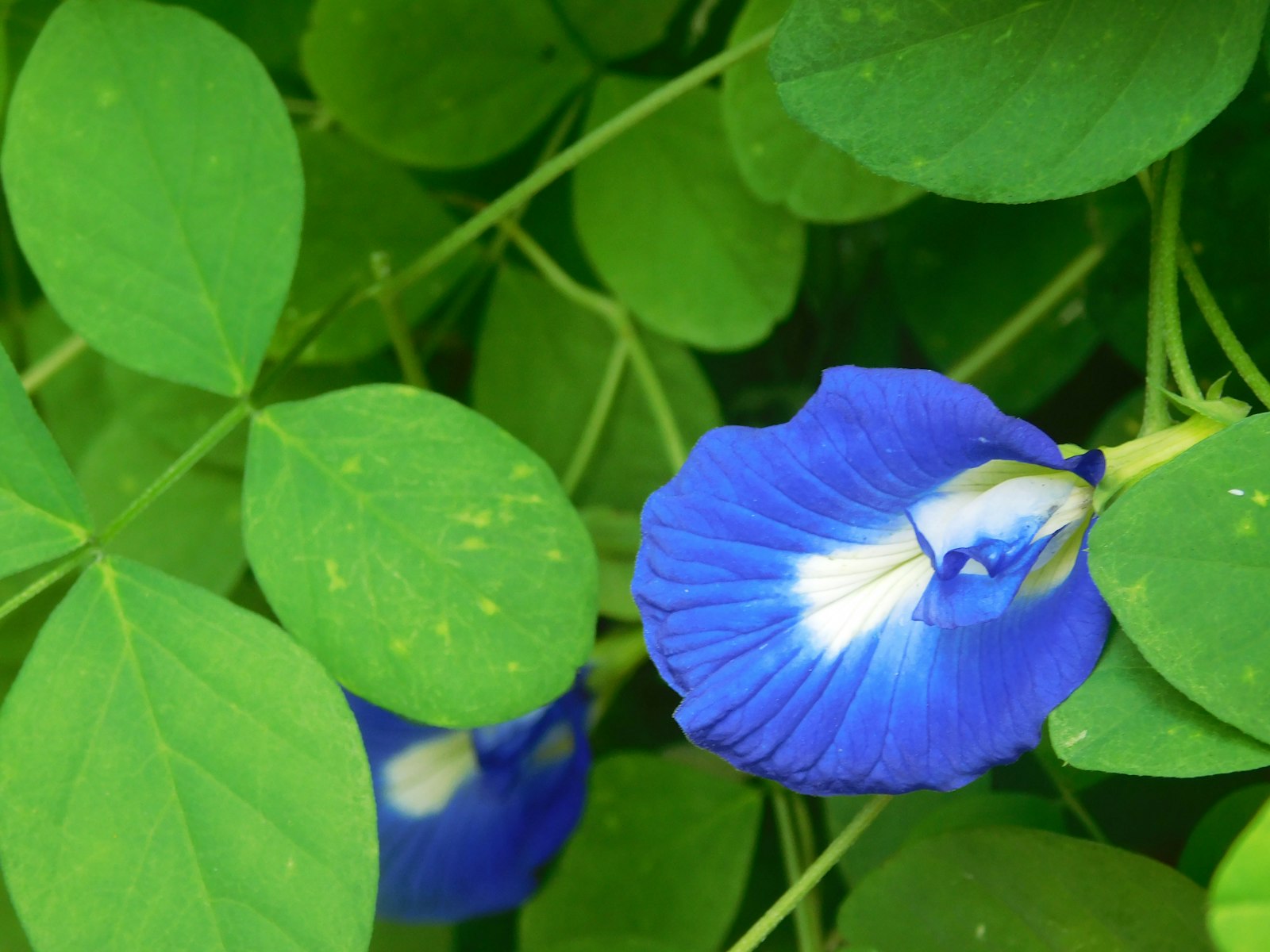
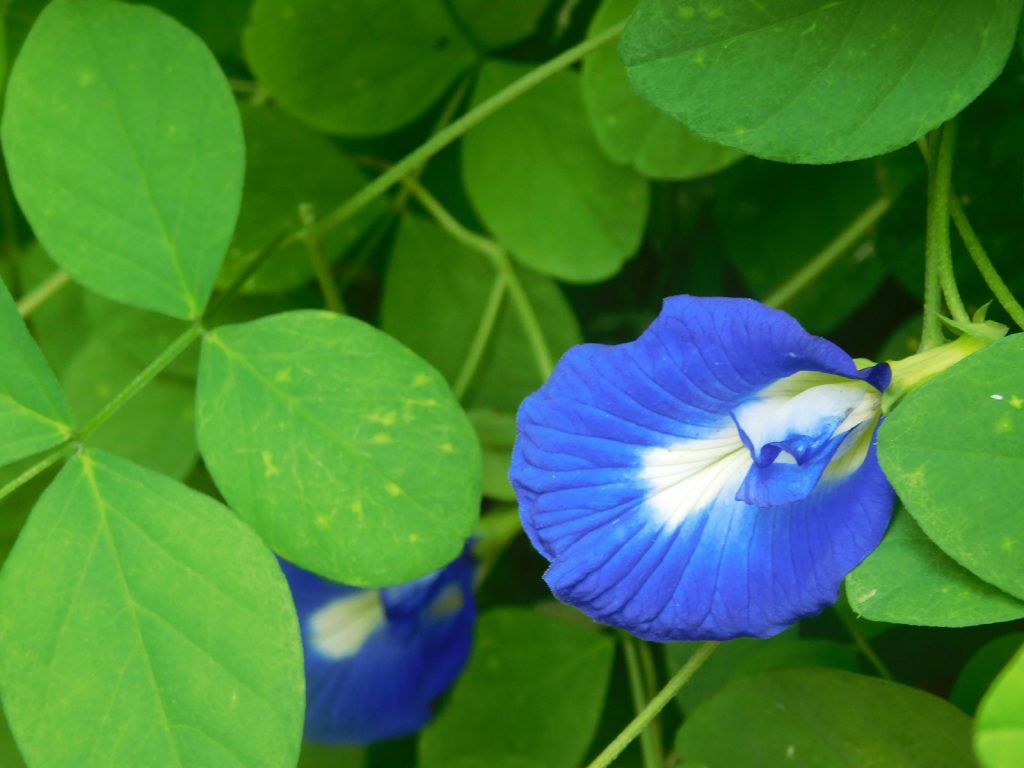
Blue latte and color-changing tea demand refers to the growing commercial appetite, across cafes, ready-to-drink (RTD) brands, and D2C beverage startups, for products whose most distinctive feature is their color: a vivid blue that turns purple and then pink or red when acid is added. The primary ingredient behind that effect is Clitoria ternatea — butterfly pea flower — and its pigments called ternatins, polyacylated delphinidin-based anthocyanins that shift hue in direct response to pH change. Understanding why that demand exists, and where it is actually concentrating, matters more than a market-size headline — because the market-size figures for this category are, frankly, all over the place.
Why the Market-Size Numbers Are Unreliable
If you have researched butterfly pea blue latte trends, you have almost certainly encountered a range of market projections that appear to contradict each other by an implausible order of magnitude. Some estimates place the global butterfly pea flower market in the range of roughly USD 150 million. Others cite figures approaching USD 151.7 billion for the broader “natural food color” market in which butterfly pea sits as one ingredient among many. A few sources appear to conflate the two.
This desk does not cite either figure authoritatively. [FLAG: market-size figures for this ingredient diverge wildly and are single-source or methodology-dependent. Any single number should be treated as the output of one analyst’s scope definition and extrapolation, not a verified industry consensus.] The honest answer is that no public agency or industry body publishes a verified, auditable market size for butterfly pea flower specifically. What the trade data does show is directional: demand is growing across multiple end-use segments, sourcing inquiries have increased, and the ingredient has moved from niche herbal tea into mainstream beverage and food manufacturing. That is actionable intelligence. A specific dollar figure from an unverified report is not.
For buyers making sourcing decisions, the more useful framing is: which demand drivers are structural and which are cyclical, and which product forms are those drivers actually consuming?
The Six Demand Drivers Behind Viral Blue Tea Wholesale Demand
1. Clean-Label and Natural Colorant Pressure
Synthetic food dyes — particularly FD&C Blue No. 1 (Brilliant Blue), Blue No. 2 (Indigo Carmine), and the combination colors that produce purple and violet shades — have faced sustained consumer pushback and retailer reformulation pressure in the US and UK for over a decade. Several major grocery chains have issued voluntary phase-out timelines. The EU requires warning labels on products containing certain synthetic azo dyes. Against that backdrop, butterfly pea extract offers a legal, clean-label blue that a product developer can put on a label as “butterfly pea flower extract” without a disclosure statement.
This is a structural driver, not a social-media trend. It is pulling demand from ingredient buyers — formulators, beverage developers, confectionery companies — who may not care about the color-change drama at all. They want a blue that their retail customers will accept, that clears US FDA requirements, and that photographs better than a synthetic alternative. The 2021 FDA approval of butterfly pea flower water extract as a color additive exempt from certification under 21 CFR 73.69 formalized this path for extract buyers in the US. Approved food categories have expanded over time from the initial listing to include various beverages, yogurt, dairy drinks, candy, pretzels, and more — but buyers should confirm the exact current approved categories directly in 21 CFR 73.69, as the CFR is amended periodically and the full current scope was not directly verified here. [VERIFY]
2. Caffeine-Free Wellness Positioning
Butterfly pea flower tea is naturally caffeine-free. That sounds simple, but it matters commercially in a specific way: the category of “functional wellness beverages without caffeine” has been one of the faster-growing segments of the broader hot and cold beverage market since at least 2018. Consumers who want to reduce caffeine but still want a ritual-driven hot drink with ceremony and color have adopted butterfly pea tea as a credible alternative. It sits adjacent to chamomile and hibiscus on the wellness shelf, but the visual theatre — that deep blue in the cup — differentiates it immediately.
This is the base of the butterfly pea blue latte trend in cafes. A blue latte made with butterfly pea powder in oat or almond milk is caffeine-free, visually distinctive, and easy to photograph. Cafes can price it as a premium item. The ingredient cost per cup, at rough blue-latte dosing volumes, is manageable even at B2B powder prices — which is why cafe chains and independent specialty coffee shops globally have adopted it. We do not make health claims about this ingredient; the positioning is aesthetic and ingredient-label driven, not therapeutic.
3. Social Media and Visual Appeal
This driver is real and it is also the most cyclical. Color-changing drinks — add a squeeze of lemon, watch the blue turn purple, then pink — are made for short-form video. The pH color-change in butterfly pea is genuinely photogenic and the science behind it is explainable in a few seconds of content. That has driven enormous top-of-funnel consumer awareness that would have cost tens of millions of dollars in conventional advertising to replicate.
The sourcing implication is straightforward: when a particular color-change drink format goes viral in one market, ingredient buyers in that market start hunting for supply quickly. Wholesale demand arrives in bursts. Suppliers who can demonstrate consistent color strength — which requires anthocyanin stability through drying, storage, and transport, all documented in a CoA — hold the advantage when a buyer needs reliable reorder volume, not just a sample that photographs well.
The more durable piece of this driver is that visual-first product development is now a standard part of how beverage brands build range extensions. The butterfly pea color-change is not a novelty in the way a single viral moment is; it has been absorbed into the toolkit of anyone developing color-forward beverages. That supports a longer-duration demand baseline than a single trend cycle would suggest.
4. FDA Color-Additive Approval (US Extract Market)
The 2021 FDA approval noted above deserves its own entry because it changes the commercial calculus for a specific class of buyer. Before 2021, formulating with butterfly pea extract in a regulated US food or beverage product required a degree of regulatory uncertainty that some buyers treated as a barrier. The 21 CFR 73.69 approval removed that barrier for water extract in covered food categories. It created a defined regulatory lane.
What followed was predictable: ingredient suppliers started actively marketing extract to US food manufacturers, RTD brands began piloting butterfly pea-colored beverages for retail distribution, and the inquiry volume from extract buyers in the US increased materially. This driver is US-specific and extract-specific — it does not apply to whole flower for food use in the same way, and it does not apply in the EU at all (see below). But for US-bound extract sourcing, it is a genuine structural enabler of demand, not a trend.
5. E-Commerce and D2C Brand Growth
The explosion of D2C food and beverage brands selling through their own websites, Amazon, and specialty marketplaces has created a class of small buyers who source at lower volumes but with high frequency and high brand-story requirements. A D2C tea brand selling direct to consumer can charge a meaningful premium for a butterfly pea latte mix if the origin story, the color-change drama, and the clean-label positioning are communicated well. These brands are often buying at volumes too small for a traditional export FCL but collectively represent substantial demand when aggregated.
This has a product-form implication: D2C brands generally want retail-ready or near-retail-ready formats — butterfly pea powder in consumer-facing formats, or private-label tea blends. The underlying butterfly pea powder wholesale market is serving not just food manufacturers but also contract packagers who supply these smaller brands. That adds a layer of intermediary demand between the Indonesian or Thai grower-processor and the final end user.
6. RTD Beverage and Cocktail Trade Adoption
Ready-to-drink beverages with natural color, craft cocktail bars using color-change as tableside theater, and non-alcoholic beverage brands developing premium mocktail formats have all incorporated butterfly pea in various ways. For RTD production at any meaningful scale, whole flower is usually impractical — you cannot efficiently infuse, filter, and standardize whole flowers in a production line. The form that works is water-soluble extract, dosed precisely to a color target confirmed by the CoA absorbance figure. This segment of demand is pulling specifically on extract supply, which is a different procurement channel from the whole-flower tea trade.
The EU: Where Demand Meets a Hard Wall
EU buyers reading this piece should be aware of something that no color-change beverage trend can change: Clitoria ternatea as a food ingredient is currently NOT authorized in the European Union under the novel-food regulation. A traditional-food notification was filed by industry. EFSA raised safety objections (reference EFSA EN-7084). The European Commission terminated the authorization procedure (C(2026)776). RASFF enforcement notifications have followed, including Austria 2025.0444 and a 2024 notification involving Belgium and Cambodian-origin flowers. Belgian recalls have been reported.
Marketing butterfly pea flower as a food, tea, latte ingredient, or food colorant in the EU is currently illegal and carries real enforcement risk: seizure, recall, destruction, and reputational exposure for any brand on whose product a RASFF notification lands. This applies to all forms — whole flower, powder, and water extract alike. The EU novel-food framework does not draw a distinction between them on the question of authorization.
EU supplement use may be treated differently depending on member state rules, but those rules vary across the bloc and are legally uncertain; treat them as unresolved and obtain proper legal advice for your specific product and target market. Organic certification does not override the novel-food non-authorization. If you are sourcing for EU distribution, obtain qualified legal advice before placing any order, regardless of what a supplier’s marketing materials say.
This matters for the broader demand picture: a significant share of the clean-label colorant demand that butterfly pea extract could serve in theory is inaccessible in the EU until and unless an authorization pathway is successfully completed. US, Australian, Japanese, South Korean, and several Southeast Asian markets have generally more permissive frameworks for this ingredient, but each market requires its own verification. This is trade information, not legal advice.
Mapping Demand to Product Form
One of the more useful things a sourcing desk can do is translate demand signals into a form decision. The viral blue tea wholesale demand that shows up in trade inquiries is not monolithic — different buyers in different segments need different materials.
| Application | Recommended form | Key sourcing note |
|---|---|---|
| Blue latte mix (cafe or retail) | Ground flower powder (100 mesh or finer) | Dispersion in milk; specify mesh size; CoA must show color absorbance and moisture |
| Loose-leaf blue tea (retail or foodservice) | Whole flower, premium grade (approx. 90% intact) | Visual drama in cup; premium grade commands price; color strength tied to drying quality |
| Color-change cocktail or mocktail (bar program) | Whole flower (in-bar infusion) or extract (syrup/RTD) | For bar use: whole flower infused, filtered, portion-controlled. For RTD: extract for consistency |
| RTD beverage colorant (production scale) | Spray-dried water-soluble extract | US: confirm 21 CFR 73.69 approved food categories [VERIFY]; EU: not authorized; dose to CoA absorbance target |
| Confectionery, baked goods, dairy | Spray-dried extract or powder | Heat sensitivity of ternatins means color may shift in baking; test in application; US extract approval covers some dairy and candy categories [VERIFY scope] |
| D2C private-label tea blend | Whole flower or powder, depending on format | Pyramid tea bags: near-whole petals viable. Powdered latte mix: fine grind. See powder wholesale page for form comparison |
The column that most buyers skip is the “key sourcing note.” Asking for “butterfly pea flower” without specifying form, mesh size, grade, or regulatory context produces quotes that cannot be compared to each other. A 100-mesh food-grade Indonesian powder and a spray-dried Thai extract standardized to a target absorbance are priced differently, behave differently in your application, and carry different regulatory designations in the US. Get the form specification right before you request a live quote.
What the Color-Change Mechanism Actually Is
Because the pH color-change is the visual hook for most of the applications above, it is worth being precise about the chemistry — not to make health claims, but because buyers and product developers who understand the mechanism source more accurately.
The pigments responsible are ternatins, a family of polyacylated delphinidin-based anthocyanins. In water at neutral or mildly alkaline pH, these pigments produce the characteristic deep blue color. As the pH drops toward acidity — typically by adding citrus juice, a citric acid solution, or any acid-containing mixer — the molecular structure of the anthocyanin shifts and the pigment absorbs different wavelengths. The result is a color transition from blue through violet to purple and eventually red or pink, depending on how much acid is added and the starting concentration of the pigment.
This shift is immediate and dramatic. It is real chemistry, not a dye or a trick. And it is the reason why the butterfly pea color-change is so effective for consumer-facing products: it happens visibly in front of the customer, which is inherently shareable content and an explanation that requires no chemistry degree to understand — “add lemon, watch it change.”
The sourcing implication: ternatin content is the determinant of both color depth and color-change drama. A low-ternatin lot — typically the result of over-hot drying, excessive light exposure, or long storage in inadequate packaging — will produce a muted, brownish blue that does not shift cleanly. The CoA field that captures this is the absorbance measurement (approximately 560–620 nm for blue ternatin pigments). Buyers who specify a minimum absorbance value in their CoA requirements are specifying color performance, not just botanical identity. That is the right frame.
Ready to match your application to the right form and discuss volume requirements? Use our enquiry form or message our desk on WhatsApp at +62 811 3941 4563 — tell us your end application, target market, and volume, and we will route the RFQ accordingly.
Pricing Context: What Demand Does Not Change
Growing demand does not, by itself, produce a published price list. There is still no industry price board for butterfly pea flower in any form. What demand growth does is add buyers to a market that was previously small enough that individual suppliers set prices almost arbitrarily. As the buyer pool grows, more data points enter the market, and indicative ranges become somewhat more reliable — but they remain indicative.
For whole flower at meaningful B2B FOB volumes, the indicative range inferred from sparse public data and analogous herb trade runs roughly USD 6–12/kg for standard food-grade non-organic Indonesian or Vietnamese-origin material, and roughly USD 10–20/kg for premium-grade or certified-organic Thai-origin material. For ground flower powder, a rough indicative band of USD 6–10/kg has been observed for non-organic standard-grade material. These are not firm quotes, not negotiating anchors, and not guarantees of what you will actually be quoted — they are orientation ranges to help you identify whether a supplier’s opening position is reasonable or wildly off market. A live quote is required for any firm figure. Do not commit volume on the basis of an indicative range from any publication, including this one.
Spray-dried water-soluble extract carries a higher per-kilogram headline price than ground flower powder. Whether it is more economical depends entirely on your cost-per-color-unit calculation for your specific application, not the per-kilogram sticker. For high-volume RTD production, extract almost always works out better on that calculation. For small-batch nutraceutical capsule filling, ground powder may be more practical at the volumes involved.
Sourcing for the Blue Latte and Color-Change Category: Summary
The demand drivers behind blue latte and color-changing tea demand are multiple, overlapping, and at different stages of the trend cycle. Clean-label reformulation pressure and FDA color-additive approval are structural. Caffeine-free wellness positioning is durable. Social-media virality is real but episodic — it drives spikes, not sustained baselines. E-commerce and D2C growth is ongoing. RTD adoption is accelerating in markets where the regulatory path is clear.
What ties them together from a sourcing perspective is a set of form requirements that differ by application. Powder for blue lattes. Whole flower for visible color-change drama in the cup or glass. Extract for scalable, consistent RTD colorant production. Getting the form right before you go to market with an RFQ saves you a wasted sample round and a reformulation cycle. Getting the regulatory status right before you commit to a market saves you considerably more.
For buyers in the US and other markets where the ingredient is legally usable in food: start with a specification that includes form, mesh size or extract concentration, grade, destination, and required documentation, then get a live quote from a verified supplier. For EU-based buyers: confirm the current novel-food status with qualified legal counsel before any sourcing commitment, regardless of what market trend data says about demand growth in your category.
This desk sources from verified Indonesian processors and routes qualified RFQs to a vetted partner who quotes, contracts, and ships. We publish trade information as a service to buyers trying to navigate an opaque market; where an introduction results in a transaction, that partner may pay us a referral fee at no additional cost to you. Start an inquiry, or message us on WhatsApp at +62 811 3941 4563 or email [email protected] with your form requirement, volume, and destination market.
Frequently Asked Questions
What ingredient makes a blue latte blue?
The blue color in a butterfly pea blue latte comes from dried Clitoria ternatea flowers or their ground powder, which contains pigments called ternatins — polyacylated delphinidin-based anthocyanins. When mixed with neutral or mildly acidic liquid at low dose, these pigments produce a deep blue. Add an acid (lemon juice, citric acid solution) and the pH drop causes the pigment to shift through purple and into pink or red. The color-change is genuine chemistry, not a dye or additive effect.
Is the color-changing blue latte trend driven by one thing?
No. Multiple drivers overlap: the clean-label reformulation push away from synthetic dyes, caffeine-free wellness positioning, strong visual and social-media appeal, FDA color-additive approval for water extract in the US (21 CFR 73.69), and e-commerce growth enabling D2C brands to build around niche ingredients. The social-media element generates spikes; the regulatory and wellness drivers are more structural. For sourcing purposes, the form of demand that matters is what each application segment actually buys — powder for lattes, whole flower for loose-leaf tea and bar programs, extract for RTD production.
Can EU businesses source butterfly pea for blue latte products?
Not legally for food use under current EU rules. Clitoria ternatea is classified as a novel food in the EU and is currently not authorized for sale as a food or food ingredient in any form — whole flower, powder, or extract. EFSA raised safety objections (EN-7084), the European Commission terminated the authorization procedure (C(2026)776), and RASFF enforcement actions have been issued. EU supplement rules vary by member state and are legally uncertain. Obtain qualified legal advice for your specific product and target market before placing any order.
Which form of butterfly pea should I source for a blue latte mix versus an RTD beverage?
For a blue latte mix sold in retail or used in a cafe, ground flower powder at 100 mesh or finer is the standard working form: it disperses in milk, requires no infusion or filtration step, and doses consistently. For an RTD beverage at production scale, spray-dried water-soluble butterfly pea extract is usually more practical and more economical on a cost-per-color-unit basis, and it is the form covered by the FDA color-additive approval (21 CFR 73.69) for applicable US food categories — confirm the current approved category list directly. See our powder wholesale page and applications guide for the full form comparison.
How reliable are the butterfly pea market-size figures I see cited online?
Treat them skeptically. Published estimates for this ingredient range from roughly USD 150 million to over USD 100 billion depending on how broadly the market is scoped (butterfly pea flower specifically versus the entire natural food color category) and which methodology the analyst used. These are typically single-source projections from market-research firms rather than audited industry statistics, and no two sources appear to have used the same scope definition. The directional signal — demand growing across multiple end-use categories — is credible. Any single hard number should not be cited without knowing its methodology and scope, and for internal business planning it should be triangulated against actual sourcing data, not taken at face value.