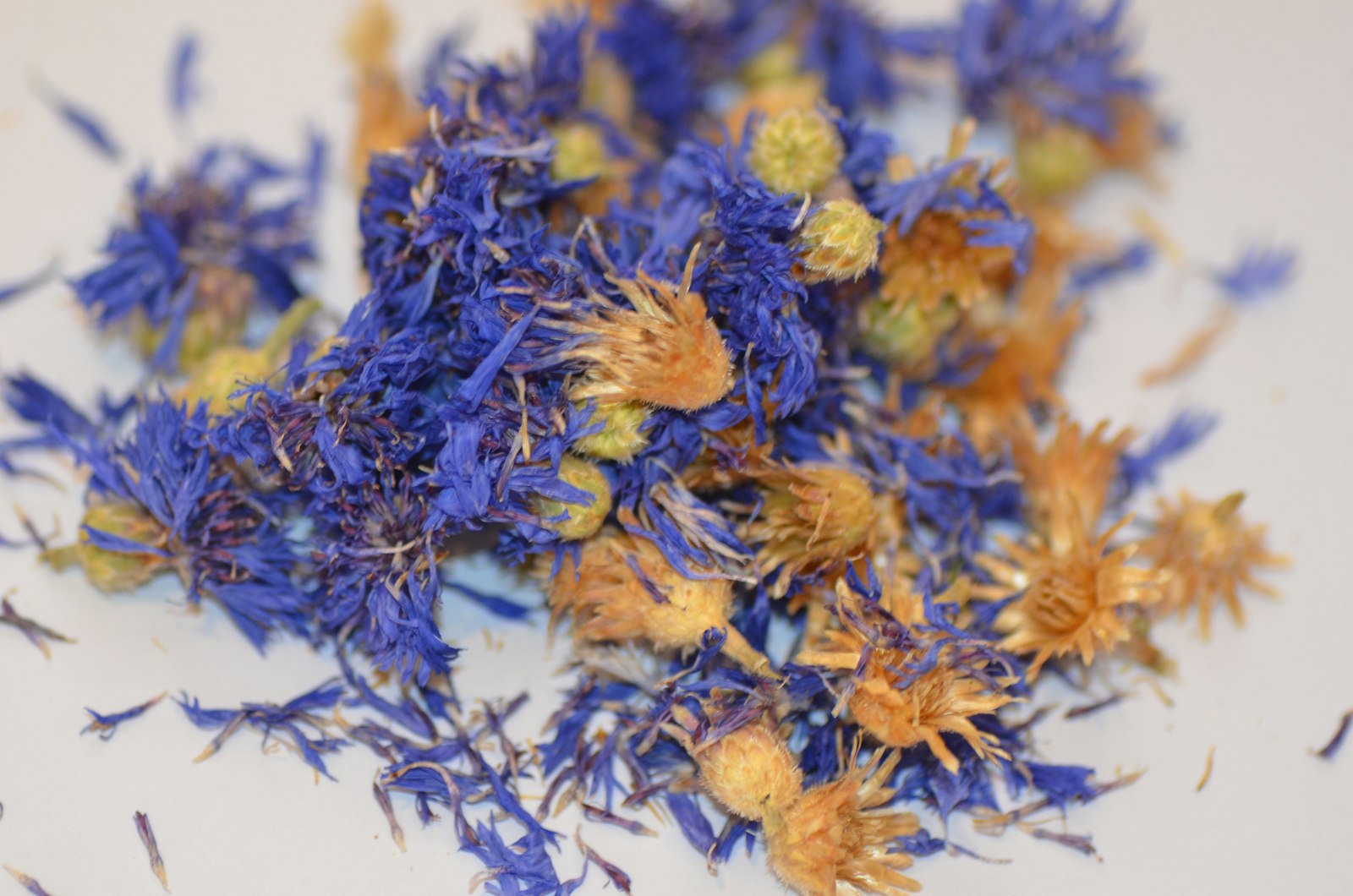
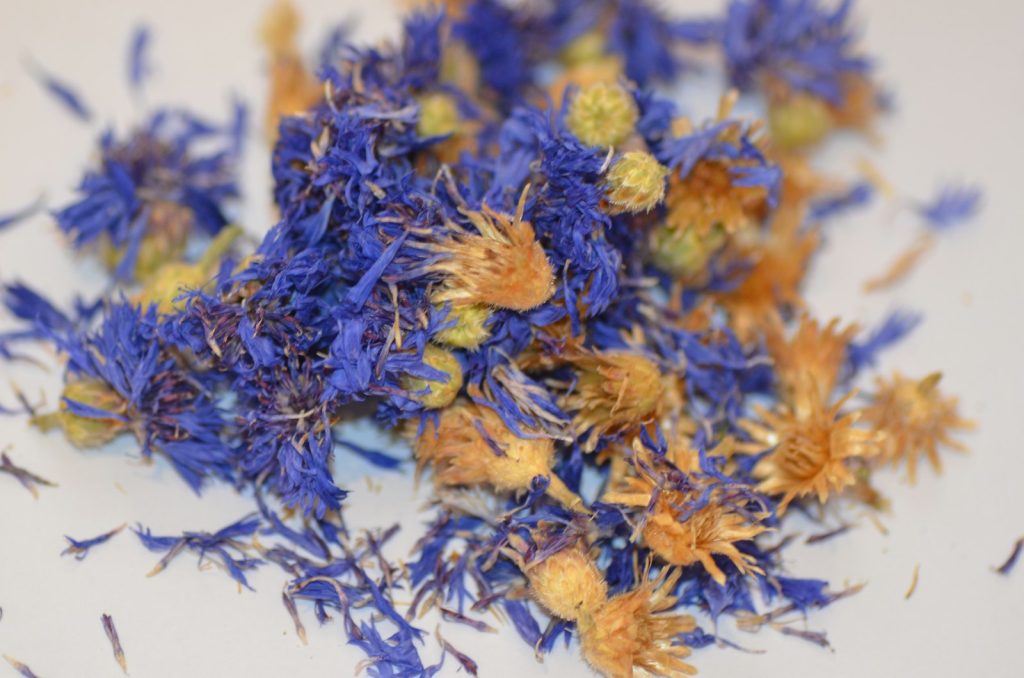
Independent sourcing note: We are an independent butterfly pea flower tea B2B sourcing desk — we curate verified Indonesian growers and tea makers and route your RFQ to a vetted partner; we are not the manufacturer, exporter of record, or freight forwarder. Butterfly pea is dried Clitoria ternatea flowers, graded by colour and moisture and also sold as petals, powder, and extract. Figures (MOQ, FOB per kg, lead times) are indicative ranges and vary by grade, season, and volume — final terms are by quote. Compliance (pesticide-residue limits, organic certification, food-contact, and import status such as EU novel-food, which is uncertain) is your responsibility to verify with the supplier and a licensed customs broker — this is general trade information, not legal or regulatory advice. We may earn a sourcing commission on referred orders (referral disclosure).
Custom packaging for butterfly pea tea refers to the deliberate design decisions — material selection, seal type, opacity, structure, and label content — that determine whether the anthocyanin pigment in dried Clitoria ternatea flowers reaches the end consumer in the same vivid blue state it left the drying floor, and whether your brand’s retail unit can support the shelf life your purchase contract promises. This is not primarily an aesthetics conversation. For this specific product, packaging is a chemistry problem first and a branding problem second. Get the material choices wrong and the color degrades before the product ever opens.
This desk is an independent sourcing and trade-information guide. Where we route an enquiry to a vetted partner and a referral fee results from that introduction, we say so plainly. Everything here is trade information, not legal, regulatory, or labeling advice — market-specific compliance decisions belong with your own counsel.
Why Butterfly Pea Tea Has Packaging Requirements Most Dried Herbs Do Not
Dried chamomile or hibiscus can tolerate a modestly translucent kraft pouch with a basic seal and still arrive commercially intact. Butterfly pea cannot, and the chemistry explains why. The color that makes this product commercially valuable comes from ternatins — polyacylated delphinidin-3,3′,5′-triglucosides, a class of anthocyanin pigments verified in published biochemistry. These pigments are reactive. Three environmental stressors accelerate their degradation in sequence or simultaneously: light (UV and visible wavelengths), oxygen (which oxidizes the anthocyanin structure), and moisture (which promotes microbial activity and accelerates breakdown).
A batch that scores deep blue on a color-strength absorbance test at 560–620 nm when it leaves a Javanese or Thai facility can arrive at a buyer’s warehouse looking brown and flat if any of those stressors were sustained through the supply chain. The fading is not recoverable. There is no packaging intervention on the buyer’s end that reverses oxidized ternatins. That makes the packaging decision, made upstream at the design stage, load-bearing in a way it simply is not for most botanicals.
This also means that custom packaging butterfly pea tea design is not the same conversation as packaging design for, say, a green tea or a chamomile blend. The trade-offs are specific. Some formats that look premium on a retail shelf actively compromise the product inside. This guide works through those trade-offs honestly.
The Core Design Trade-Off: Visibility vs. Barrier Protection
The central tension in butterfly pea retail packaging design is that the thing buyers want to show — that deep, unusual blue — is precisely what packaging needs to protect from exposure. You cannot fully optimize for both simultaneously. The design decision is always a trade-off between display value and barrier performance, and where you land on that spectrum should follow directly from your end-use context and sales channel.
Window Pouches: Show the Blue, Sacrifice the Shield
A stand-up pouch with a clear window panel is tempting. The blue of dried butterfly pea flowers is visually arresting, and in a retail context — specialty tea shops, health food stores, farmers markets, e-commerce photography — showing the actual product builds immediate credibility. Buyers who have never encountered the ingredient can see what they are getting.
The barrier trade-off is real, though. Any window panel introduces a surface area where light reaches the product directly. A transparent PET or OPP window transmits the UV and visible wavelengths that degrade ternatins. The larger the window, the more light exposure. A pouch sitting on a retail shelf under fluorescent or LED lighting for weeks is accumulating photodegradation on the flower material nearest the window surface. For a product with a stated shelf life in the 18–24 month range, that is a meaningful hit over the latter portion of the cycle.
Window pouches are defensible in specific circumstances: very short retail cycles (high-turnover specialty SKUs sold within a few weeks of production), shelf environments with minimal direct light, or where the product inside the window is protected by a secondary inner layer — for example, a small opaque sachet nested inside a window-format outer box. If your brand and channel genuinely depend on the product being visible at point of sale, work with your packaging supplier to minimize window area and specify a UV-blocking window film. These exist; they add cost but reduce the photodegradation hit.
Fully Opaque Pouches: Color Stays Put, Product Stays Hidden
A fully opaque pouch — kraft outer, foil-laminate inner, no window — is the functional choice for protecting barrier packaging butterfly pea color through a long supply chain. No ambient light reaches the flower material. A proper hermetic heat seal excludes oxygen. A moisture-barrier laminate layer in the structure (typically PET/AL/PE or OPP/AL/PE) prevents humidity migration during ocean transit, warehouse storage, and the temperature cycling that any container shipment will experience.
The trade-off is that the buyer cannot see the product without opening the package. For some channels this does not matter — your brand name and product photography on the label carry the sales work, the same way a tin of premium loose-leaf tea does not need a window to sell. For channels where unfamiliarity with butterfly pea is a barrier to purchase, you are asking the consumer to trust your label photography over their own eyes at point of sale.
For B2B buyers sourcing bulk retail units for a tea brand, an opaque resealable pouch with high-quality print and label is the format the majority of established specialty tea brands use for this product. It is also the format that will deliver the most consistent color performance over the stated shelf life, provided the pouch construction is adequate — which brings us to the inner film specification, not just the outer appearance.
The Film Specification Question Your Supplier May Not Raise
A common buyer mistake is specifying the appearance of a pouch — "kraft, resealable, 100g, matte finish" — without specifying the film construction that determines its actual barrier performance. A kraft outer layer is a paper layer; it provides no oxygen or moisture barrier on its own. The barrier comes from what is laminated beneath it.
The range of constructions in commercial use spans from essentially no barrier (kraft/PE, which is adequate for short-term dry storage but not for cross-ocean transit or long shelf life) to meaningful barrier (kraft/AL/PE or OPP/AL/PE foil-laminate structures, where the aluminum layer provides substantial oxygen and moisture protection). The difference in unit cost between these constructions is measurable. Suppliers who are competing aggressively on price may default to the cheaper construction without disclosing it unless you ask explicitly.
Ask your packaging manufacturer or contract manufacturer to specify the film structure in writing: what materials, in what order, at what thickness. If you are targeting an 18-month retail shelf life for butterfly pea flower, a foil-laminate structure is not a premium upgrade — it is the functional minimum for protecting the pigment through the full cycle. Confirm the sealing method too: a properly heat-sealed bag with a hermetic seal performs very differently from a zip-lock closure left partially open or a fold-over bag without a seal.
Format-by-Format Design Considerations
Beyond the opaque-versus-window choice, each retail format brings its own set of design decisions relevant to barrier packaging butterfly pea color and brand presentation. The format comparison below covers the main options buyers encounter in OEM and private-label production.
| Format | Light barrier | Oxygen/moisture barrier | Color protection | Brand presentation | Main trade-off |
|---|---|---|---|---|---|
| Fully opaque stand-up pouch (foil-laminate) | Excellent | Good to excellent (depends on laminate) | Strong | Strong print surface, matte or gloss finish | Product not visible; label and photography do the selling |
| Window pouch (clear panel) | Poor at window surface | Variable (depends on non-window areas) | Risk of photodegradation near window | High visual impact at point of sale | Light exposure to product; higher risk over longer shelf life |
| Decorative tin (opaque, tight lid with gasket) | Excellent | Good with proper lid seal/inner lining | Strong if sealed correctly | Premium feel; gifting and hospitality market | Higher unit cost; verify lid seal quality; inner lining needed |
| Glass jar (with foil under-cap seal) | Poor (transparent); needs dark storage | Good with foil under-cap seal intact | Vulnerable to light if not stored dark | Premium aesthetic, high visual appeal in photography | Light transmission; breakage risk in transit; dark storage required |
| Pyramid tea bag in outer box | Depends on outer box and inner wrap | Depends on individual sachet seal and outer wrapper | Adequate if individually wrapped and boxed | Tea-shelf format; strong for cafe/gifting | Individual bag material choice (see below); outer box must be light-excluding |
| Biodegradable film pouch | Variable (often kraft/PLA structure) | Generally weaker than foil-laminate | Lower over long shelf life | Sustainability narrative; growing retailer preference | Weaker barrier is a real trade-off; shorter effective shelf life is likely |
Tins: Barrier Performance With Premium Signal
Decorative tins are one of the few formats where the premium feel and the functional barrier performance actually align. An opaque tin excludes all light. A properly constructed lid seal — which requires an inner gasket or liner, not just a friction-fit cap — provides meaningful oxygen exclusion. For butterfly pea flower tea targeted at the gift market, hotel amenity programs, or premium café in-house branding, a tin positions the product correctly at price points that support the unit cost.
Two things to verify before specifying tins. First: the lid seal. A friction-fit lid without a gasket is not airtight and will allow slow oxygen ingress. Ask your tin supplier to confirm the lid construction and whether an inner foil or foam liner is included. Second: if you are filling tins at a contract manufacturer, confirm the filling environment and the point at which the lid is applied. Product that sits open in a high-humidity packaging environment before lidding may have absorbed moisture before the seal is even closed.
Glass Jars: Aesthetic Risk if Storage Is Not Controlled
Glass jars communicate purity and allow the color to be seen in retail photography and on store shelves, which is a genuine marketing advantage for a product this visually distinctive. The problem is that glass is transparent. Butterfly pea flower stored in a clear glass jar on a lit retail shelf is receiving continuous light exposure. For a product that relies on color for its commercial value, that is an active problem rather than a background risk.
Glass jars for butterfly pea tea belong in contexts where dark storage is reliable throughout the retail cycle — dark pantry environments, rapid stock turnover, or display cases specifically designed to limit light exposure. A foil seal under the cap is essential: the cap alone is not an oxygen or moisture barrier. For online retail where the jar is shipped to the customer and stored at home without any guarantee of shelf conditions, the format carries inherent risk to color longevity.
Pyramid Bags in Boxes: The System Matters, Not Just the Bag
A pyramid tea bag program for butterfly pea tea involves two distinct packaging layers: the bag material itself and the outer retail box. Both matter for barrier performance, and both are often specified independently without buyers thinking about the system as a whole.
On the bag material: nylon pyramid bags are structurally strong and allow good infusion flow. They carry a sustainability objection that is real for environmentally positioned brands, and there are credible concerns about microplastics in hot-water brewing conditions. PLA (polylactic acid) bags are marketed as compostable, but PLA requires industrial composting conditions — above approximately 58°C sustained for weeks — which do not occur in home compost bins in most climates. This matters if your label or brand story makes a compostability claim: verify the certification (look for TUV Austria OK compost HOME or equivalent for genuine home compostability) and match it against how your customer realistically disposes of the bag. A well-intentioned sustainability claim that does not survive scrutiny is a brand liability.
On the outer box: many tea brands in this category use printed paperboard boxes that are not inherently airtight or light-excluding. If individual pyramid bags are not hermetically sealed in their own foil wrapper before boxing, the product inside is relying solely on the paperboard for protection — which is not a barrier packaging solution. Specify individually foil-wrapped sachets if shelf life and color protection matter. The additional per-unit cost is the price of the barrier performance.
Biodegradable Films: Sustainability Claim vs. Barrier Reality
Retailers with sustainability commitments are increasingly requesting biodegradable or compostable packaging options, and suppliers have responded with a range of bio-based film structures. For most products this is a welcome development. For butterfly pea tea specifically, buyers should understand the barrier trade-off before committing.
Biodegradable films — typically plant-fiber-based, PLA-laminate, or other bio-based structures — generally provide weaker oxygen and moisture barriers than foil-laminate synthetic films. The oxygen transmission rate (OTR) and water vapor transmission rate (WVTR) for bio-based films vary significantly by supplier and construction, but they typically run higher than a PET/AL/PE foil laminate. For a product as sensitive to oxidation as butterfly pea flower, a higher OTR translates into faster anthocyanin degradation over the shelf life.
This does not mean biodegradable packaging cannot work for butterfly pea tea. It means the shelf life claim needs to be calibrated to the actual barrier performance of the specific film being used, not to the 18–24 month figure that assumes an adequate barrier. If you are specifying a biodegradable pouch, ask the manufacturer for the OTR and WVTR data for that film construction and compare it to a foil-laminate benchmark. If the barrier is meaningfully weaker, either adjust your shelf life claim or accept a shorter effective color stability window.
Ready to work through packaging specifications for a specific SKU? Our enquiry form is the place to start, or message us directly on WhatsApp at +62 811 3982 4563. Describe your target format, destination market, and required shelf life, and we will route the specification conversation to our vetted manufacturing partner. You can also reach us at [email protected].
Bulk Packing Norms: What Comes Before the Retail Unit
For buyers who are importing bulk dried butterfly pea flowers and then doing their own retail packaging, the bulk packing specification matters separately from the retail design decisions above. There is no formal ISO or Codex packaging standard specific to butterfly pea — these are indicative industry norms from the dried-herb and botanical trade, applied to this product by inference [VERIFY with your supplier before finalizing purchase-order specifications].
Standard export bulk packaging runs food-grade polyethylene (PE) or polypropylene (PP) inner bags, typically in units of 1–5 kg per inner bag, often vacuum-sealed or heat-sealed. Outer export cartons commonly run roughly 10–20 kg net weight, though this varies with inner-bag count and compression ratio [indicative norm, not a butterfly-pea-specific specification]. Dried whole flowers are light and bulky — the cargo cubes out before it weighs out — so carton sizing affects container utilization more than weight constraints do.
For bulk flower destined for your own retail filling, the inner PE or PP bag quality matters beyond aesthetics. A vacuum-sealed food-grade PE inner bag with a hermetic seal arriving intact is protecting the color through the transit leg. Specify the sealing method and minimum remaining seal integrity in your purchase order. A carton of compressed flower that arrives with a punctured inner bag has been exposed to oxygen and humidity for the duration of the ocean voyage — no amount of careful retail packaging downstream recovers what was lost.
Label Basics: What Belongs on the Pack and Where the Desk Stops
Label compliance is market-specific, and the binding answers belong with your regulatory counsel. This section covers the baseline fields a buyer planning butterfly pea retail packaging design needs to think through, not the legal standards that govern each field in a given destination market.
At minimum, a retail butterfly pea tea label needs to address: the common name of the product (“butterfly pea flower tea” or “blue pea flower tea” are both in common commercial use; the botanical name Clitoria ternatea is strongly advisable and required in some markets for herbal products); the net weight in units required by the destination market; the country of origin (“Product of Indonesia” or “Product of Thailand” as applicable); an ingredient list in descending order by weight; and best-before or expiry date in the format required by the destination market.
Clitoria ternatea is a legume in the family Fabaceae. Whether that triggers allergen declaration requirements depends on your destination market’s allergen labeling law. Do not assume it does not. Route the allergen question to your regulatory counsel before finalizing label artwork — changing artwork after print-run production wastes money and delays launch.
The responsible-party declaration — the name and address of the brand or importer who placed the product on the market in the destination — is required in most serious import markets. For US retail, this is the importer of record. For EU markets, this is the food business operator (noting that the EU novel-food non-authorization for Clitoria ternatea in food currently makes EU food-market launch a separate and serious legal question, independent of label design).
Storage guidance on the label — “Store in a cool, dry place away from direct sunlight” — is not just a legal formality for this product. It is the consumer instruction that extends the color stability the packaging was designed to protect. A buyer who sells product in a beautiful foil-laminate pouch but includes no storage guidance has left the last leg of color protection to chance.
Health claims are the field where independent sourcing desks should be direct about the limits of their role. The research literature on butterfly pea includes work on antioxidant activity and various pharmacological properties, and that research is real. It is not a license for label claims in regulated markets. In the US, disease-prevention claims turn a food into a drug; structure/function claims require substantiation and a disclaimer. EU Regulation 1924/2006 governs health claims in EU food — and again, the novel-food authorization is the prior barrier in that market. Get label claims reviewed by a qualified regulatory attorney familiar with your destination market before the artwork goes to print. This desk does not substitute for that review.
Shelf Life: What the 18–24 Month Figure Means and Where It Comes From
A shelf life of roughly 18–24 months appears on supplier specifications and retail packs across this category. Buyers should understand what underlies that figure before putting it on a label or writing it into a purchase contract.
The 18–24 month range is supplier-stated and consistent with general dried-herb trade norms for well-dried, properly sealed botanical material. It is not derived from peer-reviewed shelf-life studies specifically conducted on Clitoria ternatea [FLAG — no species-specific peer-reviewed shelf-life data was found in sourcing this guide]. Treat it as the defensible industry baseline, not a scientifically validated product-specific guarantee.
What the figure is conditional on matters as much as the figure itself. The 18–24 months assumes: product dried to adequate moisture content (around 10% or below for premium grade, around 12% for standard grade, with water activity at or below 0.6 — figures inferred from general dried-herb and Codex practice, not a published butterfly-pea-specific standard [FLAG]); packaging that provides adequate light, oxygen, and moisture barrier; and storage conditions that are cool, dark, and dry throughout the supply chain. Change any of those inputs and the effective color stability window shortens. A window pouch in a bright retail environment will not deliver 24 months of color quality regardless of what the best-before date says.
For purchase contracts, the shelf life claim needs to be paired with a minimum-remaining-shelf-life clause at the point of delivery. A common buyer protection is specifying a minimum of 12 months remaining shelf life on arrival at the buyer’s warehouse. Without that clause, a supplier can legally ship product against a 24-month stated shelf life that has already spent 12 months in the manufacturer’s storage. Build the clause into the contract before you need it.
For the full format inventory and bulk export packaging specifications, including inner-bag and outer-carton norms for export shipments, see the packaging and branding page. For private-label and OEM production specifics — formats, MOQ ranges, and the documents to request from a contract manufacturer — see the private label and OEM page.
Practical Design Checklist Before You Brief a Packaging Supplier
The questions below are not a compliance checklist — they are the practical decisions that should be settled before you hand a brief to a packaging supplier or contract manufacturer, so that the packaging you receive actually performs the way the product needs it to.
- What is your target shelf life?
- 18 months? 24 months? The answer determines the minimum barrier specification for the film or format you choose. A shorter retail cycle can tolerate a weaker barrier; a full 24-month claim needs a foil-laminate-grade construction.
- What is your sales channel environment?
- A dark specialty tea cabinet, a lit supermarket shelf, an e-commerce warehouse, a hotel room service setup — each exposes the product to different light levels and temperature conditions. The channel should determine whether a window panel or a glass jar is viable.
- Have you asked for the film construction specification in writing?
- Not the pouch appearance — the actual laminate structure, layer by layer. If your supplier cannot or will not provide this, that is a red flag about what is actually inside the attractive packaging.
- What is the sealing method?
- Heat-sealed hermetic seal, zip-lock resealable closure, or fold-over? The hermetic seal provides the strongest oxygen exclusion at the initial fill. The resealable closure matters for the consumer’s repeated use after opening. Both are relevant to color stability over the full shelf life.
- Is the sustainability claim on your packaging defensible?
- If you are using biodegradable or compostable packaging, have you confirmed the specific certification behind the claim and what composting conditions it actually requires? A claim that does not survive scrutiny is a brand liability, not a brand asset.
- Have you addressed allergen declaration requirements for your destination market?
- Butterfly pea is a legume. Get the question answered before the artwork is finalized.
- Does your label carry any health claims that need regulatory review?
- If yes, that review should happen before print, not after.
These are not the only questions — they are the ones that generate the most avoidable problems on first-run private-label butterfly pea projects. Finalizing packaging artwork and then discovering a label claim needs to be removed, or that the pouch construction does not actually provide the barrier the shelf life claim assumes, is a costly sequence that delays launch and wastes pre-production spend.
To discuss your specific packaging specification and get a routed RFQ to a vetted manufacturing partner, reach us through our enquiry form or on WhatsApp at +62 811 3982 4563. Include your target format, net weight, destination market, required certifications, and intended shelf life. We may earn a referral fee if you proceed with the partner we introduce — at no extra cost to you, and it does not influence what we publish here.
Frequently Asked Questions
Why does a window pouch put butterfly pea color at risk?
Butterfly pea’s blue color comes from ternatins, a class of anthocyanin pigment that degrades under light exposure. A clear window panel in a pouch allows UV and visible-spectrum light to reach the flower material directly. Product stored in a window pouch on a lit retail shelf accumulates photodegradation over time, with color closest to the window surface fading first. For a product marketed on its color, this is a functional trade-off, not a cosmetic one. Window pouches are lower risk in high-turnover contexts or where a UV-blocking window film is specified; for long shelf-life retail, a fully opaque construction is more defensible.
What makes barrier packaging effective for butterfly pea tea?
An effective barrier packaging solution for butterfly pea color protection needs to address all three degradation drivers: light (opaque outer layer, no transparent panels), oxygen (hermetic heat seal and a film construction that includes a genuine oxygen barrier layer — typically an aluminum foil laminate in structures such as PET/AL/PE or OPP/AL/PE), and moisture (a moisture-barrier laminate layer, not plain PE alone, which is inadequate for ocean transit and long-term warehouse storage). The outer appearance of a pouch does not reveal the film construction. Ask your supplier to specify the laminate structure in writing before confirming an order.
Are biodegradable pouches suitable for butterfly pea tea if I need an 18-month shelf life?
Possibly, but the answer depends on the specific film construction and its actual barrier performance, not on whether the material is classified as biodegradable. Bio-based and biodegradable films generally have higher oxygen and water vapor transmission rates than foil-laminate synthetic films. For a product as sensitive to oxidation as butterfly pea flower, a weaker barrier translates into faster color degradation. If you want to use a biodegradable film and claim an 18-month shelf life, ask the film manufacturer for OTR and WVTR data and compare it to a foil-laminate benchmark. The shelf life claim should reflect the actual barrier performance of the chosen material, not a general industry norm calibrated to a stronger construction.
What label fields are non-negotiable for butterfly pea tea retail packaging?
At a minimum across most serious import markets: common name (including botanical name Clitoria ternatea where required for herbal products), net weight in destination-market units, country of origin, ingredient list in descending order by weight, allergen declarations required by local law, best-before or expiry date, responsible-party name and address, and storage guidance. Health claim language requires market-specific regulatory review before it appears on any label. EU buyers have a prior issue that packaging design does not resolve: Clitoria ternatea in food is currently a novel food that is not authorized in the EU, regardless of how the label is written. Route market-specific compliance to your regulatory counsel, not to a sourcing desk.
What shelf life should I claim on my retail packaging for butterfly pea flower tea?
The industry standard cited on supplier specifications is 18–24 months, with 24 months from production a common contract clause. This is a supplier-stated and general-herb-trade norm, not a figure derived from peer-reviewed shelf-life studies specific to Clitoria ternatea [FLAG]. The claimed shelf life should match the actual barrier performance of your chosen packaging, the moisture content of the dried product at the time of packing, and the storage conditions your supply chain can reliably maintain. A weak barrier or a borderline moisture content shortens the effective window before the 24-month label date arrives. In your purchase contract, also specify a minimum remaining shelf life at delivery to your warehouse — 12 months remaining on arrival is a common buyer requirement — to prevent receiving product that has already consumed most of its stated life at the manufacturer’s facility.