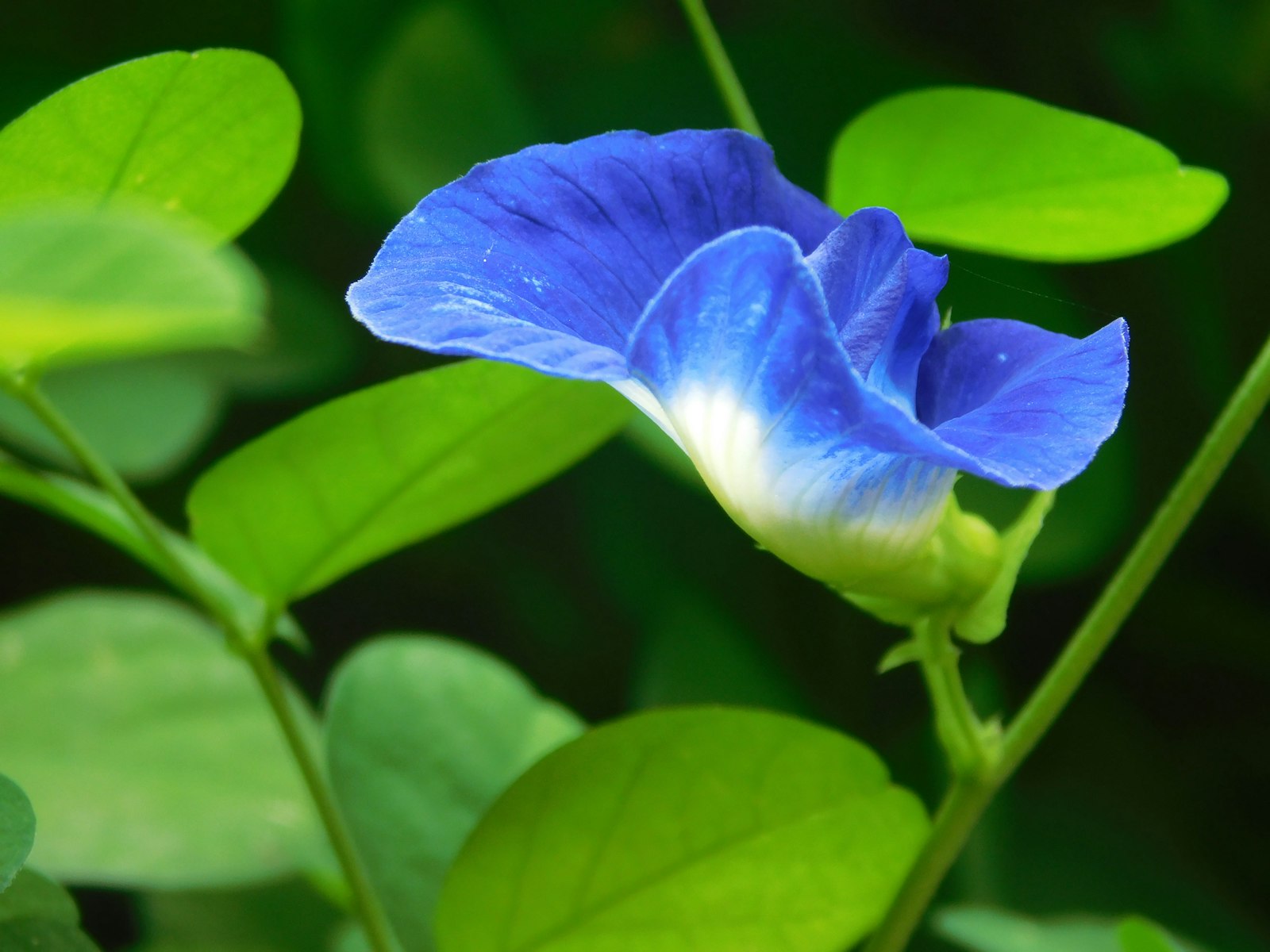

Reading a butterfly pea certificate of analysis means working through a supplier document line by line — moisture percentage, water activity, microbiology panel, pesticide residue screen, heavy metals, botanical identity, and anthocyanin color strength — to decide whether a lot of dried Clitoria ternatea flower meets the specification you actually need, not the one the supplier assumed you would accept. A COA is not a pass/fail verdict handed to you by a lab. It is raw data, and how you read it, what you notice is absent, and whether the issuing laboratory is credible all determine what it is worth. This guide walks through every field a careful buyer should see on a butterfly pea COA, explains what each result means in practice, and flags the gaps that should prompt follow-up questions before any commercial commitment is made.
One structural point before we start: a COA reflects one lot, drawn and tested at one point in time. It tells you about that batch, not about the supplier’s production in general, not about what a container ordered three months from now will look like. The implication is practical: lot-by-lot COAs tied to specific batch numbers, paired with retained reference samples held by both buyer and supplier, are the only mechanism that gives you defensible evidence of consistency over time. A single COA on file is a beginning, not a quality assurance system.
This is trade information, not regulatory or food-safety advice. Buyers are responsible for confirming that any lot meets the requirements of their destination market through a licensed broker and the relevant authorities. For EU buyers: Clitoria ternatea as a food is currently not authorized in the EU; EFSA raised safety objections (EFSA EN-7084), the Commission terminated the authorization procedure (C(2026)776), and RASFF enforcement notifications have been issued. Verify the current status before ordering for any EU food application.
The First Thing to Check: The Laboratory Itself
Before reading a single result on a butterfly pea COA, look at the issuing body. A COA from a supplier’s internal quality room is almost entirely without value for serious import decisions. The same operation that processed the lot, and that has an interest in your business, also conducted the testing. That is not third-party verification; it is self-certification with a lab coat on.
What you need is a COA from an ISO/IEC 17025-accredited third-party laboratory, preferably one accredited for the specific test methods used — pesticide residue analysis by LC/GC-MS/MS, ICP-MS for heavy metals, microbiological enumeration methods. Accreditation to ISO/IEC 17025 means an external body has independently assessed the lab’s competence, equipment, and methods against international standards. It does not make the results infallible, but it means the lab operates within a quality system that is externally verified and subject to re-audit.
Check the COA for: the laboratory’s name and address, the accreditation body cited (examples include A2LA in the US, UKAS in the UK, KAN in Indonesia), the scope of accreditation as it applies to the test methods used, and the date the testing was performed relative to the batch date. A COA from an accredited lab that was issued six months before the lot was produced is not documentation for that lot.
Identifying the Lot: What the Header Must State
The COA header is where a weak document often shows its first problems. A properly issued butterfly pea COA should carry:
- Product name and botanical name — Clitoria ternatea L., plant part (flower), country of origin
- Lot or batch number — a unique identifier that traces back to the production record at the processor
- Harvest date or production date, and the date testing was performed
- Grade description as agreed in the purchase order — whole flower, broken petals, or powder, with the intact-flower percentage specification if applicable
- Net weight of the tested batch
- Name and accreditation details of the issuing laboratory
If the batch number on the COA does not match the batch number on the physical packaging, ask before you accept. Mismatched identifiers are sometimes clerical errors; they are sometimes evidence that the COA was issued against a different — possibly better — batch than the one that shipped.
Moisture Content and Water Activity: Two Numbers, One Risk
Moisture is where most butterfly pea quality failures start. The COA should report moisture content as a percentage, determined by the standard loss-on-drying (LOD) method, typically at 105 °C. What it should also report — and often does not, because buyers do not demand it — is water activity (αw).
These two figures measure different things. Moisture content tells you the total water present as a proportion of the sample weight. Water activity tells you how much of that water is available to support microbial growth and chemical degradation reactions. A lot can show a moderate moisture percentage but still carry a water activity above the critical threshold for mold, depending on the water-binding characteristics of the plant material and any hygroscopic packaging effects.
- Premium whole-flower moisture target
- ≤10% — a defensible inference from general dried-herb and Codex Alimentarius dried-spice practice. No species-specific published moisture standard for dried Clitoria ternatea has been documented in the reviewed literature as of mid-2026. Treat this as an industry-norm target, not a regulated limit. [FLAG: practice-based, not species law]
- Standard-grade moisture target
- ≤12% — same basis; wider tolerance reflects the lower-value application.
- Water activity target
- ≤0.60 — the general dried-herb norm below which most mold growth is inhibited. This is the more meaningful figure for shelf-stability risk assessment. [FLAG: general herb practice, not a butterfly-pea-specific published rule]
A COA showing 13% moisture is not automatically a rejection, but it is a conversation. A COA showing αw 0.65 at 10% moisture is a rejection, because that water activity can support mold growth regardless of what the percentage looks like. If the supplier cannot report water activity at all, that is worth noting: a processor serious about butterfly pea quality for export will have water activity measurement capability, because it is the relevant metric for controlling shelf life.
Mold in dried butterfly pea is often invisible in its early stages. The COA’s microbiological panel is what catches it, not the moisture number alone — which is why both sections of the document must be read together.
The Microbiology Panel: What Each Result Actually Means
The micro panel on a dried-flower COA is where micro panel dried flower CoA literacy matters most for food safety. The minimum panel a careful buyer should expect includes four entries: Total Plate Count, yeast and mold count, Salmonella spp. absent per 25 g, and Escherichia coli absent per 25 g.
Total Plate Count (TPC / Aerobic Plate Count)
TPC measures the density of aerobic bacteria in the sample. Results are reported in colony-forming units per gram (CFU/g). For dried herbs, a TPC in the range of 104–105 CFU/g is common and generally acceptable; a TPC approaching or exceeding 106 CFU/g is a signal that post-harvest handling, drying, or storage conditions introduced significant contamination. The COA should report the actual count, not just a pass/fail verdict against an unspecified limit. Ask what internal limit the supplier tests against and why.
Yeast and Mold Count
This is the most directly relevant microbial result for butterfly pea, because the primary spoilage risk in high-moisture or humidity-stressed dried flower is fungal, not bacterial. Yeast and mold counts above 103–104 CFU/g are cause for heightened scrutiny. Visible mold on arrival is a rejection without discussion. An elevated yeast and mold count on the COA even without visible growth warrants a full mycotoxin investigation — see below.
Salmonella: Absent per 25 g
The result here should read “Not detected in 25 g” or “Absent/25 g.” A detection limit statement matters: if the lab reports “below detection limit of X CFU/g,” check whether that detection limit is sensitive enough to be meaningful. For Salmonella, which is a pathogen with a near-zero tolerance in ready-to-consume food products, “absent” means absent per the method’s sensitivity, not absent-with-certainty at all possible contamination levels. That is why the test must be run on a representative, adequately-sized sample composite — not a single 1 g draw. If the COA does not state the sample size, ask.
E. coli: Absent per 25 g
E. coli presence in a dried herb lot is a hygiene failure indicator — it points to fecal contamination in the environment, the water supply, or the hands of workers during post-harvest processing. Like Salmonella, the result must read absent per 25 g from a representative sample. Some COAs report generic coliform counts separately; generic coliforms are a broader indicator but E. coli specifically is the regulated pathogen marker. Both should be reported.
When to Add Mycotoxins
Mycotoxin testing — specifically aflatoxins B1, B2, G1, G2 and ochratoxin A — is not automatically on every herb COA, but it should be triggered whenever the yeast/mold count is elevated, when the lot was harvested during a wet season, when the supplier cannot confirm controlled-humidity warehouse storage with temperature logs, or when the odor on physical inspection suggests any musty or off-fermented notes. Aflatoxins are produced primarily by Aspergillus flavus and A. parasiticus; both are soil-borne molds found across tropical smallholder production environments. If your application sits in a regulated food category in the US or EU, mycotoxin limits are not optional.
Multi-Residue Pesticide Testing: Reading the Screen Correctly
Pesticide residue is the highest-risk field on a butterfly pea COA for importers shipping to markets with published maximum residue limits (MRLs). Clitoria ternatea is a legume grown predominantly on smallholder plots across Indonesia, Thailand, and Vietnam, many of which apply organophosphate, carbamate, and fungicide treatments without the documentation trail an export buyer needs.
The correct method is multi-residue pesticide testing by LC/GC-MS/MS — liquid chromatography and gas chromatography coupled to tandem mass spectrometry. A comprehensive screen covers 200–500+ compounds in a single run. COAs that report a narrow panel of ten or fifteen compounds from a simplified QuEChERS screen are not giving you the breadth of coverage you need for destination-market compliance.
Three things to read on the pesticide results section:
What analytes were screened?
A credible COA lists the full compound list or states that the screen covered a named validated method with a specific number of compounds. “Pesticides: pass” with no compound list is not a pesticide COA. It is a statement that someone ran a test you cannot evaluate.
What do the detection limits mean?
Every pesticide screen has a limit of quantitation (LOQ) — the concentration below which the method cannot reliably quantify a residue. Results reported as “<0.01 mg/kg” or “not detected” mean the residue, if present, is below the LOQ of the method, not necessarily absent at all concentrations. For most EU MRLs, which for unlisted pesticides on herbs default to 0.01 mg/kg, the LOQ of the method must be at or below 0.01 mg/kg to give you useful data. Check that the method’s LOQ is equal to or lower than the MRL you are testing against.
Which MRL framework applies?
US buyers test against EPA tolerances, enforceable at import by FDA sampling. Even buyers outside the EU widely use EU Regulation (EC) No 396/2005 MRLs as the reference benchmark for what “well-tested” means — because the EU list is the most comprehensive and conservative in the world for food herb exports, and a lot that passes EU MRLs is very likely to pass the US, Australian, or other destination-market requirements too. Specify the MRL framework in your purchase order so the COA reports against it explicitly.
Ready to evaluate a specific supplier’s pesticide documentation? Reach the desk via our enquiry form or on WhatsApp at +62 811 3941 4563, and we can help you frame the specification before you request a sample.
Heavy Metals COA Butterfly Pea: The ICP-MS Standard
The heavy metals COA butterfly pea section should cover four elements at minimum: lead (Pb), cadmium (Cd), arsenic (As), and mercury (Hg). The method should be ICP-MS — inductively coupled plasma mass spectrometry. Some cheaper COAs report XRF (X-ray fluorescence) screening results; XRF is a useful triage tool but is not the validated quantitative method accepted by regulatory authorities for compliance claims. If the COA says XRF, request ICP-MS confirmation before relying on it.
Why does Indonesia matter specifically for heavy metals? The archipelago sits on one of the world’s most active volcanic arcs, and volcanic soils carry elevated naturally-occurring concentrations of several heavy metals — arsenic in particular. Concentration varies significantly by island and by growing region. A lot from one growing area may show background arsenic levels well above those from a different area, through no fault of the farming practice. This is not a reason to avoid Indonesian origin; it is a reason to demand lot-by-lot ICP-MS data and to specify limits in the purchase order rather than assuming they will pass by default.
| Heavy Metal | Method | Reference Framework | Why It Matters for Butterfly Pea |
|---|---|---|---|
| Lead (Pb) | ICP-MS | EU Reg. (EC) 1881/2006; California Prop 65 | Accumulated from soil; risk from contaminated drying water or equipment |
| Cadmium (Cd) | ICP-MS | EU Reg. (EC) 1881/2006 | Naturally in some volcanic soils; absorbed by legumes |
| Arsenic (As) | ICP-MS | EU Reg. (EC) 1881/2006; US FDA guidance | Elevated in volcanic arc soils; region-dependent; total vs inorganic As distinction matters |
| Mercury (Hg) | ICP-MS | EU Reg. (EC) 1881/2006 | Lower risk in dried herbs generally; still standard panel inclusion |
A note on arsenic specifically: COAs may report total arsenic or inorganic arsenic separately. Inorganic arsenic is the regulated, more-toxic form. If the COA reports total arsenic only, and that total figure is at all elevated, ask whether the lab can speciate — report the inorganic fraction alone. Many US and EU buyers are increasingly requesting inorganic arsenic specifically.
Botanical Identity Verification: When and Why It Matters
Butterfly pea has a distinctive visual profile — the papilionaceous deep-blue flower is hard to mistake for unrelated species. But the wholesale botanical trade has a long history of adulteration through mislabeling, species substitution, or extension with lower-value materials. No publicly documented butterfly pea-specific adulteration scandal exists as of this writing, but the general risk in the botanical ingredient category is well-established enough that buyers building a supply chain that will face retailer or certification audits need a defensible identity verification method.
Two methods are relevant:
HPTLC and LC-MS Anthocyanin Fingerprinting
High-Performance Thin-Layer Chromatography with a reference standard, or LC-MS anthocyanin fingerprinting, gives a chemical identity confirmation. The ternatins — polyacylated delphinidin-3,3′,5′-triglucosides that give butterfly pea its blue color and pH-shift behavior — have a distinctive acylation pattern distinguishable from common food anthocyanins like hibiscus (delphinidin-3-sambubioside-5-glucoside) or red grape (malvidin-based). An LC-MS profile showing the characteristic ternatin peaks confirms Clitoria ternatea identity at the chemical level and simultaneously gives you anthocyanin content data relevant to the color strength section.
DNA Barcoding
For high-value lots, or for buyers whose supply chain will be audited by a certification body or a major retailer with strict ingredient verification requirements, DNA barcoding provides species-level identity confirmation independent of chemical processing. It is available from specialist reference labs, turnaround time runs 1–2 weeks typically, and cost per test is higher than chemical fingerprinting. For a container order, that cost is trivial relative to the risk of a species substitution claim from a regulatory authority or a retail customer. Ask the supplier whether they include DNA barcoding in their standard COA panel for export-grade lots; if not, it can be added as a purchase-order requirement.
Anthocyanin Color Strength: The Commercially Critical Field
Color strength is the field on the COA that directly tracks the commercial value of the lot for most applications. Everything else is a safety and compliance baseline; anthocyanin concentration is what determines whether this lot does the job your formula, product, or tea blend requires.
The ternatins absorb most strongly in the 560–620 nm range of the visible spectrum. A COA reporting color strength should state the absorbance at a defined wavelength — most commonly around 590 nm, the absorption maximum — at a defined extract concentration. This normalizes the measurement across lots so you can compare. A lot reporting absorbance of 0.85 at 590 nm at a 1 mg/mL concentration is directly comparable to another lot reported at the same conditions; a lot reported at a different concentration or wavelength is not comparable without conversion.
Some suppliers report total anthocyanin content using the pH differential method — measuring absorbance at 520 nm at pH 1.0 and pH 4.5, with the difference proportional to total monomeric anthocyanin content. This method is well-established in fruit and botanical anthocyanin analysis and is perfectly usable for butterfly pea. What matters is that the method is stated explicitly, the same method is used across batches, and the result on the sample COA is the baseline you compare the production-lot COA against.
What a Weak Color Result Tells You
A lot with low anthocyanin concentration relative to your sample baseline has experienced ternatin degradation. The causes are the ones that show up at the drying floor: temperature too high during drying (anthocyanins are heat-sensitive), exposure to direct sun or UV during drying or storage, prolonged exposure to oxygen, or storage beyond the lot’s effective shelf life. The Thai Department of Agriculture’s documented drying spec for Clitoria ternatea — oven-drying at 50–60 °C for 8–10 hours — exists precisely because lower temperatures preserve the ternatin profile more effectively than open sun-drying. A lot sun-dried in the afternoon heat of a Java lowland may look fine on moisture content but show degraded anthocyanin numbers on the spectrophotometer.
The pH Color-Response Cross-Check
A quick physical cross-check complements the spectrophotometric result. Steep a small quantity of the lot in neutral-pH water and observe: good ternatin content produces a deep, saturated blue infusion. Add a few drops of lemon juice or citric acid solution. A high-ternatin lot shifts visibly through purple and into pink-magenta as the pH drops. A degraded lot starts grey-blue and shows a weak, muddy shift. This test requires no lab equipment, takes under five minutes, and catches the most common failure mode — ternatin degradation from over-hot drying — before you have the COA result back from the lab. It does not replace spectrophotometry in the COA; it is a field-level screening check you can run on arrival.
Reading the COA Alongside the Grades and Quality Standards
A COA does not exist in isolation. It documents how a lot performed against specific analytical criteria. Whether those criteria are the right ones depends on what grade you specified in the purchase order. A COA showing 8% moisture, intact-flower ratio 87%, and TPC 3.2 × 10⁴ CFU/g is excellent documentation for a standard-grade lot. Against a premium-grade specification requiring ≤10% moisture, ≥90% intact flowers, and all the analytical panels above, it passes on two counts but fails the intact-flower specification. The COA does not tell you whether the lot is acceptable — the specification you set does.
This is why writing the grade and analytical requirements into the purchase order before the lot is produced is not a bureaucratic step. It is the step that makes the COA usable. See the grades and quality standards page for the full grading rubric, and the sample ordering page for how to set up a reference-sample framework so you have a documented baseline to compare production COAs against.
The Butterfly Pea COA Fields Explained: A Buyer’s Checklist
The following checklist consolidates the butterfly pea COA fields explained above into a single reference. Work through it on every COA you receive before approving a lot for import.
| COA Section | What to Check | Red Flag |
|---|---|---|
| Laboratory header | ISO/IEC 17025 accreditation, accrediting body named, test dates match batch dates | No accreditation cited; COA address = supplier address; test date predates batch production |
| Lot identification | Batch number, botanical name, country of origin, harvest/production date match physical packaging | Mismatched batch numbers; no botanical name; no harvest date |
| Moisture content (%) | LOD method stated; ≤10% premium, ≤12% standard (defensible inference; not species law) | >12%; method not stated; pass/fail only with no actual figure |
| Water activity (αw) | ≤0.60 general dried-herb norm; actual figure reported not just pass/fail | Absent from COA; >0.65 at any moisture level |
| Microbiological panel | TPC, yeast/mold, Salmonella absent/25 g, E. coli absent/25 g; sample size stated | Panel incomplete; Salmonella/E. coli missing; sample size not stated; in-house lab only |
| Mycotoxins | Aflatoxins B1/B2/G1/G2, ochratoxin A where yeast/mold elevated or storage uncertain | Absent when yeast/mold count is high; absent when storage conditions unknown |
| Pesticide residues | LC/GC-MS/MS method; compound list stated; LOQ at or below applicable MRL; results vs. named MRL framework | No compound list; XRF or limited panel; LOQ above applicable MRL; no method stated |
| Heavy metals | Pb, Cd, As, Hg by ICP-MS; limits from purchase order MRL framework | XRF method only; arsenic as total only when inorganic fraction elevated; four metals not all covered |
| Botanical identity | HPTLC or LC-MS anthocyanin fingerprint; DNA barcoding for high-value or audited supply chains | No identity test at all; only visual description cited as ID |
| Anthocyanin color strength | Absorbance at defined wavelength (560–620 nm range) and concentration, or pH differential method; method and conditions stated; compared to sample baseline | No color strength data; wavelength and concentration not specified; method changed between sample and production COAs |
| GMP/HACCP/ISO 22000 | Current certificate, issuing body named, expiry date valid | Expired certificate; issuing body not independently verifiable; certificate number not provided |
| Traceability statement | Farm or cooperative origin, harvest date range, processing facility | No traceability beyond “Indonesia”; no harvest date; lot cannot be traced to a specific production event |
If a supplier’s COA is missing three or more of these sections, that is a supplier qualification gap, not a document formatting issue. The missing fields are either not being tested or not being disclosed. Both possibilities require follow-up before any commercial volume is committed.
What “Pass,” “Absent,” and a Detection Limit Actually Mean
The language on lab reports is precise in ways that matter. Three terms appear repeatedly and are frequently misread.
“Pass” is the most dangerous word on a COA if it appears without a reference specification. A result of “pass” means the lot met some limit — but whose limit, and against what specification? A supplier-set internal limit of 15% moisture can produce a “pass” result that is well above your premium-grade specification of 10%. Always confirm what the pass criterion was, and whether it is the one in your purchase order rather than the supplier’s internal standard.
“Absent” for pathogen results means “not detected at the method’s sensitivity in the sample tested.” It does not mean “zero organisms throughout the entire lot.” Microbiological testing is inherently statistical — you are testing a sample, not every gram. The confidence you can draw from an “absent” result is a function of the sample size, the method’s sensitivity, and whether the sample was drawn representatively from the lot. This is why the sample size (absent per 25 g, not absent per 1 g) matters and should be stated.
A detection limit statement — “<0.01 mg/kg” or “ND (LOD: 0.005 mg/kg)” — tells you the floor of the method’s measurement capability, not that the analyte is truly zero. For pesticides, the detection limit must be at or below the applicable MRL for the result to be usable as a compliance claim. If the LOD is 0.05 mg/kg and the MRL is 0.01 mg/kg, a “not detected” result tells you nothing about MRL compliance.
One COA Is Not a Quality System
Experienced importers of dried botanicals know what happens at scale: a sample COA shows excellent anthocyanin strength and clean microbiology; the production lot, drawn three months later from a different drying batch aggregated by an intermediary, arrives with elevated moisture and colour-fade consistent with over-drying at a different temperature. The sample COA is not wrong. It is just not representative of what produced the production lot.
The mechanisms that close this gap are three: lot-by-lot COAs tied to specific batch numbers (not one COA per product line, reused across orders); retained reference samples held by both the buyer and the supplier, labeled with the lot number, so any production dispute can be arbitrated against a physical standard; and a trial order before FCL commitment, because production-lot quality is what matters, and a trial order is the cheapest way to confirm it matches the sample.
Ask your supplier directly: do they retain samples from every production batch? What is their retention period? Are those retained samples available for comparison testing if a production lot is disputed? A supplier who cannot answer those questions has not built a quality system that supports serious export buyers.
To discuss a COA package, compare specific lot documentation, or request a properly sampled paid sample with third-party lab results, reach the desk directly on WhatsApp at +62 811 3941 4563 or email [email protected]. Alternatively, use our enquiry form — tell us the product form, grade specification, and destination market and we will route you to a vetted partner who can supply documentation to the standard described above.
Frequently Asked Questions
What fields should every butterfly pea COA include as a minimum?
At minimum: lot or batch number, botanical name and country of origin, moisture content (LOD method), water activity, microbiological panel (Total Plate Count, yeast and mold, Salmonella absent per 25 g, E. coli absent per 25 g), multi-residue pesticide screen (LC/GC-MS/MS, compound list stated), heavy metals (Pb, Cd, As, Hg by ICP-MS), and anthocyanin color strength (absorbance at a defined wavelength and concentration or pH differential method). The COA must be issued by an ISO/IEC 17025-accredited third-party laboratory, with the accrediting body named. A COA missing any of these sections is an incomplete document for serious import decisions.
What moisture percentage should I accept on a butterfly pea COA?
The figures used in trade are ≤10% for premium whole-flower grade and ≤12% for standard grade, both inferred from general dried-herb and Codex Alimentarius practice rather than a published butterfly-pea-specific standard — none has been documented in the reviewed literature as of mid-2026. These are defensible working targets, not species law. More importantly, read water activity alongside moisture: a lot at 10% moisture with αw above 0.65 can still support mold growth in humid storage, while a lot at 11% moisture with αw 0.58 may be meaningfully safer. Specify both in the purchase order.
What does “Salmonella absent per 25 g” actually mean on a COA?
It means the method detected no Salmonella organisms in the 25 g sample tested, at the sensitivity of the method used. It does not mean every gram of the lot is pathogen-free — microbiological testing is inherently statistical. The protection comes from the sample size (25 g is the regulatory standard for food pathogens, not 1 g), the method’s sensitivity, and representative sampling. Always confirm the sample size is stated on the COA; “absent” without a stated sample size is not a compliance claim.
Why does the testing laboratory matter, and what should I look for?
A COA from a supplier’s internal quality room is self-certification, not third-party verification — the same party that has an interest in your business also conducted the test. Look for an ISO/IEC 17025-accredited external laboratory, with the accrediting body named (such as A2LA, UKAS, or KAN in Indonesia). The accreditation scope should cover the specific test methods used — pesticide residue analysis by LC/GC-MS/MS, ICP-MS for heavy metals, and the microbiological methods cited. Confirm the test dates on the COA match the batch dates; a COA issued before the lot was produced is not documentation for that lot.
Should I ask for a separate COA for every order, or is one COA per product sufficient?
One COA per product line, reused across orders, is not adequate for serious import sourcing. A COA reflects one lot at one point in time. Production quality can vary between drying batches, between seasons, and between aggregated smallholder lots. Request a lot-specific COA tied to the batch number of the actual shipment, from the same third-party laboratory, and compare it to the COA issued with your sample. A supplier who cannot provide lot-specific COAs is asking you to accept production quality on trust rather than evidence.